Reaction equation
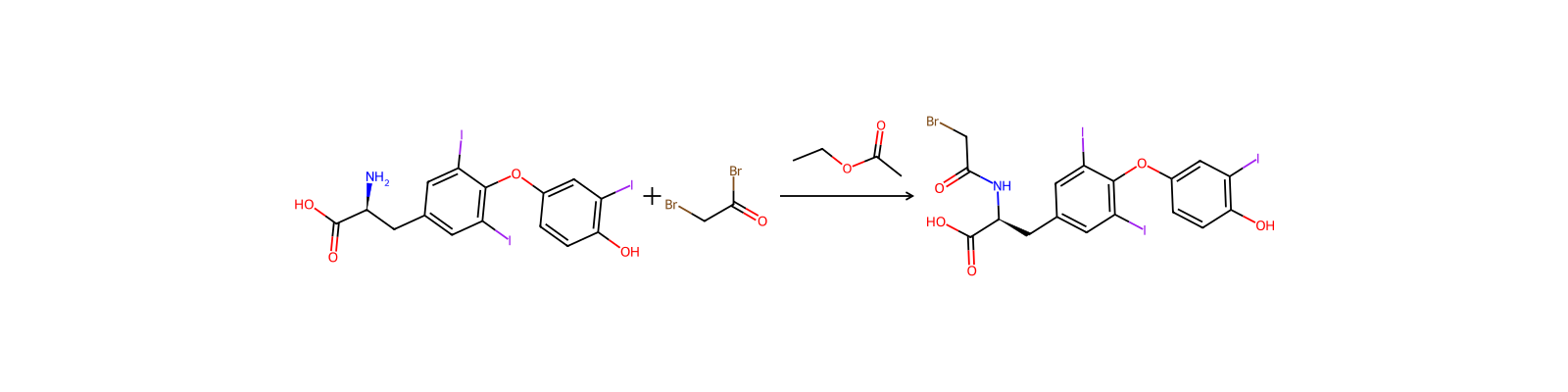
[I:1][C:2]1[CH:3]=[C:4]([CH:11]=[C:12]([I:23])[C:13]=1[O:14][C:15]1[CH:20]=[CH:19][C:18]([OH:21])=[C:17]([I:22])[CH:16]=1)[CH2:5][C@@H:6]([C:8]([OH:10])=[O:9])[NH2:7].[Br:24][CH2:25][C:26](Br)=[O:27]>C(OCC)(=O)C>[Br:24][CH2:25][C:26]([NH:7][C@H:6]([C:8]([OH:10])=[O:9])[CH2:5][C:4]1[CH:3]=[C:2]([I:1])[C:13]([O:14][C:15]2[CH:20]=[CH:19][C:18]([OH:21])=[C:17]([I:22])[CH:16]=2)=[C:12]([I:23])[CH:11]=1)=[O:27]Participants
4
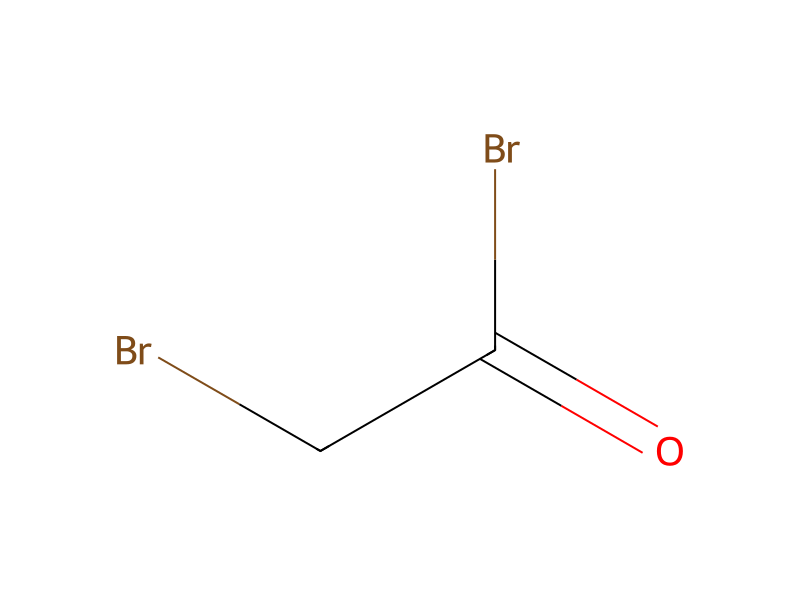
Reactant 2

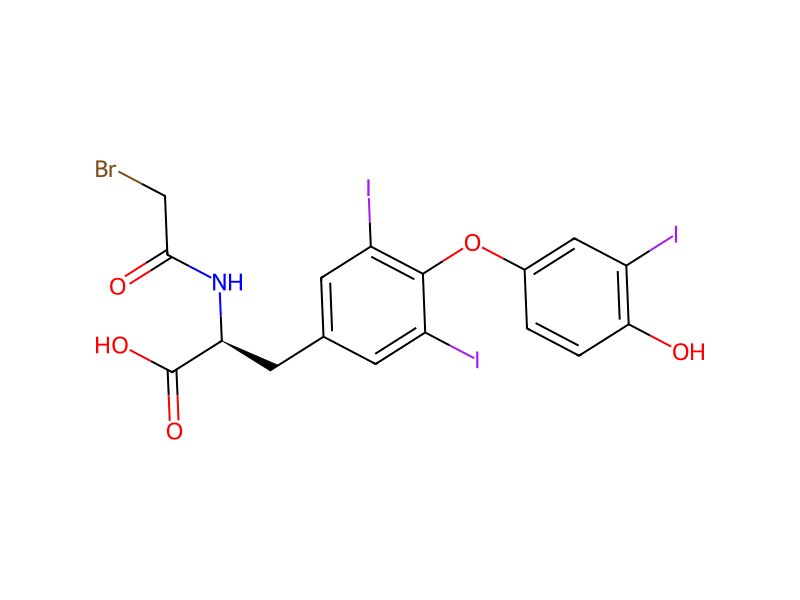
Product 1
Reagents, catalysts & solvents 1

Procedure
According to the present invention a solution of 3,3',5-triiodo-L-thyronine and bromoacetyl bromide in ethyl acetate is refluxed for a period of time to produce the bromoacetylated hormone which is then fractionated by high speed countercurrent chromatography to yield highly pure N-bromoacetyl-3,3',5-triiodo-L-thyronine.
Workup
- temperatureis refluxed for a period of time
- customto produce the bromoacetylated hormone which
Sources & evidence
- ORD record
- ord-5970f06b834348c39766db5e4bc8499b
- Source dataset
- uspto-grants-1992_12
- Patent number
- US05169984
Linked notes
Loading…