HomeMCPWorkbenchSkills
HomeWorkbenchNotificationsMe
llms.txt · MCP GuidePrivacy Policy · Terms of Service · Supportv1.8.3
  1. Home
  2. /Reaction

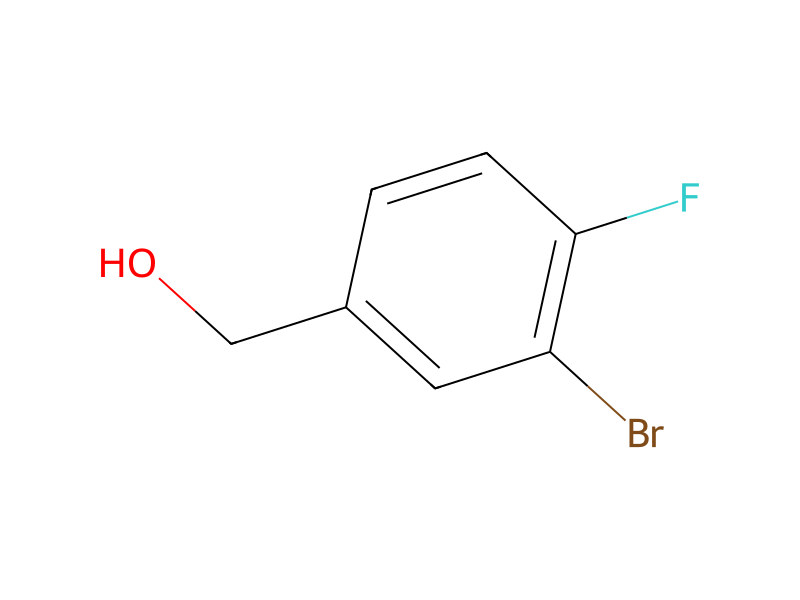
Hydrochloric Acid → 3-Bromo-4-fluorobenzyl Alcohol

HRID 1702505
Print

Reaction equation

HRID 1702505 reaction equation
[Br:1][C:2]1[CH:3]=[C:4]([CH:8]=[CH:9][C:10]=1[F:11])[C:5](F)=[O:6].[BH4-].[Na+].Cl>C(O)(C)C>[Br:1][C:2]1[CH:3]=[C:4]([CH:8]=[CH:9][C:10]=1[F:11])[CH2:5][OH:6]
ParticipantsProcedureWorkupSources & evidenceReaction notes

Participants

5

Reactant 3

HCID 313Hydrochloric AcidHCID 4311764Sodium borohydrideHCID 129227073-Bromo-4-fluorobenzoyl fluoride

Product 1

HCID 27733513-Bromo-4-fluorobenzyl AlcoholYield 79.5%

Reagents, catalysts & solvents 1

HCID 3776IsopropanolSolvent

Procedure

221 g (1 mol) of 3-bromo-4-fluoro-benzoyl fluoride were added dropwise to a mixture of 30.4 g (0.8 mol) of sodium tetrahydridoborate and 840 ml of isopropanol at 20°-25° C. in the course of 3 hours. The reaction mixture was stirred for about a further 30 minutes and then poured into 2 liters of ice-water. The pH was adjusted to 1 by adding concentrated hydrochloric acid, and the organic layer was then separated off. The aqueous phase was subsequently extracted with 200 ml of methylene chloride. The combined organic phases were dried and filtered and the filtrate was distilled. 163 g (79.5% of theory) of 3-bromo-4-fluorobenzyl alcohol of boiling point 137° C./16 mbars and of refractive index nD20 =1.5623 were obtained.

Workup

  1. customthe organic layer was then separated off
  2. extractionThe aqueous phase was subsequently extracted with 200 ml of methylene chloride
  3. customThe combined organic phases were dried
  4. filtrationfiltered
  5. distillationthe filtrate was distilled

Sources & evidence

ORD record
ord-9d0d5d261f1140dabd6c9548ef0ed659
Source dataset
uspto-grants-1983_04
DOI
10.6084/m9.figshare.5104873.v1
Patent number
US04381412

Reaction notes

On this pageParticipantsProcedureWorkupSources & evidenceReaction notes