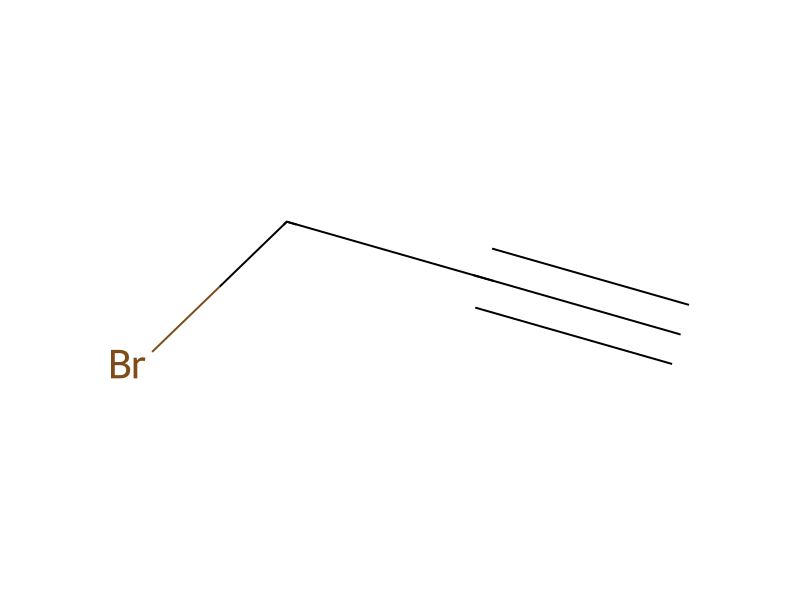
[CH3:1][C:2]([Si:5]([CH3:14])([CH3:13])[O:6][C@H:7]1[CH2:11][CH2:10][NH:9][C:8]1=[O:12])([CH3:4])[CH3:3].[H-].[Na+].[CH2:17](Br)[C:18]#[CH:19]>O1CCCC1.C1(C)C=CC=CC=1.ClCCl>[CH3:4][C:2]([Si:5]([CH3:14])([CH3:13])[O:6][C@H:7]1[CH2:11][CH2:10][N:9]([CH2:19][C:18]#[CH:17])[C:8]1=[O:12])([CH3:1])[CH3:3]In one portion, 11.6 g of (S)-3-[[(1,1-dimethyl-ethyl)dimethylsilyl]oxy]-2-pyrrolidinone was added to a suspension of 2.35 g of 60% sodium hydride in mineral oil in 400 ml of tetrahydrofuran which was cooled to 0° C. The resulting solution was stirred at room temperature until solution was complete, then recooled to 0° C. An 80% solution of propargyl bromide in toluene (8.5 ml) was added and the resulting solution was stirred overnight. The solution was diluted with dichloromethane, washed with water, dried and concentrated in vacuo. The residue was purified by chromatography (silica gel), giving (S)-3-[[(1,1-dimethylethyl)-dimethylsilyl]oxy]-1-(2-propynyl)-2-pyrrolidinone, [α]D26 =-44° (dichloromethane); mp 35°-36° C.