HomeMCPSkillsWorkbenchOpenChem
HomeWorkbenchNotificationsMe
llms.txt · skill.md · MCP GuidePrivacy Policy · Terms of Service · Supportv1.8.5
  1. Home
  2. /Reaction

Propargyl bromide → HCID 22416821, compound

HRID 1721014
Print

Reaction equation

[C:1]1([CH:7]([NH2:16])[CH2:8][C:9]2[CH:14]=[CH:13][C:12]([Cl:15])=[CH:11][CH:10]=2)[CH:6]=[CH:5][CH:4]=[CH:3][CH:2]=1.[CH2:17](Br)[C:18]#[CH:19].C(N(C(C)C)CC)(C)C>O1CCCC1>[ClH:15].[CH2:19]([NH:16][CH:7]([C:1]1[CH:2]=[CH:3][CH:4]=[CH:5][CH:6]=1)[CH2:8][C:9]1[CH:10]=[CH:11][C:12]([Cl:15])=[CH:13][CH:14]=1)[C:18]#[CH:17]
ParticipantsProcedureWorkupSources & evidenceReaction notes

Participants

5

Reactant 3

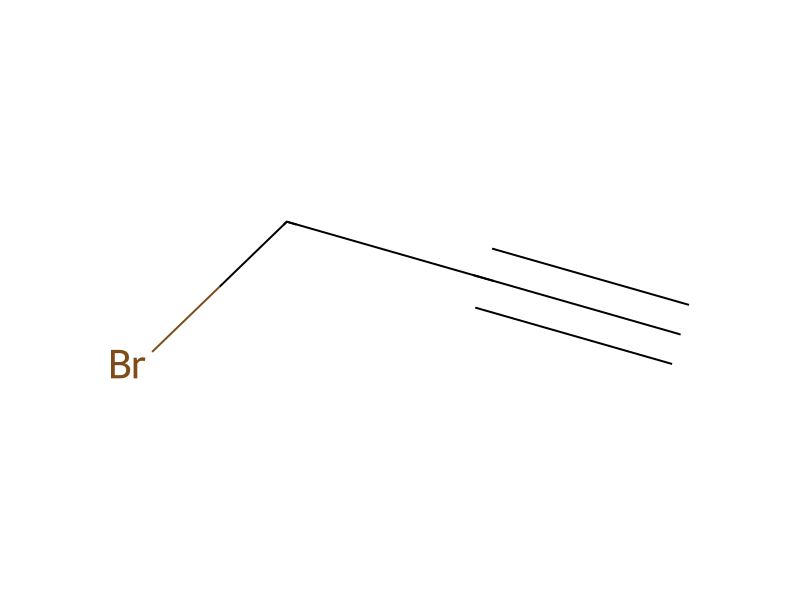
HCID 7842Propargyl bromide2×HCID 81531DiisopropylethylamineHCID 30526302-(4-Chlorophenyl)-1-phenylethan-1-amine

Product 1

HCID 22416821HCID 22416821, compound

Reagents, catalysts & solvents 1

HCID 8028TetrahydrofuranSolvent

Procedure

A stirred solution of 1-phenyl-2-(4-chlorophenyl)ethylamine (6.00 gm, 2.6×10⁻² mol), propargyl bromide (80% in toluene, 4.82 gm, 3.2×10⁻² mol), and diisopropylethylamine (5.04 gm, 3.9×10⁻² mol) in 50 ml of anhydrous tetrahydrofuran was refluxed at 90° C. under a dry nitrogen atmosphere for four hours. Then, an additional portion of propargyl bromide (0.48 gm, 3.9×10⁻³ mol) was added, and reflux was continued to another two hours. The reaction mixture was cooled to room temperature, and the resulting white precipitate was removed by filtration. The mother liquor was concentrated on a rotary evaporator, the residue was diluted with 100 ml of diethyl ether, and the resulting white precipitate was again removed by filtration. The etheral mother liquor was quickly extracted with two 50 ml portions of 2N aqueous HCl. Upon standing, the combined aqueous layers yielded the desired intermediate, N-propargyl-1-phenyl-2-(4-chlorophenyl)ethylamine hydrochloride, as an off-white precipitate, which was washed with diethyl ether (4.53 gm, 57%), mp=191°-193°.

Workup

  1. temperaturereflux
  2. customthe resulting white precipitate was removed by filtration
  3. concentrationThe mother liquor was concentrated on a rotary evaporator
  4. additionthe residue was diluted with 100 ml of diethyl ether
  5. customthe resulting white precipitate was again removed by filtration
  6. extractionThe etheral mother liquor was quickly extracted with two 50 ml portions of 2N aqueous HCl

Sources & evidence

ORD record
ord-f6b19545cf8349a883186b872869322d
Source dataset
uspto-grants-1996_04
DOI
10.6084/m9.figshare.5104873.v1
Patent number
US05508401

Reaction notes

On this pageParticipantsProcedureWorkupSources & evidenceReaction notes

