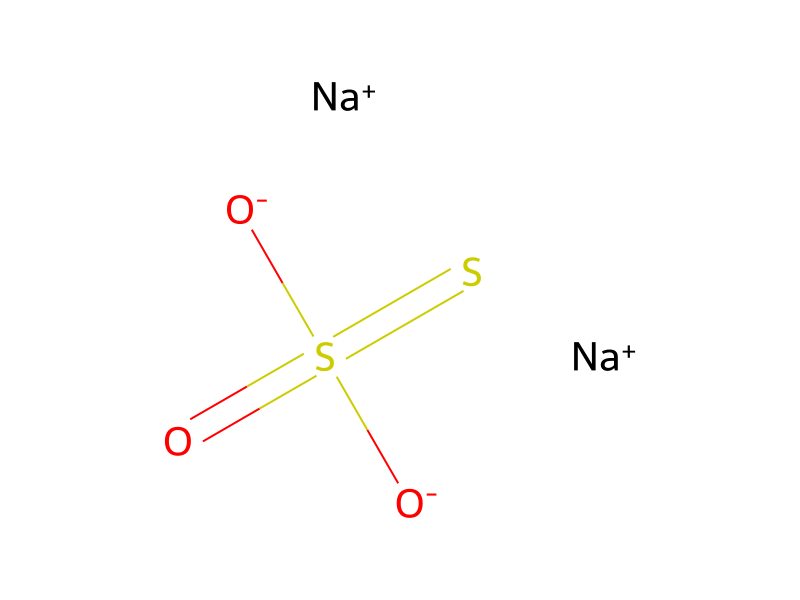
[Cl:1][O-].[Na+].[Cl:4][C:5]1[C:15]([Cl:16])=[C:14]([C:17]([C:19]2[N:23]([CH2:24][CH3:25])[N:22]=[CH:21][CH:20]=2)=[O:18])[CH:13]=[CH:12][C:6]=1[O:7][CH2:8][C:9]([OH:11])=[O:10].S([O-])([O-])(=O)=S.[Na+].[Na+]>C(O)(=O)C.CN(C)C=O.O>[Cl:4][C:5]1[C:15]([Cl:16])=[C:14]([C:17]([C:19]2[N:23]([CH2:24][CH3:25])[N:22]=[CH:21][C:20]=2[Cl:1])=[O:18])[CH:13]=[CH:12][C:6]=1[O:7][CH2:8][C:9]([OH:11])=[O:10]6.7 g of an aqueous 10% sodium hypochlorite solution are added dropwise to a solution of 2.36 g of [2,3-dichloro-4-(1-ethyl-5-pyrazolylcarbonyl)phenoxy]acetic acid in a mixture of 50 ml of acetic acid and 20 ml of dimethylformamide, and the mixture is stirred at room temperature for 30 minutes. A solution of 2.0 g of sodium thiosulfate in 5 ml of water is added to the reaction mixture to decompose excess sodium hypochloride, and the mixture is evaporated to remove solvent. The residue (oil) is dissolved in water, and the solution is adjusted to pH 3 with 1N hydrochloric acid and extracted with ethyl acetate. The extract is washed with water, dried and evaporated to remove solvent. The residue is crystallized from a mixture of ethyl acetate and hexane to give 2.19 g of [2,3-dichloro-4-(4-chloro-1-ethyl-5-pyrazolylcarbonyl)phenoxy]acetic acid.
Loading…