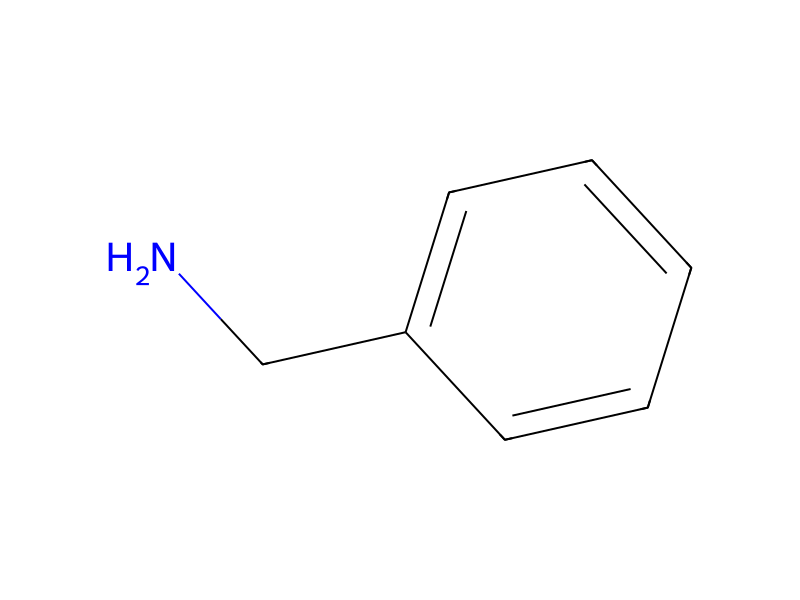
[F:1][C@H:2]1[C@H:5]([CH2:6][O:7][CH2:8][C:9]2[CH:14]=[CH:13][CH:12]=[CH:11][CH:10]=2)[CH2:4][C:3]1=O.[CH2:16]([NH2:23])[C:17]1[CH:22]=[CH:21][CH:20]=[CH:19][CH:18]=1.C(O[BH-](OC(=O)C)OC(=O)C)(=O)C.[Na+].CC(O)=O>ClCCCl>[CH2:16]([NH:23][CH:3]1[CH2:4][CH:5]([CH2:6][O:7][CH2:8][C:9]2[CH:14]=[CH:13][CH:12]=[CH:11][CH:10]=2)[CH:2]1[F:1])[C:17]1[CH:22]=[CH:21][CH:20]=[CH:19][CH:18]=1In a 25 mL flask with trans-2-fluoro-3-(benzyloxymethyl)cyclobutanone (0.20 g, 0.96 mmol) inside, dry 1,2-DCE 3.4 mL was added under argon to give a colorless solution. To this, benzylamine (0.11 mL, 1.01 mmol) was added to give still a colorless solution. After stirring for 5 min, sodium triacetoxyborohydride (0.29 g, 1.37 mmol) was added all at once to give a white emulsion. Then AcOH (0.06 mL, 1.05 mmol) was added drop by drop. After 5 min, it gave a yellow solution and this was left stirring for 2 hr and then the reaction was quenched by sat. NaHCO3. The organic phase was separated and the aqueous phase was extracted with EtOAc twice. The combined organic phase was dried over MgSO4 and the crude product was purified by silica gel flash chromatography (Hexane:EtOAc=3:1) to give 0.19 g (65%, Rf=0.18) of the product. 1H NMR (CDCl3, 600 MHz): δ 1.81-1.95 (m, 3H), 2.80-2.89 (m, 1H), 3.46-3.56 (m, 3H), 3.76-3.84 (m, 3H), 4.51-4.55 (m, 2H), 4.89-5.00 (td, 1H, J=54.6, 4.8), 7.25-7.37 (m, 10H).