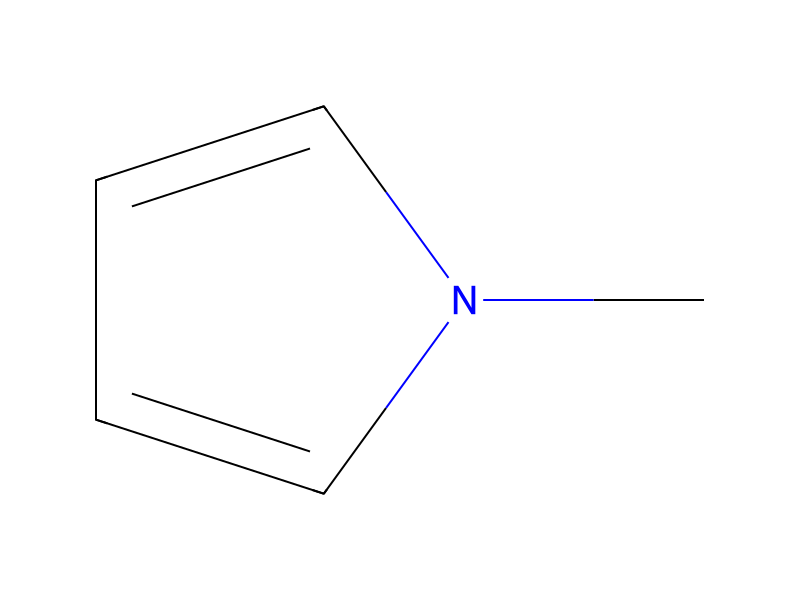
[CH3:1][N:2]1[CH:6]=[CH:5][CH:4]=[CH:3]1.[O:7]=[CH:8][C:9](Cl)(Cl)Cl.[C-:13]#[N:14].[K+].C(=O)([O-])[O-].[K+].[K+].[OH-:22].[Na+]>O1CCOCC1.CO>[C:13]([C:6]1[N:2]([CH3:1])[C:3]([CH2:9][C:8]([OH:22])=[O:7])=[CH:4][CH:5]=1)#[N:14]N-Methylpyrrole (1.62 g, 20.0 mmol) and chloral (3.20 g, 21.7 mmol) were reacted in dioxane (5 ml) to afford the adduct. A solution of potassium cyanide (5.70 g, 88 mmol) and potassium carbonate (2.80 g, 20 mmol) dissolved in methanol (150 ml) was added to the adduct and the mixture was stirred for 4 days. Then sodium hydroxide (3.0 g, 75 mmol) was added portion-wise to the mixture for the next 3 days. The reaction mixture was worked-up in the same manner as described in Example 3 above to afford the desired product, 5-cyano-1-methylpyrrole-2-acetic acid (1.50 g).