HomeMCPSkillsWorkbenchOpenChem
HomeWorkbenchNotificationsMe
llms.txt · skill.md · MCP GuidePrivacy Policy · Terms of Service · Supportv1.8.5
  1. Home
  2. /Reaction

Diisopropylamine → 4-chloro-5-iodo-7-{[2-(trimethylsilyl)ethoxy]methyl}-7H-pyrrolo[2,3-d]pyrimidine-6-carbaldehyde

HRID 1750294
Print

Reaction equation

C(NC(C)C)(C)C.C([Li])CCC.[Cl:13][C:14]1[C:15]2[C:22]([I:23])=[CH:21][N:20]([CH2:24][O:25][CH2:26][CH2:27][Si:28]([CH3:31])([CH3:30])[CH3:29])[C:16]=2[N:17]=[CH:18][N:19]=1.[CH:32](OCC)=[O:33]>O1CCCC1>[Cl:13][C:14]1[C:15]2[C:22]([I:23])=[C:21]([CH:32]=[O:33])[N:20]([CH2:24][O:25][CH2:26][CH2:27][Si:28]([CH3:31])([CH3:30])[CH3:29])[C:16]=2[N:17]=[CH:18][N:19]=1
ParticipantsConditionsProcedureWorkupSources & evidenceReaction notes

Participants

6

Reactant 4

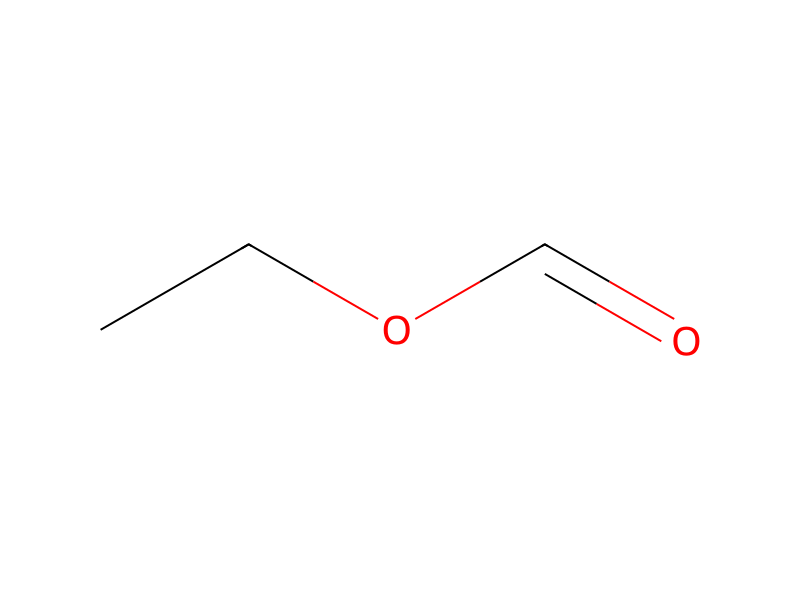
HCID 7912DiisopropylamineHCID 8025Ethyl formateHCID 867069334-chloro-5-iodo-7-((2-(trimethylsilyl)ethoxy)methyl)-7H-pyrrolo[2,3-d]pyrimidineHCID 178418339Butyllithium

Product 1

HCID 867069644-chloro-5-iodo-7-{[2-(trimethylsilyl)ethoxy]methyl}-7H-pyrrolo[2,3-d]pyrimidine-6-carbaldehyde

Reagents, catalysts & solvents 1

HCID 8028TetrahydrofuranSolvent3×

Conditions

Temperature
0 °C

Procedure

A solution of diisopropylamine (2.9 g, 29 mmol) in tetrahydrofuran (30 mL) was cooled to −78° C. and treated drop-wise with n-butyllithium (2.5 M, 11.6 mL, 29 mmol). The reaction mixture was stirred at 0° C. for 1 hour, and then cooled to −78° C. A solution of 4-chloro-5-iodo-7-{[2-(trimethylsilyl)ethoxy]methyl}-7H-pyrrolo[2,3-d]pyrimidine (C1) (8.0 g, 20 mmol) in tetrahydrofuran (10 mL) was added drop-wise, and stirred was continued at −78° C. for 1 hour. After drop-wise addition of a solution of ethyl formate (2.6 g, 35 mmol) in tetrahydrofuran (10 mL) to the −78° C. reaction mixture, it was allowed to warm to room temperature and stir for 18 hours. It was then cooled to 0° C., and the reaction was quenched by addition of saturated aqueous ammonium chloride solution (20 mL), then extracted with ethyl acetate (3×50 mL). The combined organic layers were washed with saturated aqueous sodium chloride solution (50 mL), dried over sodium sulfate, filtered, and concentrated. Purification via silica gel chromatography (Gradient: 0% to 25% ethyl acetate in petroleum ether) afforded the product as a yellow oil. Yield: 5.0 g, 11 mmol, 55%. 1H NMR (400 MHz, CDCl3) δ 10.11 (s, 1H), 8.80 (s, 1H), 6.05 (s, 2H), 3.55-3.62 (m, 2H), 0.89-0.96 (m, 2H), −0.05 (s, 9H).


Workup

  1. temperaturecooled to −78° C
  2. stirringstirred
  3. waitwas continued at −78° C. for 1 hour
  4. customto the −78° C. reaction mixture, it
  5. temperatureto warm to room temperature
  6. stirringstir for 18 hours
  7. temperatureIt was then cooled to 0° C.
  8. customthe reaction was quenched by addition of saturated aqueous ammonium chloride solution (20 mL)
  9. extractionextracted with ethyl acetate (3×50 mL)
  10. washThe combined organic layers were washed with saturated aqueous sodium chloride solution (50 mL)
  11. dry with materialdried over sodium sulfate
  12. filtrationfiltered
  13. concentrationconcentrated
  14. customPurification via silica gel chromatography (Gradient: 0% to 25% ethyl acetate in petroleum ether)

Sources & evidence

ORD record
ord-afadf8c108d04dcb82c1e42c7fea4b33
Source dataset
uspto-grants-2015_10
DOI
10.6084/m9.figshare.5104873.v1
Patent number
US09156845B2

Reaction notes

On this pageParticipantsConditionsProcedureWorkupSources & evidenceReaction notes