HomeMCPWorkbenchSkills
HomeWorkbenchNotificationsMe
llms.txt · MCP GuidePrivacy Policy · Terms of Service · Supportv1.8.3
  1. Home
  2. /Reaction

Benzaldehyde → 2,4-Bis(isopropenyl)dibenzo[b,d]furan-3-amine

HRID 1750898
Print

Reaction equation

HRID 1750898 reaction equation
Br[C:2]1[C:14]([NH2:15])=[C:13](Br)[C:5]2[O:6][C:7]3[CH:12]=[CH:11][CH:10]=[CH:9][C:8]=3[C:4]=2[CH:3]=1.[CH:17](=O)[C:18]1C=CC=C[CH:19]=1.[CH3:25][C:26]1(C)[C:30](C)(C)OB(C(C)=C)O1.P([O-])([O-])([O-])=O.[K+].[K+].[K+]>C1(C)C=CC=CC=1.O.C1C=CC(/C=C/C(/C=C/C2C=CC=CC=2)=O)=CC=1.C1C=CC(/C=C/C(/C=C/C2C=CC=CC=2)=O)=CC=1.C1C=CC(/C=C/C(/C=C/C2C=CC=CC=2)=O)=CC=1.[Pd].[Pd].C1(P(C2CCCCC2)C2C=CC=CC=2C2C(OC)=CC=CC=2OC)CCCCC1>[C:18]([C:2]1[C:14]([NH2:15])=[C:13]([C:26]([CH3:30])=[CH2:25])[C:5]2[O:6][C:7]3[CH:12]=[CH:11][CH:10]=[CH:9][C:8]=3[C:4]=2[CH:3]=1)([CH3:19])=[CH2:17]
ParticipantsProcedureWorkupSources & evidenceReaction notes

Participants

9

Reactant 4

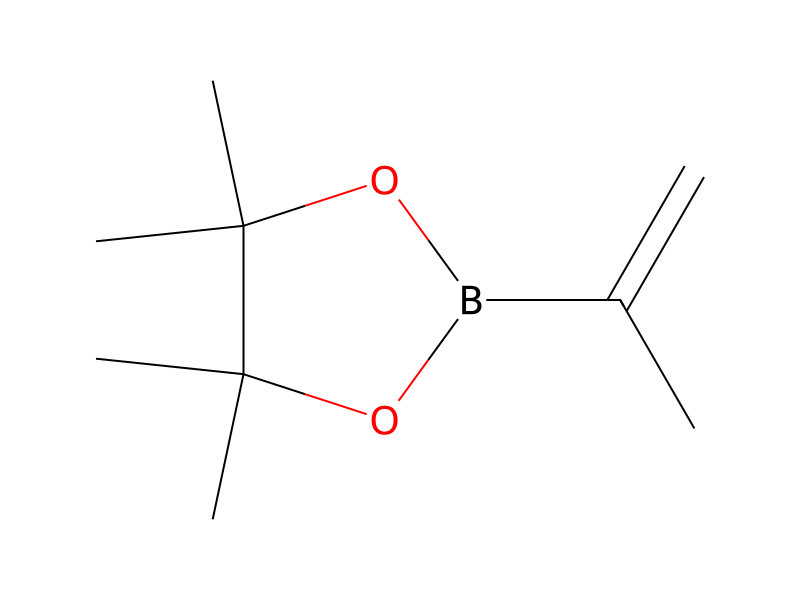
HCID 240BenzaldehydeHCID 62657Potassium Phosphate, TribasicHCID 109974264,4,5,5-Tetramethyl-2-(prop-1-en-2-yl)-1,3,2-dioxaborolaneHCID 150187032,4-Dibromodibenzo[b,d]furan-3-amine

Product 1

HCID 584008402,4-Bis(isopropenyl)dibenzo[b,d]furan-3-amineYield 59%

Reagents, catalysts & solvents 4

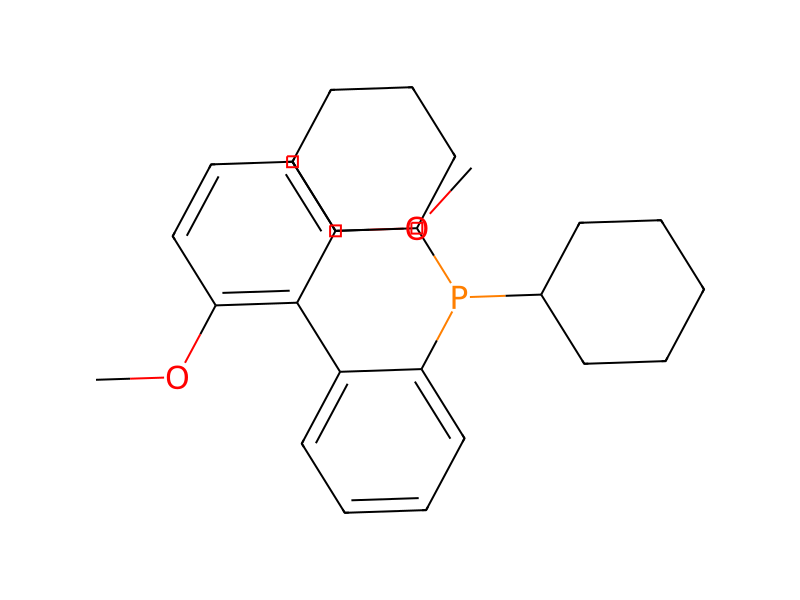
HCID 9811564Bis(dibenzylideneacetone)palladiumCatalystHCID 112698722-Dicyclohexylphosphino-2',6'-dimethoxybiphenylCatalystHCID 962WaterSolventHCID 1140TolueneSolvent

Procedure

A mixture of 2,4-dibromodibenzo[b,d]furan-3-amine (14.5 g, 42.5 mmol), benzaldehyde (4.96 g, 46.8 mmol), 4,4,5,5-tetramethyl-2-(prop-1-en-2-yl)-1,3,2-dioxaborolane (21.44 g, 128 mmol), and potassium phosphate (45.1 g, 213 mmol) in 250 mL of toluene and 25 mL of H2O was bubbled with N2 for 20 minutes. Dicyclohexyl(2′,6′-dimethoxybiphenyl-2-yl)phosphine (0.698 g, 1.701 mmol) and Pd2(dba)3 (0.389 g, 0.425 mmol) were then added, and the mixture was heated to reflux under N2 for 14 h. GC-MS indicated the reaction was done. After cooled to room temperature, the toluene layer was decanted. The aqueous layer was washed with toluene, and the organic layers were combined. 60 mL of concentrated HCl was added. The mixture was stirred at room temperature for 1 h. The precipitated was collected by filtration. The solid was dissolved in dichloromethane and neutralized with NaOH and dried over magnesium sulfate. After solvent evaporation, the residue was purified by column chromatography using 5-10% of ethyl acetate/hexanes as solvent. 6.6 g (59% yield) of product was obtained after purification.

Workup

  1. customwas bubbled with N2 for 20 minutes
  2. temperaturethe mixture was heated
  3. temperatureto reflux under N2 for 14 h
  4. customthe toluene layer was decanted
  5. washThe aqueous layer was washed with toluene
  6. addition60 mL of concentrated HCl was added
  7. filtrationThe precipitated was collected by filtration
  8. dissolutionThe solid was dissolved in dichloromethane and neutralized with NaOH
  9. dry with materialdried over magnesium sulfate
  10. customAfter solvent evaporation
  11. customthe residue was purified by column chromatography

Sources & evidence

ORD record
ord-fae4621b61af45f899872d0867a31cb2
Source dataset
uspto-grants-2015_10
DOI
10.6084/m9.figshare.5104873.v1
Patent number
US09156870B2

Reaction notes

On this pageParticipantsProcedureWorkupSources & evidenceReaction notes