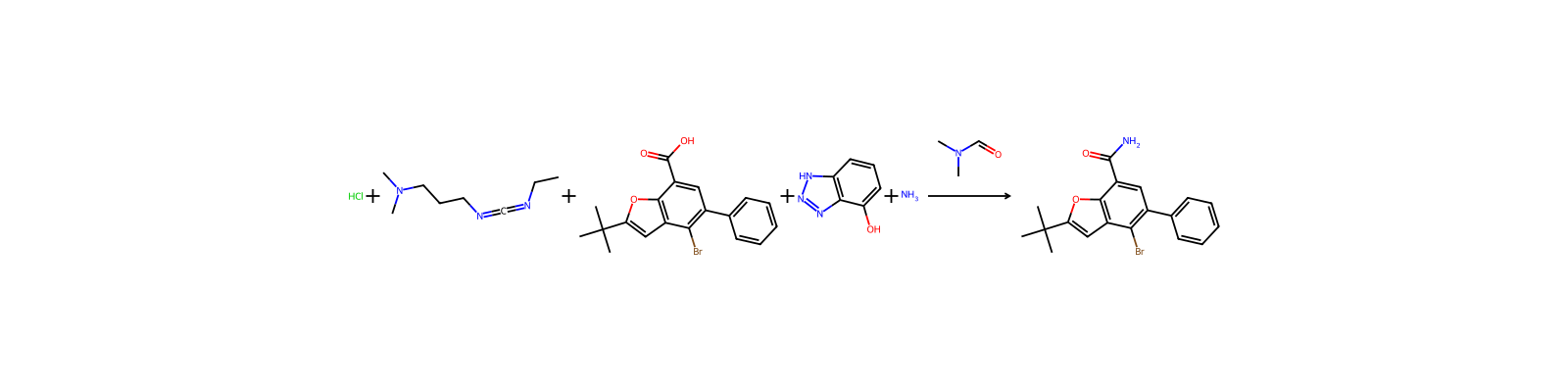
1-Ethyl-3-[3-(dimethylamino)propyl]carbodiimide hydrochloride (1.61 g, 8.42 mmol) was added to an N,N-dimethylformamide (80 ml) solution of 4-bromo-2-tert-butyl-5-phenyl-1-benzofuran-7-carboxylic acid (I-256) (2.62 g, 7.02 mmol) and hydroxybenzotriazole (1.14 g, 8.42 mmol), followed by stirring at room temperature for 1 hour. The reaction liquid was cooled at 0° C., then aqueous 28% ammonia (1.42 ml, 21.1 mmol) was put into it, followed by further stirring at room temperature for 1 hour. The reaction liquid was concentrated under reduced pressure, then saturated sodium bicarbonate water (200 ml) was added, the product was extracted with ethyl acetate (200 ml×2). The organic layer was washed with saturated brine (50 ml), then dried over anhydrous magnesium sulfate, concentrated under reduced pressure, and the residue was purified by silica gel column chromatography (n-hexane/ethyl acetate=3:2) to obtain the entitled compound (2.59 g, 99%) as a yellow white solid.