Reaction equation

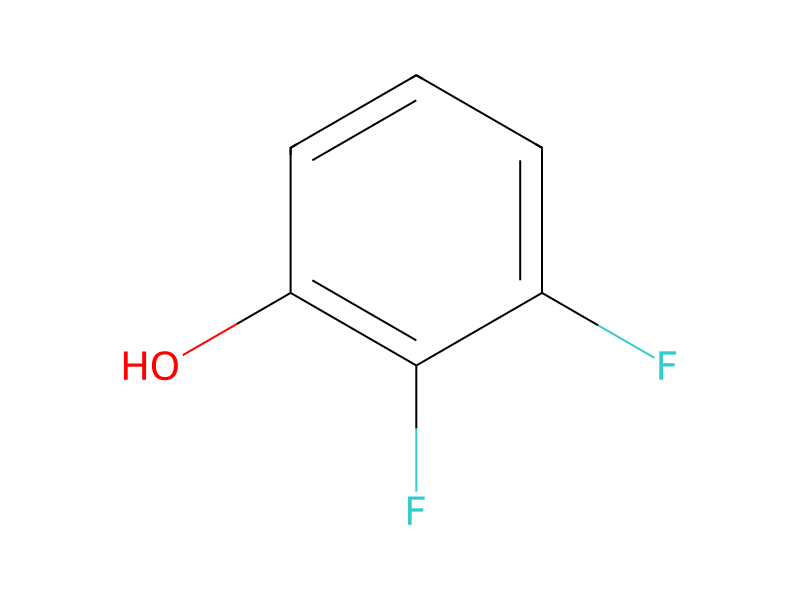
Cl[C:2]1[CH:7]=[C:6]([O:8][CH2:9][C:10]#[C:11][CH3:12])[N:5]=[CH:4][N:3]=1.C(=O)([O-])[O-].[K+].[K+].[F:19][C:20]1[C:25]([F:26])=[CH:24][CH:23]=[CH:22][C:21]=1[OH:27].[Cl-].[NH4+]>CN(C)C=O>[CH2:9]([O:8][C:6]1[CH:7]=[C:2]([O:27][C:21]2[CH:22]=[CH:23][CH:24]=[C:25]([F:26])[C:20]=2[F:19])[N:3]=[CH:4][N:5]=1)[C:10]#[C:11][CH3:12]Participants
6





Conditions
- Temperature
- 60 °C
Procedure
To 2 ml of N,N-dimethylformamide were added 0.2 g of 4-chloro-6-(2-butynyloxy)pyrimidine, 0.23 g of potassium carbonate, and 0.17 g of 2,3-difluorophenol, followed by stirring at 60° C. for 7 hours. The reaction mixture was then left for cooling to room temperature and poured into a saturated aqueous ammonium chloride solution, which was extracted three times with chloroform. The chloroform layers were combined, washed with diluted hydrochloric acid and then with water, and dried over anhydrous magnesium sulfate and then concentrated. The residue was subjected to silica gel column chromatography to give 0.17 g of 4-(2-butynyloxy)-6-(2,3-difluorophenoxy)pyrimidine (the present compound (39)).
Workup
- waitThe reaction mixture was then left
- temperaturefor cooling to room temperature
- extractionwas extracted three times with chloroform
- washwashed with diluted hydrochloric acid
- dry with materialwith water, and dried over anhydrous magnesium sulfate
- concentrationconcentrated
Sources & evidence
- ORD record
- ord-de704a130de44c2e86846c8caf34db25
- Source dataset
- uspto-grants-2005_01
- Patent number
- US06838463B2
Linked notes
Loading…