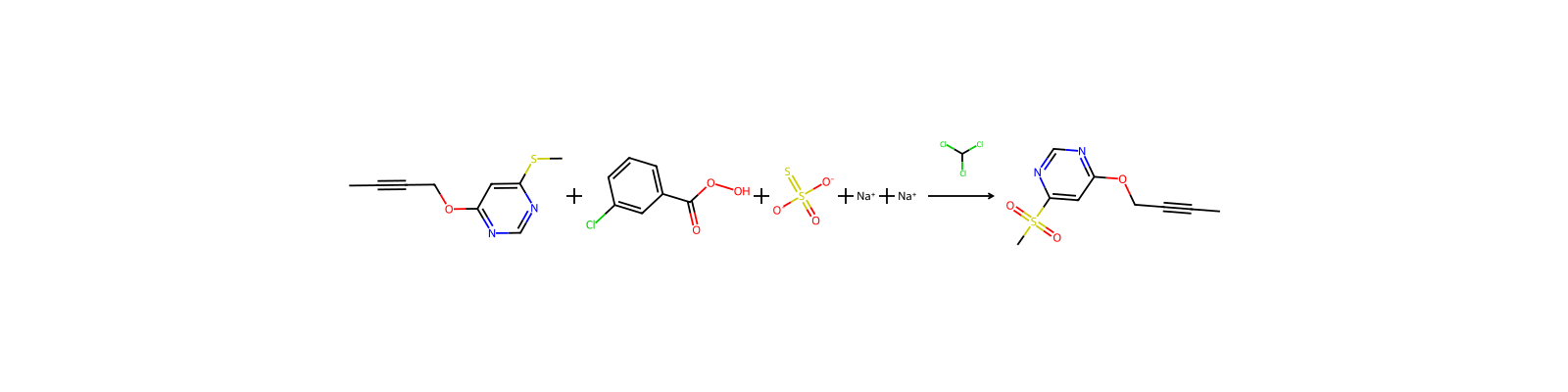
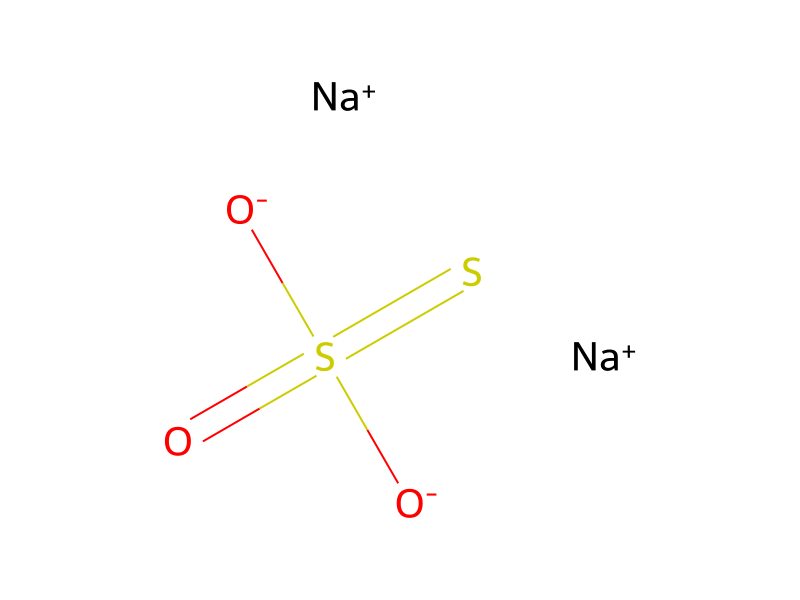
[CH2:1]([O:5][C:6]1[CH:11]=[C:10](SC)[N:9]=[CH:8][N:7]=1)[C:2]#[C:3][CH3:4].Cl[C:15]1C=CC=C(C(OO)=O)C=1.[S:25]([O-:29])([O-])(=[O:27])=S.[Na+].[Na+]>C(Cl)(Cl)Cl>[CH2:1]([O:5][C:6]1[CH:11]=[C:10]([S:25]([CH3:15])(=[O:29])=[O:27])[N:9]=[CH:8][N:7]=1)[C:2]#[C:3][CH3:4]To 14 ml of chloroform were added 4-(2-butynyloxy)-6-methylthiopyrimidine and 3.5 g of m-chloroperbenzoic acid (>65%), followed by stirring at 0° C. for 10 hours. The reaction mixture was then poured into a saturated aqueous sodium thiosulfate solution and extracted three times with chloroform. The chloroform layers were combined, washed with water, dried over anhydrous magnesium sulfate, and then concentrated. The residue was subjected to silica gel column chromatography to give 1.4 g of 4-(2-butynyloxy)-6-methanesulfonylpyrimidine.