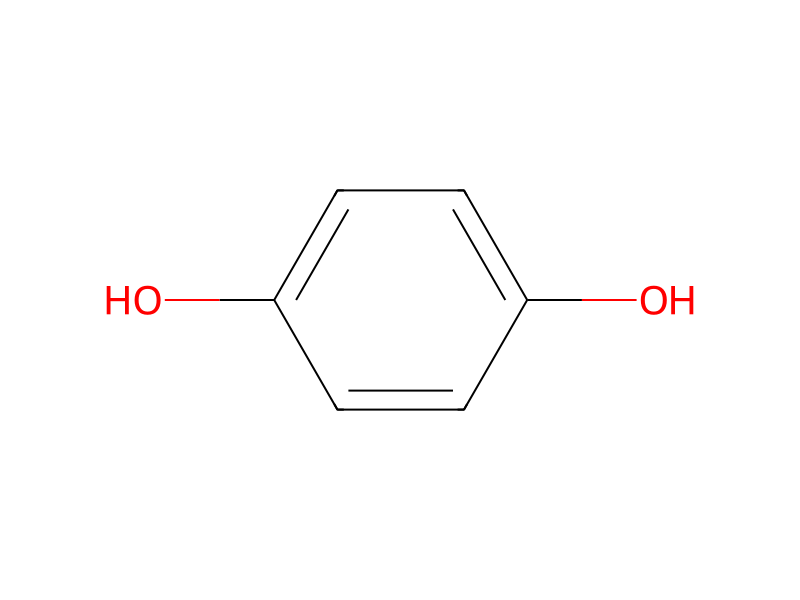
[C:1]1([CH:8]=[CH:7][C:5]([OH:6])=[CH:4][CH:3]=1)[OH:2].[OH-].[K+].F[C:12]1[C:17]([F:18])=[CH:16][C:15]([C:19]([F:22])([F:21])[F:20])=[CH:14][N:13]=1.Cl>CS(C)=O>[F:18][C:17]1[C:12]([O:2][C:1]2[CH:8]=[CH:7][C:5]([OH:6])=[CH:4][CH:3]=2)=[N:13][CH:14]=[C:15]([C:19]([F:21])([F:20])[F:22])[CH:16]=1A mixture of 16.5 g (0.15 mol) of hydroquinone, 19.1 g (0.3 mol) of potassium hydroxide (88%) in 600 ml of dimethylsulfoxide is stirred at room temperature under a nitrogen atmosphere until everything is dissolved. A solution of 13.7 g (0.075 mol) of 2,3-difluoro-5-trifluoromethyl-pyridine in 25 ml of dimethylsulfoxide is added dropwise at a temperature of 15°-20°. The reaction mixture is then stirred at room temperature for 24 hours. Then it is poured into ice/water and the mixture is acidified with hydrochloric acid, extracted with methylene chloride, washed with water, dried over magnesium sulfate, filtered and evaporated to dryness. The residue crystallizes in hexane/ethyl acetate to yield 14.5 g (71%) of white crystals, melting at 97°.