HomeMCPWorkbenchSkills
HomeWorkbenchNotificationsMe
llms.txt · MCP GuidePrivacy Policy · Terms of Service · Supportv1.8.0
  1. Home
  2. /Reaction

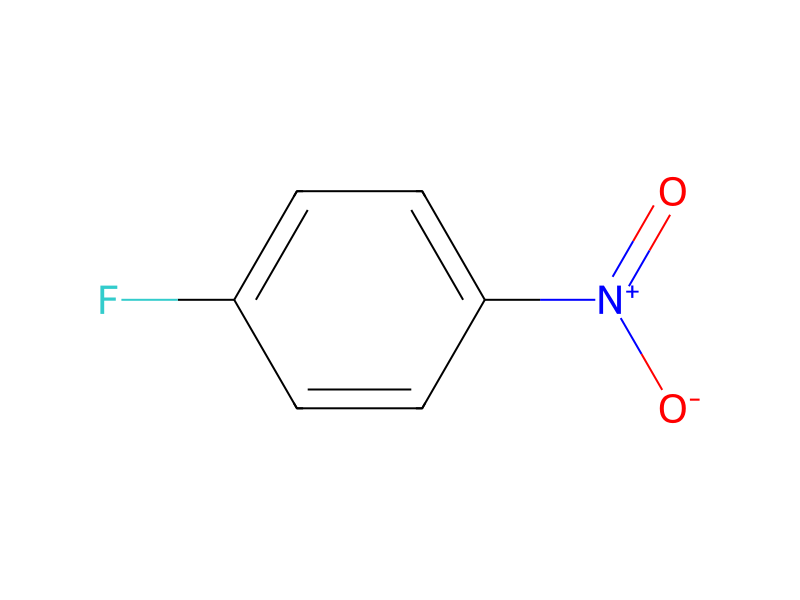
p-Fluoronitrobenzene → 4-(4-Nitrophenoxy)pyridine

HRID 1770840
Notes
Print preview

Reaction equation

HRID 1770840 reaction equation
[OH:1][C:2]1[CH:7]=[CH:6][N:5]=[CH:4][CH:3]=1.F[C:9]1[CH:14]=[CH:13][C:12]([N+:15]([O-:17])=[O:16])=[CH:11][CH:10]=1.C([O-])([O-])=O.[K+].[K+]>CN(C=O)C.O>[N:5]1[CH:6]=[CH:7][C:2]([O:1][C:9]2[CH:14]=[CH:13][C:12]([N+:15]([O-:17])=[O:16])=[CH:11][CH:10]=2)=[CH:3][CH:4]=1
ParticipantsProcedureWorkupSources & evidenceReaction notes

Participants

6

Reactant 3

HCID 9590p-FluoronitrobenzeneHCID 11430Potassium CarbonateHCID 178418642HCID 178418642, compound

Product 1

HCID 445585384-(4-Nitrophenoxy)pyridineYield 90%

Reagents, catalysts & solvents 2

HCID 962WaterSolventHCID 6228
Dimethylformamide
Solvent

Procedure

To a solution of 4-hydroxypyridine (4.42 g, 45.8 mmol) and 1-fluoro-4-nitrobenzene (4.89 mL, 45.8 mmol) in anhydrous DMF (50 mL) was added anhydrous K2CO3 (13.0 g, 91.6 mmol) in one portion. The mixture was heated at the reflux temperature with stirring for 24 h, cooled to room temperature and poured in water (300 mL). The solid that separated was filtered, washed with water and dried well under high vacuum to yield 8.9 g (90%) of desired product, 4-(4-pyridinyloxy)-1-nitrobenzene. 1H NMR (CDCl3, 300 MHz): δ 8.36 (d, 2H, J=9.0 Hz), 8.11 (d, 2H, J=8.1 Hz), 7.83 (d, 2H, J=9.0 Hz), 6.27 (d, 2H, J=7.8 Hz); LCMS (m/z): 217 (MH+).

Workup

  1. temperatureThe mixture was heated at the reflux temperature
  2. customThe solid that separated
  3. filtrationwas filtered
  4. washwashed with water
  5. customdried well under high vacuum

Sources & evidence

ORD record
ord-0c9ef0b02dd648e5a21f8959dcc412fa
Source dataset
uspto-grants-2016_02
DOI
10.6084/m9.figshare.5104873.v1
Patent number
US09248190B2

Reaction notes

Loading…

On this pageParticipantsProcedureWorkupSources & evidenceReaction notes