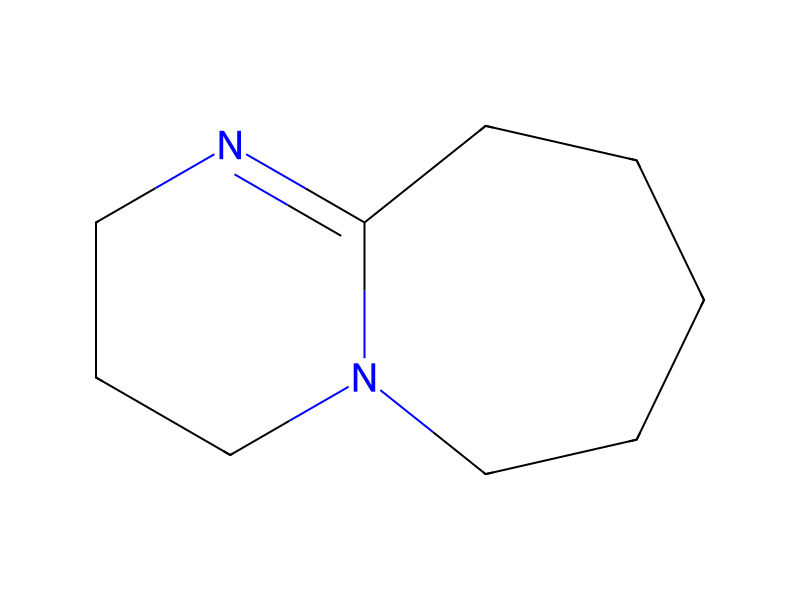
[CH3:1][C:2]1[C:6]([C:7]2[CH:8]=[C:9](I)[C:10]3[NH:14][C:13](=[O:15])[NH:12][C:11]=3[CH:16]=2)=[C:5]([CH3:18])[O:4][N:3]=1.[F:19][C:20]1[CH:25]=[CH:24][C:23]([C:26](B(O)O)=[CH2:27])=[CH:22][CH:21]=1.N12CCCN=C1CCCCC2.O>CN1CCCC1=O>[CH3:1][C:2]1[C:6]([C:7]2[CH:8]=[C:9]([C:26]([C:23]3[CH:24]=[CH:25][C:20]([F:19])=[CH:21][CH:22]=3)=[CH2:27])[C:10]3[NH:14][C:13](=[O:15])[NH:12][C:11]=3[CH:16]=2)=[C:5]([CH3:18])[O:4][N:3]=16-(3,5-Dimethylisoxazol-4-yl)-4-iodo-1H-benzo[d]imidazol-2(3H)-one (100 mg, 0.28 mmol), 1-(4-Fluorophenyl)vinylboronic acid, pinacol ester (209.59 mg, 0.84 mmol), PEPPSI″-IPr catalyst (19.19 mg, 0.03 mmol), 1,8-Diazabicyclo[5.4.0]undec-7-ene solution (0.25 ml, 1.69 mmol) were mixed in 1-Methyl-2-pyrrolidinone (6 ml) and Water (3 ml) in sealed in a microwave vial and heated to 110° C. for 30 minutes in a microwave reactor. The reaction mixture was then cooled and partitioned between water and ethyl acetate. The organic layer was washed with water then brine and dried over sodium sulfate. Purification on silica gel (Hexane/EtOAc) followed by preparative HPLC afforded 6-(3,5-dimethylisoxazol-4-yl)-4-(1-(4-fluorophenyl)vinyl)-1H-benzo[d]imidazol-2(3H)-one.