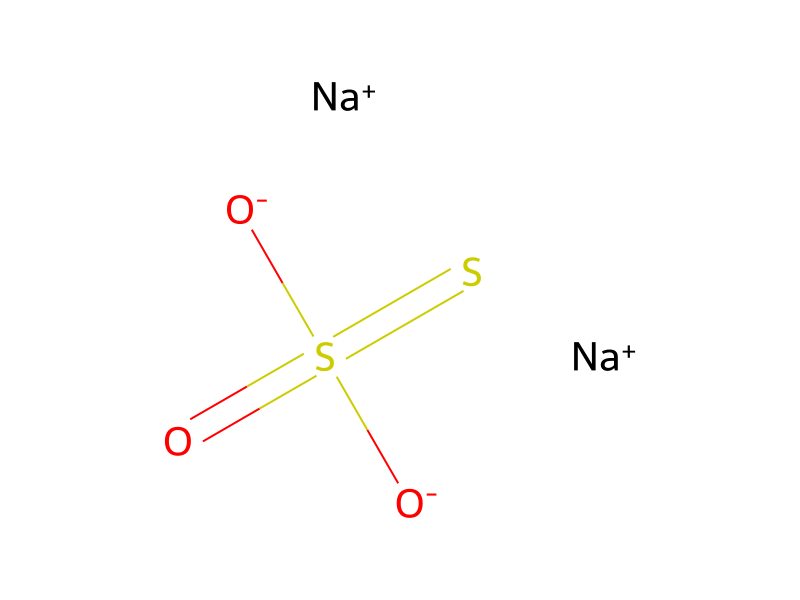
Cl[C:2]1C=CC=C(C(OO)=O)[CH:3]=1.C(S[C:15]1[CH:20]=[CH:19][CH:18]=[CH:17][C:16]=1[C:21]1[CH:22]=[CH:23][C:24]2[N:25]([CH:27]=[C:28]([C:30]([F:33])([F:32])[F:31])[N:29]=2)[CH:26]=1)C.[S:34]([O-:38])([O-])(=[O:36])=S.[Na+].[Na+]>C(Cl)(Cl)Cl>[CH2:2]([S:34]([C:15]1[CH:20]=[CH:19][CH:18]=[CH:17][C:16]=1[C:21]1[CH:22]=[CH:23][C:24]2[N:25]([CH:27]=[C:28]([C:30]([F:33])([F:32])[F:31])[N:29]=2)[CH:26]=1)(=[O:38])=[O:36])[CH3:3]220 mg of 3-chloroperbenzoic acid (purity of 65% or more) was added to a mixture of 134 mg of 6-(2-ethylsulfanylphenyl)-2-trifluoromethylimidazo[1,2-a]pyridine and 4 ml of chloroform, under ice cooling, and the mixture was stirred at room temperature for 4 hours. A 10% aqueous sodium thiosulfate solution was added to the reaction mixture, and the mixture was extracted with chloroform. The organic layer was washed with a saturated aqueous sodium bicarbonate solution and dried over anhydrous magnesium sulfate, and then concentrated under reduced pressure. 93 mg of 6-(2-ethylsulfonylphenyl)-2-trifluoromethylimidazo[1,2-a]pyridine (Compound of Present Invention 27) was obtained.
Loading…