Reaction equation

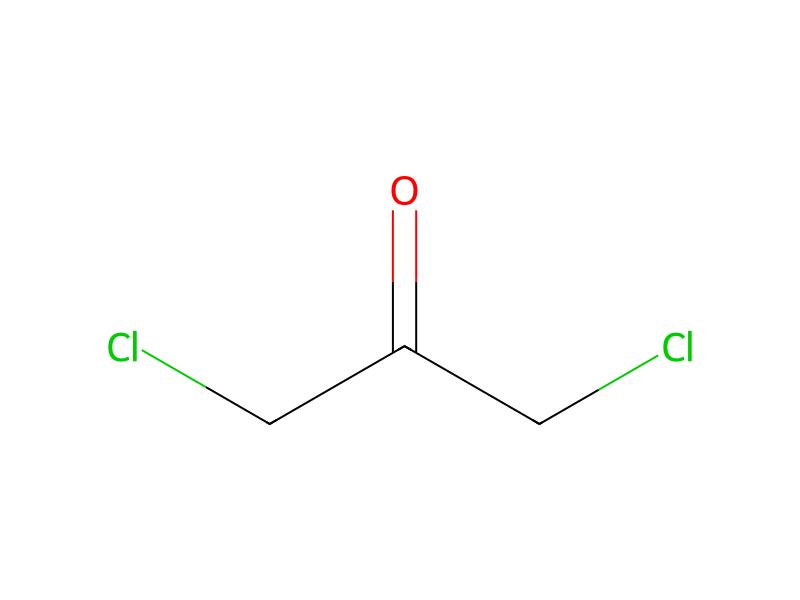
OC[C:3]([CH3:7])([CH2:5][OH:6])[CH3:4].[Cl:8][CH2:9][C:10]([CH2:12][Cl:13])=[O:11].C1C=CC=CC=1.C(=O)(O)[O-].[Na+]>C1(C)C=CC(S(O)(=O)=O)=CC=1.O>[Cl:8][CH2:9][C:10]1([CH2:12][Cl:13])[O:6][CH2:5][C:3]([CH3:4])([CH3:7])[O:11]1Participants
7






Procedure
This compound was synthesized by substantially following the procedure of the above-mentioned article by Isaka, Ejiri, and Nakamura. 69 grams of neopentyl glycol, 76 grams of 1,3-dichloroacetone, 50 ml of benzene, and 2.3 g of p-toluenesulfonic acid were refluxed through a Dean-Stark water separator for 8 hours whereon the reaction was diluted with hexanes and neutralized with aqueous sodium bicarbonate. The organic layer was dried over anhydrous magnesium sulfate and concentrated in vacuo yielding 41.2 g of 2,2-bis-chloromethyl-5,5-dimethyl-1,3-dioxolane, a pale yellow liquid.
Workup
- customThis compound was synthesized
- dry with materialThe organic layer was dried over anhydrous magnesium sulfate
- concentrationconcentrated in vacuo
Sources & evidence
- ORD record
- ord-bd67b92e946446cd96d7efddfc3592d5
- Source dataset
- uspto-grants-2010_06
- Patent number
- US07741245B2
Linked notes
Loading…