HomeMCPWorkbenchSkills
HomeWorkbenchNotificationsMe
llms.txt · MCP GuidePrivacy Policy · Terms of Service · Supportv1.8.3
  1. Home
  2. /Reaction

Hydrochloric Acid → 3-Chloro-5-hydroxy-2-(4-octyloxyphenyl)pyridine

HRID 1780062
Print

Reaction equation

HRID 1780062 reaction equation
[Li]CCCC.Br[C:7]1[CH:8]=[C:9]([Cl:28])[C:10]([C:13]2[CH:18]=[CH:17][C:16]([O:19][CH2:20][CH2:21][CH2:22][CH2:23][CH2:24][CH2:25][CH2:26][CH3:27])=[CH:15][CH:14]=2)=[N:11][CH:12]=1.B(OC)(OC)[O:30]C.Cl>CCCCCC.O1CCCC1>[Cl:28][C:9]1[C:10]([C:13]2[CH:18]=[CH:17][C:16]([O:19][CH2:20][CH2:21][CH2:22][CH2:23][CH2:24][CH2:25][CH2:26][CH3:27])=[CH:15][CH:14]=2)=[N:11][CH:12]=[C:7]([OH:30])[CH:8]=1
ParticipantsConditionsProcedureWorkupSources & evidenceReaction notes

Participants

7

Reactant 4

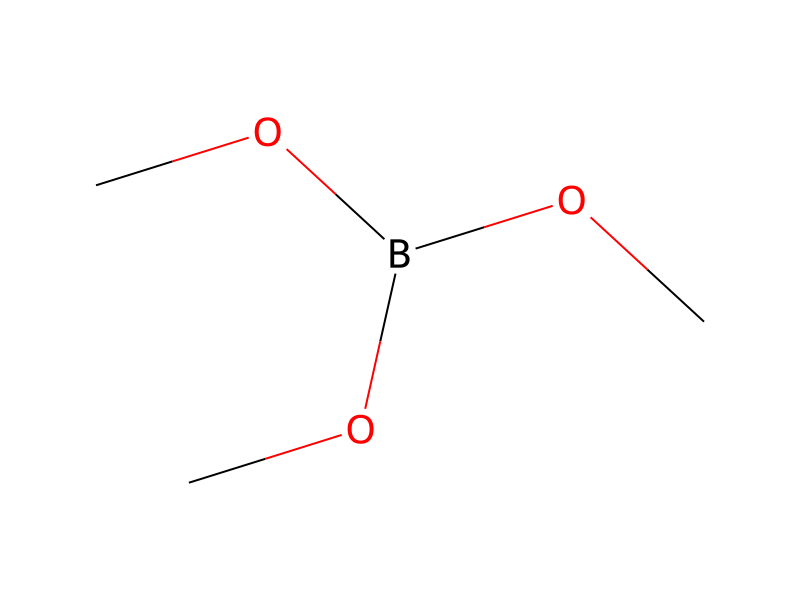
HCID 313Hydrochloric AcidHCID 8470Trimethyl borateHCID 190500045-Bromo-3-chloro-2-(4-octyloxyphenyl)pyridineHCID 178418339Butyllithium

Product 1

HCID 190499953-Chloro-5-hydroxy-2-(4-octyloxyphenyl)pyridineYield 58.2%

Reagents, catalysts & solvents 2

HCID 8028
Tetrahydrofuran
Solvent
HCID 8058HexaneSolvent

Conditions

Temperature
0 °C

Procedure

18.9 ml (30.30 mmol) of 1.6M n-BuLi solution in n-hexane are added dropwise at 0° C. to 4.50 g (12.10 mmol) of 5-bromo-3-chloro-2-(4-octyloxyphenyl)pyridine and 2.7 ml (24.20 mmol) of trimethyl borate in 70 ml of tetrahydrofuran, and the mixture is stirred at 0° C. for 0.5 hour. The mixture is subsequently acidified by means of dilute hydrochloric acid and partitioned between aqueous sodium chloride solution and ether, the organic phase is washed with sodium chloride solution, dried over sodium sulfate and filtered, and the filtrate is evaporated. The dry residue is dissolved in 100 ml of tetrahydrofuran and refluxed for 2 hours with 5 ml of 35% strength hydrogen peroxide. After the mixture has been cooled to 0° C., 6.3 g of Na2SO3 in 45 ml of water are added dropwise, and the mixture is stirred at room temperature for a quarter of an hour. The mixture is subsequently partitioned between ether and aqueous sodium chloride solution, the organic phase is washed with sodium chloride solution, dried over sodium sulfate and filtered, and the filtrate is evaporated to dryness. Chromatographic purification (silica gel, dichloromethane:ethyl acetate=4:1) gives 2.35 g of 3-chloro-5-hydroxy-2-(4-octyloxyphenyl)pyridine. ##STR18## m.p.: 128°-129.5° C.


Workup

  1. custompartitioned between aqueous sodium chloride solution and ether
  2. washthe organic phase is washed with sodium chloride solution
  3. dry with materialdried over sodium sulfate
  4. filtrationfiltered
  5. customthe filtrate is evaporated
  6. dissolutionThe dry residue is dissolved in 100 ml of tetrahydrofuran
  7. temperaturerefluxed for 2 hours with 5 ml of 35% strength hydrogen peroxide
  8. temperatureAfter the mixture has been cooled to 0° C.
  9. addition6.3 g of Na2SO3 in 45 ml of water are added dropwise
  10. stirringthe mixture is stirred at room temperature for a quarter of an hour
  11. customThe mixture is subsequently partitioned between ether and aqueous sodium chloride solution
  12. washthe organic phase is washed with sodium chloride solution
  13. dry with materialdried over sodium sulfate
  14. filtrationfiltered
  15. customthe filtrate is evaporated to dryness
  16. customChromatographic purification (silica gel, dichloromethane:ethyl acetate=4:1)

Sources & evidence

ORD record
ord-e379f09c06304326a705e3784a5d915d
Source dataset
uspto-grants-1997_05
DOI
10.6084/m9.figshare.5104873.v1
Patent number
US05629428

Reaction notes

On this pageParticipantsConditionsProcedureWorkupSources & evidenceReaction notes