HomeMCPWorkbenchSkills
HomeWorkbenchNotificationsMe
llms.txt · MCP GuidePrivacy Policy · Terms of Service · Supportv1.8.3
  1. Home
  2. /Reaction

Hydrochloric Acid → 6-Amino-3,4-dihydro-1'-[2-(benzofurazan-5-yl)ethyl]-spiro[(2H)-1-benzopyran-2,4'-piperidine]-4-one

HRID 1781423
Print

Reaction equation

HRID 1781423 reaction equation
[N:1]1[O:5][N:4]=[C:3]2[CH:6]=[C:7]([CH2:10][CH2:11][N:12]3[CH2:17][CH2:16][C:15](=[O:18])[CH2:14][CH2:13]3)[CH:8]=[CH:9][C:2]=12.[C:19]([C:22]1[CH:23]=[C:24]([NH:29]C(=O)C)[CH:25]=[CH:26][C:27]=1O)(=[O:21])[CH3:20].N1CCCC1.Cl>CO.C(O)C>[NH2:29][C:24]1[CH:25]=[CH:26][C:27]2[O:18][C:15]3([CH2:16][CH2:17][N:12]([CH2:11][CH2:10][C:7]4[CH:8]=[CH:9][C:2]5[C:3]([CH:6]=4)=[N:4][O:5][N:1]=5)[CH2:13][CH2:14]3)[CH2:20][C:19](=[O:21])[C:22]=2[CH:23]=1
ParticipantsProcedureWorkupSources & evidenceReaction notes

Participants

7

Reactant 4

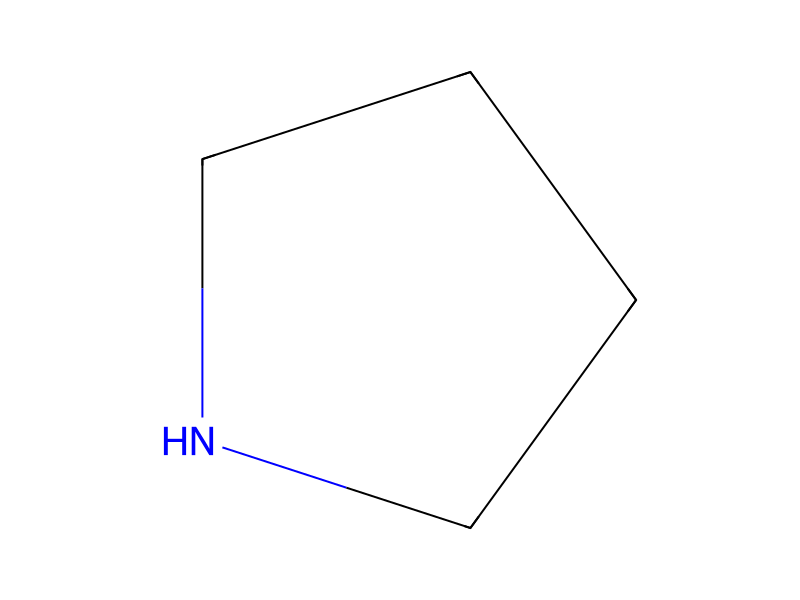
HCID 313Hydrochloric AcidHCID 31268PyrrolidineHCID 81720N-(3-Acetyl-4-hydroxyphenyl)acetamideHCID 190452521-[2-(Benzofurazan-5-yl)ethyl]-4-piperidinone

Product 1

HCID 190452936-Amino-3,4-dihydro-1'-[2-(benzofurazan-5-yl)ethyl]-spiro[(2H)-1-benzopyran-2,4'-piperidine]-4-oneYield 77.3%

Reagents, catalysts & solvents

2
HCID 702EthanolSolventHCID 887MethanolSolvent

Procedure

1-[2-(Benzofurazan-5-yl)ethyl]-4-piperidinone (0.98 g, 4 mmol), N-(3-acetyl-4-hydroxyphenyl)acetamide (0.77 g, 4 mmol) and pyrrolidine (0.33 ml, 0.28 g, 4 mmol) in methanol (20 ml) were heated under reflux for 3 hours, cooled and the solvent was evaporated under reduced pressure. Water (50 ml) and aqueous sodium hydroxide (20%, 10 ml) were added and the mixture was extracted with ethyl acetate (3×50 ml). The combined organic fractions were dried (Na2SO4) and evaporated under reduced pressure to give a yellow solid. Ethanol (40 ml) and aqueous HCl (6N, 40 ml) were added and the mixture was heated under reflux for 2 hours. The mixture was cooled and the ethanol was evaporated under reduced pressure. Water (40 ml) was added and the mixture was washed with ethyl acetate (50 ml). Aqueous sodium hydroxide (20%, 60 ml) was added slowly, with stirring and cooling, and the mixture was extracted with dichloromethane (3×100 ml). The combined organic fractions were dried (Na2SO4) and evaporated under reduced pressure. The residue was triturated with ethyl acetate-hexane (1:1, 20 ml) and the solid was collected and dried in vacuo to give a yellow solid (1.17 g, 77%). A sample was recrystallized from chloroform-hexane to give the pyranone as a yellow solid, m.p. 191°-193° C.


Workup

  1. temperatureunder reflux for 3 hours
  2. temperaturecooled
  3. customthe solvent was evaporated under reduced pressure
  4. additionWater (50 ml) and aqueous sodium hydroxide (20%, 10 ml) were added
  5. extractionthe mixture was extracted with ethyl acetate (3×50 ml)
  6. dry with materialThe combined organic fractions were dried (Na2SO4)
  7. customevaporated under reduced pressure
  8. customto give a yellow solid
  9. temperaturethe mixture was heated
  10. temperatureunder reflux for 2 hours
  11. temperatureThe mixture was cooled
  12. customthe ethanol was evaporated under reduced pressure
  13. additionWater (40 ml) was added
  14. washthe mixture was washed with ethyl acetate (50 ml)
  15. additionAqueous sodium hydroxide (20%, 60 ml) was added slowly
  16. temperaturecooling
  17. extractionthe mixture was extracted with dichloromethane (3×100 ml)
  18. dry with materialThe combined organic fractions were dried (Na2SO4)
  19. customevaporated under reduced pressure
  20. customThe residue was triturated with ethyl acetate-hexane (1:1, 20 ml)
  21. customthe solid was collected
  22. customdried in vacuo

Sources & evidence

ORD record
ord-7bc9e01d3d47429ba198b10e7b7a6e3c
Source dataset
uspto-grants-1997_05
DOI
10.6084/m9.figshare.5104873.v1
Patent number
US05633247

Reaction notes

On this pageParticipantsProcedureWorkupSources & evidenceReaction notes