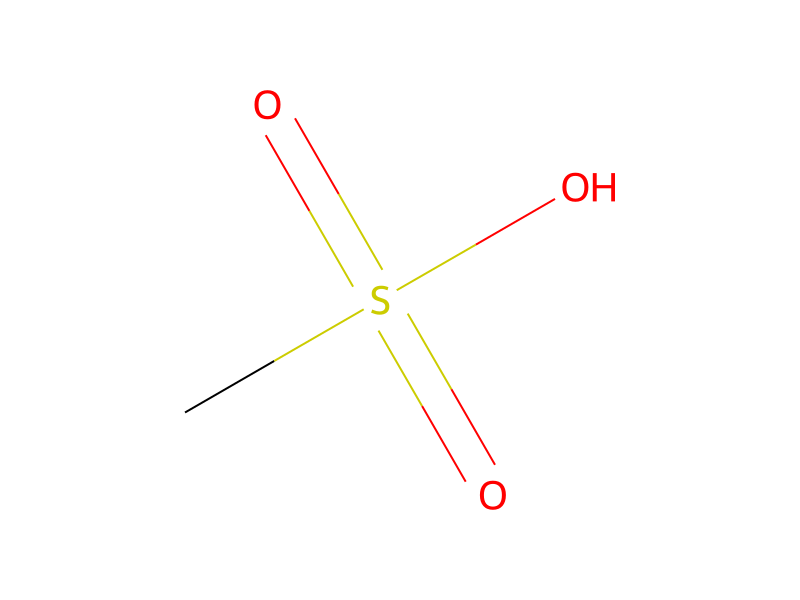
[CH2:1]([NH:10][C:11](=[O:17])[CH2:12][CH2:13][C:14]([OH:16])=[O:15])[CH2:2][CH2:3][CH2:4][CH2:5][CH2:6][CH2:7][CH2:8][CH3:9].[OH:18]O>CS(O)(=O)=O>[CH2:1]([NH:10][C:11](=[O:17])[CH2:12][CH2:13][C:14]([O:16][OH:18])=[O:15])[CH2:2][CH2:3][CH2:4][CH2:5][CH2:6][CH2:7][CH2:8][CH3:9]A 500 mL beaker was charged with 50.0 g (0.205 mol) of 4-nonylamino-4-oxobutyric acid and 100 mL of 98% methanesulfonic acid. The resulting solution was cooled in an ice bath and, with stirring, 38.8 g of 90% hydrogen peroxide (34.9 g, 1.03 mol of hydrogen peroxide) was added dropwise at a rate such that the temperature of the reaction mixture did not rise above 20° C. (required 10 minutes). The solution was stirred at room temperature for 1.5 hours, cooled to -15° C., and poured over ice. The precipitated solid was collected by filtration and washed with water. The filter cake was reslurried with water, filtered, and washed with water. The wet filter cake was dissolved in 250 mL of 60° C. ethyl acetate, the water layer removed with a pipet, and the ethyl acetate solution cooled to -15° C. The crystals which formed were collected by filtration, washed with -15° C. ethyl acetate, and air dried to yield 47.5 g of 4-nonylamino-4-oxoperoxybutyric acid (1), mp 85°-91° C., analysis for available oxygen (AvO)=5.61%. Theoretical yield=53.2 g having an AvO of 6.17%.