HomeMCPWorkbenchSkills
HomeWorkbenchNotificationsMe
llms.txt · MCP GuidePrivacy Policy · Terms of Service · Supportv1.8.3
  1. Home
  2. /Reaction

Hydrochloric Acid → 5-(2,4-Dichlorophenyl)-4-isoxazolylmethanol

HRID 1794312
Print

Reaction equation

HRID 1794312 reaction equation
[Cl:1][C:2]1[CH:7]=[C:6]([Cl:8])[CH:5]=[CH:4][C:3]=1[C:9]1[O:13][N:12]=[CH:11][C:10]=1[C:14](OCC)=[O:15].[H-].C([Al+]CC(C)C)C(C)C.Cl>O1CCCC1>[Cl:1][C:2]1[CH:7]=[C:6]([Cl:8])[CH:5]=[CH:4][C:3]=1[C:9]1[O:13][N:12]=[CH:11][C:10]=1[CH2:14][OH:15]
ParticipantsProcedureWorkupSources & evidenceReaction notes

Participants

5

Reactant 3

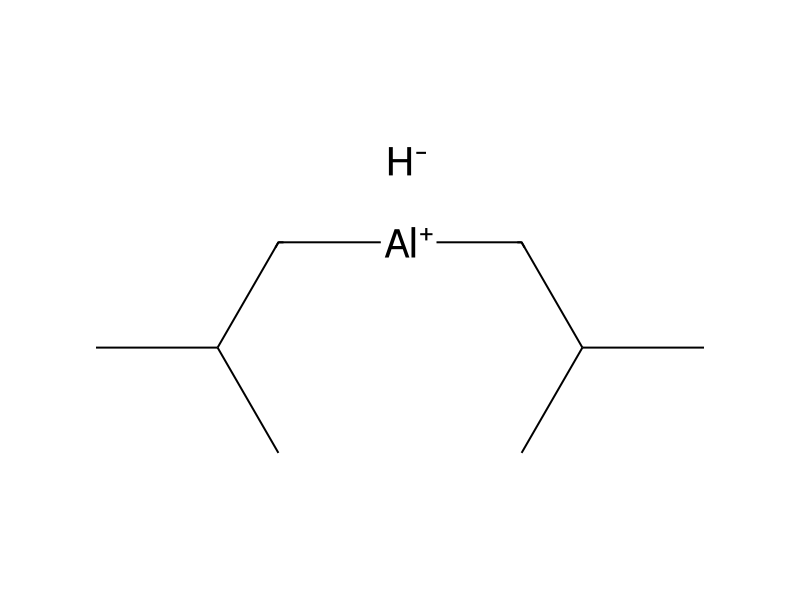
HCID 313Hydrochloric AcidHCID 21225700DiisobutylaluminumhydrideHCID 22221209Ethyl-5-(2',4'-dichlorophenyl)-4-isoxazolecarboxylate

Product 1

HCID 222210875-(2,4-Dichlorophenyl)-4-isoxazolylmethanolYield 96.6%

Reagents, catalysts & solvents 1

HCID 8028TetrahydrofuranSolvent

Procedure

To a solution of ethyl 5-(2,4-dichlorophenyl)isoxazole-4-carboxylate (8.60 g) in tetrahydrofuran (50 ml) was gently added diisobutylaluminum hydride (1.0 M tetrahydrofuran solution, 65 ml) at 0° C. and the mixture was stirred at room temperature for 30 min. The reaction mixture was poured into dilute hydrochloric acid, and the mixture was extracted with ethyl acetate. The ethyl acetate layer was washed with saturated brine, dried (MgSO4) and concentrated to give 5-(2,4-dichlorophenyl)-4-isoxazolylmethanol (7.09 g, yield 96%) as colorless crystals. The crystals were recrystallized from ethyl acetate-hexane. melting point: 76–77° C.

Workup

  1. customat 0° C.
  2. extractionthe mixture was extracted with ethyl acetate
  3. washThe ethyl acetate layer was washed with saturated brine
  4. dry with materialdried (MgSO4)
  5. concentrationconcentrated

Sources & evidence

ORD record
ord-8c4e180ff7fe46f0a3205fb7bdf42d2a
Source dataset
uspto-grants-2006_04
DOI
10.6084/m9.figshare.5104873.v1
Patent number
US07022725B2

Reaction notes

On this pageParticipantsProcedureWorkupSources & evidenceReaction notes