HomeMCPWorkbenchSkills
HomeWorkbenchNotificationsMe
llms.txt · MCP GuidePrivacy Policy · Terms of Service · Supportv1.8.3
  1. Home
  2. /Reaction

Water → 8-Bromo-6-methoxy-4-(2-trimethylsilanyl-ethoxymethoxy)-quinoline-2-carboxylic acid (4-morpholinyl-phenyl)-amide

HRID 1795339
Print

Reaction equation

HRID 1795339 reaction equation
[N:1]1([C:7]2[CH:12]=[CH:11][C:10]([NH:13][C:14]([C:16]3[NH:17][C:18]4[C:23]([C:24](=[O:26])[CH:25]=3)=[CH:22][C:21]([O:27][CH3:28])=[CH:20][C:19]=4[Br:29])=[O:15])=[CH:9][CH:8]=2)[CH2:6][CH2:5][O:4][CH2:3][CH2:2]1.[H-].[Na+].[CH3:32][Si:33]([CH3:40])([CH3:39])[CH2:34][CH2:35][O:36][CH2:37]Cl.O>CN1CCCC1=O.CO>[N:1]1([C:7]2[CH:12]=[CH:11][C:10]([NH:13][C:14]([C:16]3[CH:25]=[C:24]([O:26][CH2:37][O:36][CH2:35][CH2:34][Si:33]([CH3:40])([CH3:39])[CH3:32])[C:23]4[C:18](=[C:19]([Br:29])[CH:20]=[C:21]([O:27][CH3:28])[CH:22]=4)[N:17]=3)=[O:15])=[CH:9][CH:8]=2)[CH2:6][CH2:5][O:4][CH2:3][CH2:2]1
ParticipantsProcedureWorkupSources & evidenceReaction notes

Participants

7

Reactant 4

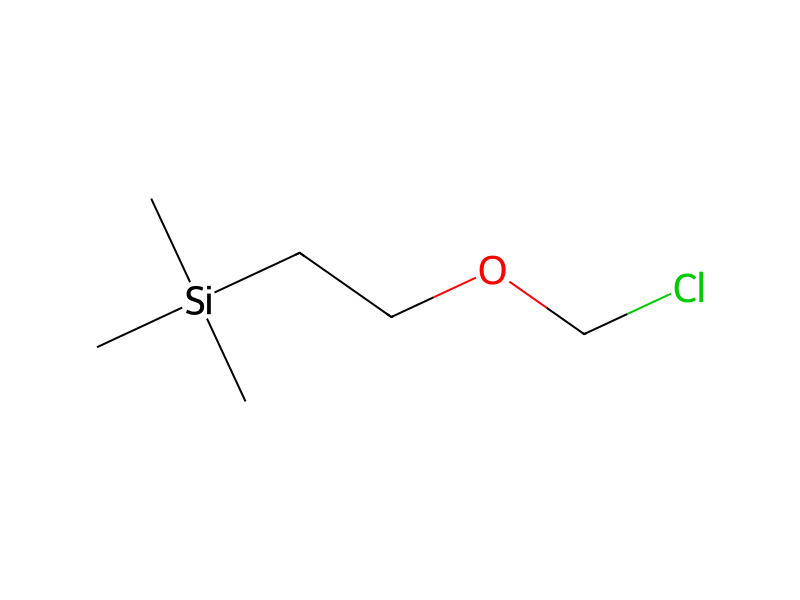
HCID 962WaterHCID 24758Sodium hydrideHCID 27242712-Chloromethyl 2-(trimethylsilyl)ethyl etherHCID 86587185HCID 86587185, compound

Product 1

HCID 865871868-Bromo-6-methoxy-4-(2-trimethylsilanyl-ethoxymethoxy)-quinoline-2-carboxylic acid (4-morpholinyl-phenyl)-amideYield 80.3%

Reagents, catalysts & solvents

2
HCID 887MethanolSolventHCID 13387N-methyl-2-pyrrolidoneSolvent

Procedure

A yellow suspension of 8-bromo-6-methoxy-4-oxo-1,4-dihydro-quinoline-2-carboxylic acid (4-morpholin-4-yl-phenyl)-amide (Reference Example 27b) (3.092 g, 6.75 mmol) in 40 mL N-methylpyrrolidinone was treated with sodium hydride (60% dispersion in oil, 0.410 g, 10.24 mmol). Gas evolution and warming were observed and the suspension became light brown and almost clear. The reaction was stirred for 10 minutes at room temperature under nitrogen. Addition of the 2-(trimethylsilyl)ethoxymethyl chloride (1.6 mL, 9.1 mmol) resulted in a slightly cloudy, lighter brown solution. After 4.5 hours at room temperature, the reaction mixture was poured into 300 mL water, stirred for 15 minutes and then stored at 0° C. overnight. The solids were isolated by filtration, suspended in methanol, filtered again, and dried under high vacuum to afford the product as a yellow solid (3.190 g, 80%). 1H NMR (300 MHz, DMSO, d6) δ 10.18 (s, 1 H, C(O)NH), 7.95 (d, 1 H, Jm=2.4 Hz, ArH7), 7.83 (s, 1 H, ArH3), 7.69 (d, 2 H, Jo=9.0 Hz, ArH2′ & H6′), 7.51 (d, 1 H, Jm=2.7 Hz, ArH5), 7.00 (d, 2 H, Jo=9.0 Hz, ArH3′ & H5′), 5.69 (s, 2 H, OCH2O), 3.95 (s, 3 H, OCH3), 3.85 (t, 2 H, J=8.0 Hz, OCH2CH2Si), 3.75 (t, 4 H, J=4.7 Hz, OCH2CH2N), 3.10 (t, 4 H, J=4.7 Hz, OCH2CH2N), 0.94 (t, 2 H, J=8.0 Hz, OCH2CH2Si), −0.04 (s, 9 H, Si(C H3)3; Mass Spec.: calc. for [C27H34BrN3O5Si+H]+ Theor. m/z=588, 590; Obs.=588, 590.

Workup

  1. temperatureGas evolution and warming
  2. customresulted in a slightly cloudy, lighter brown solution
  3. waitAfter 4.5 hours at room temperature
  4. stirringstirred for 15 minutes
  5. waitstored at 0° C. overnight
  6. customThe solids were isolated by filtration
  7. filtrationfiltered again
  8. customdried under high vacuum

Sources & evidence

ORD record
ord-650fab4a4311411b9ca9bb54d1df699b
Source dataset
uspto-grants-2006_04
DOI
10.6084/m9.figshare.5104873.v1
Patent number
US07026314B2

Reaction notes

On this pageParticipantsProcedureWorkupSources & evidenceReaction notes