HomeMCPWorkbenchSkills
HomeWorkbenchNotificationsMe
llms.txt · MCP GuidePrivacy Policy · Terms of Service · Supportv1.8.0
  1. Home
  2. /Reaction

Hydrochloric Acid → HCID 68603754, compound

HRID 1803002
Notes
Print preview

Reaction equation

HRID 1803002 reaction equation
[Cl-].[Li+].Br[C:4]1[CH:9]=[C:8]([O:10][CH2:11][CH2:12][CH2:13][CH2:14][CH2:15][CH3:16])[C:7]([I:17])=[CH:6][C:5]=1[O:18][CH2:19][CH2:20][CH2:21][CH2:22][CH2:23][CH3:24].C1C2C(=CC=CC=2)C=CC=1.C([Mg]Cl)(C)C.BrC1SC(Br)=CC=1CCCCCC.Cl>C1COCC1>[CH2:19]([O:18][C:5]1[CH:6]=[C:7]([I:17])[C:8]([O:10][CH2:11][CH2:12][CH2:13][CH2:14][CH2:15][CH3:16])=[CH:9][CH:4]=1)[CH2:20][CH2:21][CH2:22][CH2:23][CH3:24]
ParticipantsConditionsProcedureWorkupSources & evidenceReaction notes

Participants

8

Reactant 6

HCID 313Hydrochloric AcidHCID 931Naphthalene2×HCID 433294Lithium ChlorideHCID 3936632Thiophene, 2,5-dibromo-3-hexyl-2×HCID 686032211-Bromo-2,5-bis(hexyloxy)-4-iodobenzene2×HCID 178418918HCID 178418918, compound2×

Product 1

HCID 68603754HCID 68603754, compound

Reagents, catalysts & solvents 1

HCID 8028TetrahydrofuranSolvent6×

Conditions

Temperature
0 °C

Procedure

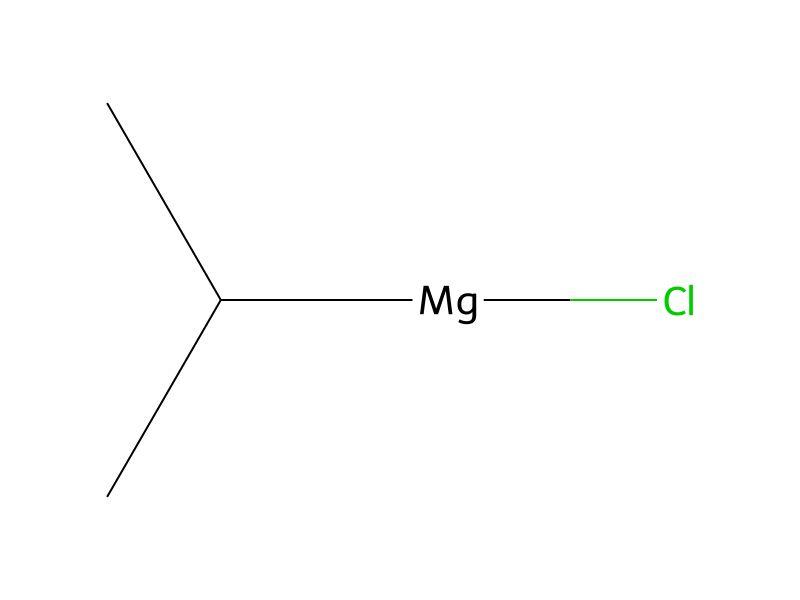
0.042 g (0.99 mmol) of anhydrous lithium chloride was put in a flask, and vacuum dried with heating the flask using a heat gun, followed by carrying out argon substitution and returning the temperature to room temperature. Thereto were added 0.483 g (1.00 mmol) of 1-bromo-2,5-dihexyloxy-4-iodobenzene and 0.0448 g (0.350 mmol) of naphthalene as an internal standard material, and the flask was again subjected to argon substitution. 5 mL of dried THF was added thereto, and 0.5 mL (1.0 mmol) of a solution of isopropylmagnesium chloride in THF (2.0 mol/l) was added, followed by stirring for 1 hour at 0° C. to Grignardize the 1-bromo-2,5-dihexyloxy-4-iodobenzene. Thereafter, 0.0105 g (0.0199 mmol, 2.0 mol %) of Ni(dppe)Cl2 suspended in 5 mL of THF was added, followed by stirring at room temperature for 30 minutes. In another egg-plant type flask were put 0.373 g (1.00 mmol) of 2,5-dibromo-3-hexylthiophene, 0.0329 g (0.257 mmol) of naphthalene, 5 mL of dried THF and 0.5 mL (1.0 mmol) of a solution of isopropylmagnesium chloride in THF (2.0 mol/l), and they were stirred at 0° C. for 1 hour to Grignardize 2,5-dibromo-3-hexylthiophene. A THF solution thereof was added to the reaction mixture, followed by stirring at room temperature for 10 minutes. After completion of the reaction, 5M HCl was added, followed by extraction with chloroform, and the organic layer was washed with water and then dried with anhydrous magnesium sulfate. The solvent was distilled off under reduced pressure to obtain a block copolymer (Mn=16200, Mw/Mn=1.27) represented by the following formula. A block copolymer having a narrow molecular weight distribution was obtained by first polymerizing the Grignardized 2,5-dihexyloxy-4-iodobenzene greater in parameter of aromatic ring charge (−0.104), and then copolymerizing 2,5-dibromo-3-hexylthiophene (−0.116).


Workup

  1. customvacuum dried
  2. temperaturewith heating the flask
  3. customto room temperature
  4. additionwas added
  5. stirringby stirring at room temperature for 30 minutes
  6. customIn another egg-plant type flask were put
  7. stirringby stirring at room temperature for 10 minutes
  8. additionwas added
  9. extractionfollowed by extraction with chloroform
  10. washthe organic layer was washed with water
  11. dry with materialdried with anhydrous magnesium sulfate
  12. distillationThe solvent was distilled off under reduced pressure
  13. customto obtain a block copolymer (Mn=16200, Mw/Mn=1.27)

Sources & evidence

ORD record
ord-1753165a767142f5bd619e2c703b42fa
Source dataset
uspto-grants-2013_01
DOI
10.6084/m9.figshare.5104873.v1
Patent number
US08349997B2

Reaction notes

Loading…

On this pageParticipantsConditionsProcedureWorkupSources & evidenceReaction notes