HomeMCPWorkbenchSkills
HomeWorkbenchNotificationsMe
llms.txt · MCP GuidePrivacy Policy · Terms of Service · Supportv1.8.0
  1. Home
  2. /Reaction

Dimethylformamide → (+/-)-cis-1-(Acetyloxy)-6-methoxy-3,3,14-trimethyl-7-oxo-2,3,7,14-tetrahydro-1h-benzo[b]chromeno[6,5-g][1,8]naphthyridin-2-yl [(tert-butoxycarbonyl)amino]acetate

HRID 18038
Notes
Print preview

Reaction equation

HRID 18038 reaction equation
C1(N=C=N[CH:10]2[CH2:15]CCCC2)CCCCC1.[OH:16][C@@H:17]1[C:34]2[C:33]3[N:32]([CH3:35])[C:31]4[N:30]=[C:29]5[CH:36]=[CH:37][CH:38]=[CH:39][C:28]5=[CH:27][C:26]=4[C:25](=[O:40])[C:24]=3[C:23]([O:41][CH3:42])=[CH:22][C:21]=2[O:20][C:19]([CH3:44])([CH3:43])[C@@H:18]1[OH:45].[C:46]([O:50][C:51]([NH:53][CH2:54][C:55]([OH:57])=O)=[O:52])([CH3:49])([CH3:48])[CH3:47].CN(C)C=[O:61]>>[C:46]([O:50][C:51]([NH:53][CH2:54][C:55]([O:45][C@@H:18]1[C@H:17]([O:16][C:15](=[O:61])[CH3:10])[C:34]2[C:33]3[N:32]([CH3:35])[C:31]4[N:30]=[C:29]5[CH:36]=[CH:37][CH:38]=[CH:39][C:28]5=[CH:27][C:26]=4[C:25](=[O:40])[C:24]=3[C:23]([O:41][CH3:42])=[CH:22][C:21]=2[O:20][C:19]1([CH3:43])[CH3:44])=[O:57])=[O:52])([CH3:47])([CH3:48])[CH3:49]
ParticipantsConditionsProcedureWorkupSources & evidenceReaction notes

Participants

5

Reactant 4

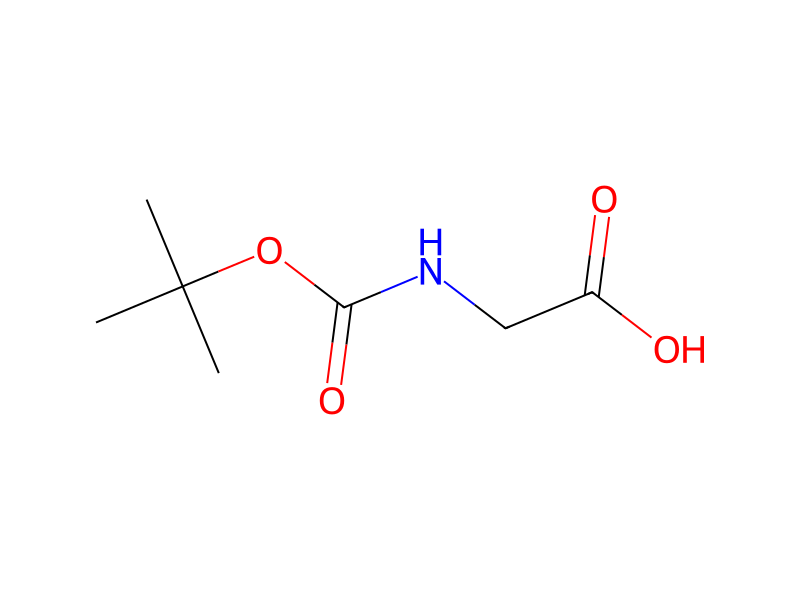
HCID 6228DimethylformamideHCID 10868DicyclohexylcarbodiimideHCID 78288N-(tert-butoxycarbonyl)glycineHCID 11327222(+/-)-cis-1,2-Dihydroxy-6-methoxy-3,3,14-trimethyl-1,2,3,14-tetrahydro-7h-benzo[b]chromeno[6,5-g][1,8]naphthyridin-7-one

Product 1

HCID 91322932
(+/-)-cis-1-(Acetyloxy)-6-methoxy-3,3,14-trimethyl-7-oxo-2,3,7,14-tetrahydro-1h-benzo[b]chromeno[6,5-g][1,8]naphthyridin-2-yl [(tert-butoxycarbonyl)amino]acetate

Conditions

Temperature
0 °C

Procedure

Slowly add 0.6 mmol of dicyclohexylcarbodiimide to a solution, at 0° C., of 0.5 mmol of the compound of Example 3 and 0.5 mmol of 2-[(tert-butoxycarbonyl)amino]acetic acid in 10 ml of dimethylformamide. The reaction mixture is maintained at 0° C. for 5 hours and then at ambient temperature for 16 hours. After filtration and evaporation under reduced pressure, the residue is dissolved in 2 ml of anhydrous pyridine, 2 ml of acetic anhydride are added, and stirring is carried out for 48 hours at ambient temperature in darkness. After concentration of the reaction mixture under reduced pressure, chromatography of the residue on silica gel (dichloromethane) allows the expected product to be isolated.


Workup

  1. customat 0° C.
  2. filtrationAfter filtration and evaporation under reduced pressure
  3. dissolutionthe residue is dissolved in 2 ml of anhydrous pyridine
  4. addition2 ml of acetic anhydride are added
  5. waitis carried out for 48 hours at ambient temperature in darkness
  6. customto be isolated

Sources & evidence

ORD record
ord-d281b54b4b4e46799a6826aa78101bc8
Source dataset
uspto-grants-2010_06
DOI
10.6084/m9.figshare.5104873.v1
Patent number
US07741325B2

Reaction notes

Loading…

On this pageParticipantsConditionsProcedureWorkupSources & evidenceReaction notes