HomeMCPWorkbenchSkills
HomeWorkbenchNotificationsMe
llms.txt · MCP GuidePrivacy Policy · Terms of Service · Supportv1.8.3
  1. Home
  2. /Reaction

Acetic Acid → 1-(4-Cyanobenzyl)azetidine-3-carboxylic acid

HRID 1804440
Print

Reaction equation

HRID 1804440 reaction equation
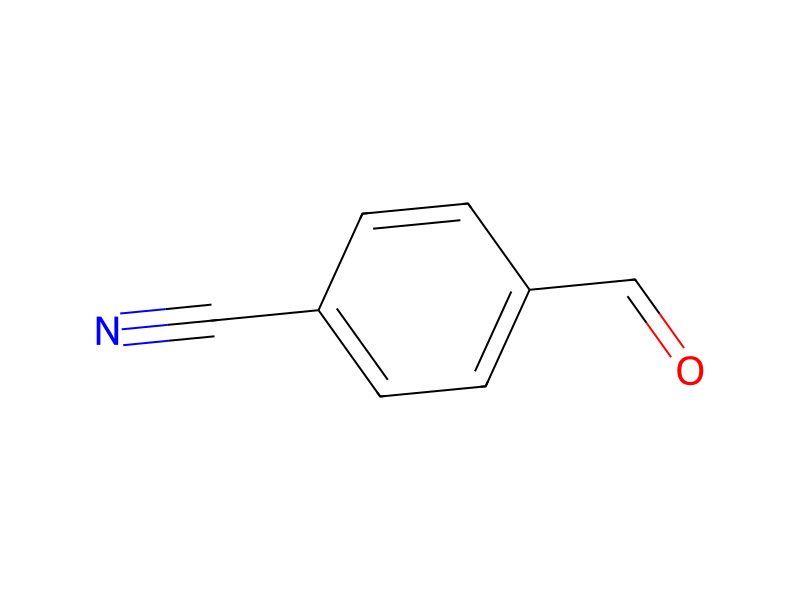
[CH:1]([C:3]1[CH:10]=[CH:9][C:6]([C:7]#[N:8])=[CH:5][CH:4]=1)=O.[NH:11]1[CH2:14][CH:13]([C:15]([OH:17])=[O:16])[CH2:12]1.C(O)(=O)C.C(O[BH-](OC(=O)C)OC(=O)C)(=O)C.[Na+]>ClCCl.CO>[C:7]([C:6]1[CH:9]=[CH:10][C:3]([CH2:1][N:11]2[CH2:14][CH:13]([C:15]([OH:17])=[O:16])[CH2:12]2)=[CH:4][CH:5]=1)#[N:8]
ParticipantsProcedureWorkupSources & evidenceReaction notes

Participants

7

Reactant 4

HCID 176Acetic AcidHCID 660424-CyanobenzaldehydeHCID 931923-azetidinecarboxylic AcidHCID 5049666Sodium triacetoxyborohydride

Product 1

HCID 585043491-(4-Cyanobenzyl)azetidine-3-carboxylic acidYield 75%

Reagents, catalysts & solvents 2

HCID 887
Methanol
Solvent
HCID 6344DichloromethaneSolvent

Procedure

A mixture of 4-formylbenzonitrile (2.88 g, 22.0 mmol), azetidine-3-carboxylic acid (2.02 g, 20 mmol), and acetic acid (1.15 mL, 20.0 mmol) in dichloromethane (20 mL) and methanol (80 mL) was stirred at room temperature for 1 h. Sodium triacetoxyborohydride (6.78 g, 32.0 mmol) was added and stirring was continued at room temperature for 18 hr. The volatiles were removed under reduced pressure, and the residue was partitioned between water (50 mL) and diethyl ether (50 mL). The aqueous layer was collected, washed with diethyl ether (50 mL), and concentrated. The residue was dissolved in water (20 mL) and loaded onto a 2.5×20 cm HP-20 column. Preparation of HP-20 Gel: approximately 400 ml of dry, unused MCI CHP-20 Gel (75-150 micron) was swelled in methanol for 24 hrs. The gel was filtered and rinsed with 1 liter of methanol. It was then transferred to a bottle for storage under methanol. Immediately before use, the desired amount of gel was rinsed thoroughly with 20 volumes of water]. The column was eluted with 240 mL of water and 400 mL of methanol. The product containing fractions were concentrated and co-evaporated from ethanol and ethyl acetate/heptane to afford 1-(4-cyanobenzyl)azetidine-3-carboxylic acid (3.25 g, 15.0 mmol, 75% yield) as a white solid. MS: (M+H)=217.18. 1H NMR (400 MHz, MeOD) δ ppm 3.39 (m, 1H), 4.08 (m, 4H), 4.32 (s, 2H), 7.63 (d, J=8.3 Hz, 2H), and 7.82 (d, J=8.3 Hz, 2H).


Workup

  1. stirringstirring
  2. waitwas continued at room temperature for 18 hr
  3. customThe volatiles were removed under reduced pressure
  4. customthe residue was partitioned between water (50 mL) and diethyl ether (50 mL)
  5. customThe aqueous layer was collected
  6. washwashed with diethyl ether (50 mL)
  7. concentrationconcentrated
  8. dissolutionThe residue was dissolved in water (20 mL)
  9. customPreparation of HP-20 Gel
  10. customapproximately 400 ml of dry
  11. waitunused MCI CHP-20 Gel (75-150 micron) was swelled in methanol for 24 hrs
  12. filtrationThe gel was filtered
  13. washrinsed with 1 liter of methanol
  14. washImmediately before use, the desired amount of gel was rinsed thoroughly with 20 volumes of water]
  15. washThe column was eluted with 240 mL of water and 400 mL of methanol
  16. additionThe product containing fractions
  17. concentrationwere concentrated

Sources & evidence

ORD record
ord-786705bee65c46d69a4ca7eb2db52714
Source dataset
uspto-grants-2013_01
DOI
10.6084/m9.figshare.5104873.v1
Patent number
US08354398B2

Reaction notes

On this pageParticipantsProcedureWorkupSources & evidenceReaction notes