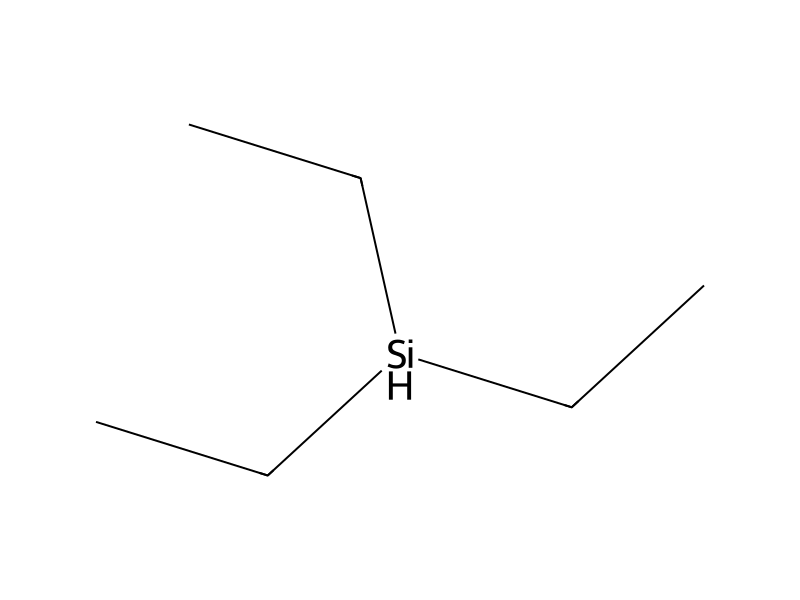
[Br:1][C:2]1[C:3]([CH3:20])=[C:4]([N:8]2[CH:17](O)[CH2:16][C:15]3[C:10](=[CH:11][CH:12]=[CH:13][CH:14]=3)[C:9]2=[O:19])[CH:5]=[CH:6][CH:7]=1.C([SiH](CC)CC)C.C(O)(C(F)(F)F)=O>C(Cl)Cl>[Br:1][C:2]1[C:3]([CH3:20])=[C:4]([N:8]2[CH:17]=[CH:16][C:15]3[C:10](=[CH:11][CH:12]=[CH:13][CH:14]=3)[C:9]2=[O:19])[CH:5]=[CH:6][CH:7]=1Step 3 A solution of crude 2-(3-bromo-2-methylphenyl)-3-hydroxy-3,4-dihydroisoquinolin-1(2H)-one (600 mg, 1.806 mmol) in DCM (30 mL) was treated with triethylsilane (15 mL, 94 mmol) and the resulting mixture was treated slowly with TFA (1.392 mL, 18.06 mmol). The mixture was stirred at rt for 2 h, then was concentrated and the residue was dissolved in DCM. The solution was washed with NaHCO3 (aq) and water, then was dried and concentrated. The residue was purified by column chromatography (eluting with a gradient from 80:20 to 60:40 hexane-EtOAc) to give 2-(3-bromo-2-methylphenyl)isoquinolin-1(2H)-one as a white solid (380 mg, 67%). Mass spectrum m/z 314, 316 (M+H)+.