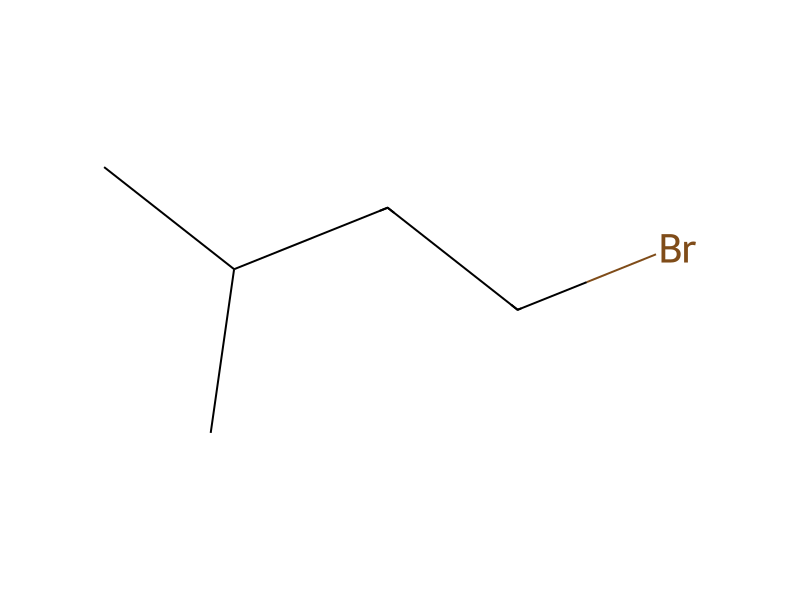
[Cl:1][C:2]1[CH:10]=[C:9]2[C:5]([C:6]([C:11](=[O:16])[C:12]([F:15])([F:14])[F:13])=[CH:7][NH:8]2)=[CH:4][CH:3]=1.C(=O)([O-])[O-].[K+].[K+].Br[CH2:24][CH2:25][CH:26]([CH3:28])[CH3:27]>CN(C)C=O>[Cl:1][C:2]1[CH:10]=[C:9]2[C:5]([C:6]([C:11](=[O:16])[C:12]([F:13])([F:14])[F:15])=[CH:7][N:8]2[CH2:24][CH2:25][CH:26]([CH3:28])[CH3:27])=[CH:4][CH:3]=1A mixture of 1-(6-chloro-1H-indol-3-yl)-2,2,2-trifluoro-ethanone (200 mg, 0.81 mmol) and potassium carbonate (214 mg, 2.02 mmol) in N,N-dimethylformamide (2 mL) was stirred at 25° C. for 30 min. This mixture was then treated with 1-bromo-3-methylbutane (0.15 mL, 1.21 mmol) and then heated at 60° C. for 5 h. At this time, the reaction was cooled to 25° C. and concentrated in vacuo. The residue was diluted with ethyl acetate (50 mL) and was washed with a saturated aqueous sodium bicarbonate solution (1×50 mL), water (2×50 mL), and a saturated aqueous sodium chloride solution (1×50 mL). The organic layer was dried over sodium sulfate, filtered, and concentrated in vacuo to afford 1-[6-chloro-1-(3-methyl-butyl)-1H-indol-3-yl]-2,2,2-trifluoro-ethanone (284.9 mg) as dark yellow solid which was used without further purification or characterization.