Reaction equation

[Br:1][C:2]1[CH:7]=[C:6]([CH3:8])[CH:5]=[C:4]([I:9])[C:3]=1[OH:10].[CH2:11](Br)[CH:12]=[CH:13][C:14]1[CH:19]=[CH:18][CH:17]=[CH:16][CH:15]=1.C(N(C(C)C)CC)(C)C>CN(C=O)C>[Br:1][C:2]1[CH:7]=[C:6]([CH3:8])[CH:5]=[C:4]([I:9])[C:3]=1[O:10][CH2:11][CH:12]=[CH:13][C:14]1[CH:19]=[CH:18][CH:17]=[CH:16][CH:15]=1Participants
5

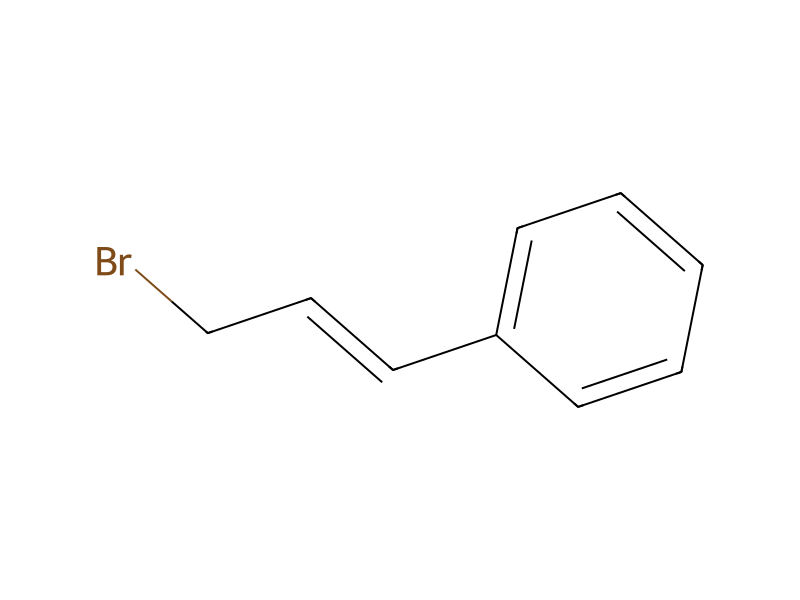



Conditions
- Temperature
- 60 °C
Procedure
2-Bromo-4-methyl-6-iodophenol (7.82 gm, 25 mmol) and cinnamyl bromide (4.93 g, 25 mmol) were added to DMF (20 ml). Diisopropylethylamine (5.3 ml, 30.4 mmol) was added and the mixture heated to 60° C. for 15 minutes and then allowed stir for 16 hours at room temperature. The DMF was removed under vacuum, and 1M HCl was added until the residue was acidic. The mixture was extracted with ethyl acetate, and the combined organic phase was dried over magnesium sulfate, filtered, and concentrated under reduced pressure to give 1-bromo-3-iodo-5-methyl-2-(3-phenylallyloxy)-benzene (10.86 g, 100% yield).
Workup
- customThe DMF was removed under vacuum, and 1M HCl
- additionwas added until the residue
- extractionThe mixture was extracted with ethyl acetate
- dry with materialthe combined organic phase was dried over magnesium sulfate
- filtrationfiltered
- concentrationconcentrated under reduced pressure
Sources & evidence
- ORD record
- ord-c9bb23be4d014b61b2df65620189bc16
- Source dataset
- uspto-grants-2010_06
- Patent number
- US07741326B2
Linked notes
Loading…