Reaction equation

[CH:1]1[C:10]2[C:5](=[CH:6][CH:7]=[CH:8][CH:9]=2)[CH:4]=[CH:3][N+:2]=1[O-].P(Cl)(Cl)([Cl:14])=O>C(Cl)(Cl)Cl>[Cl:14][C:1]1[C:10]2[C:5](=[CH:6][CH:7]=[CH:8][CH:9]=2)[CH:4]=[CH:3][N:2]=1Participants
Reactant 2

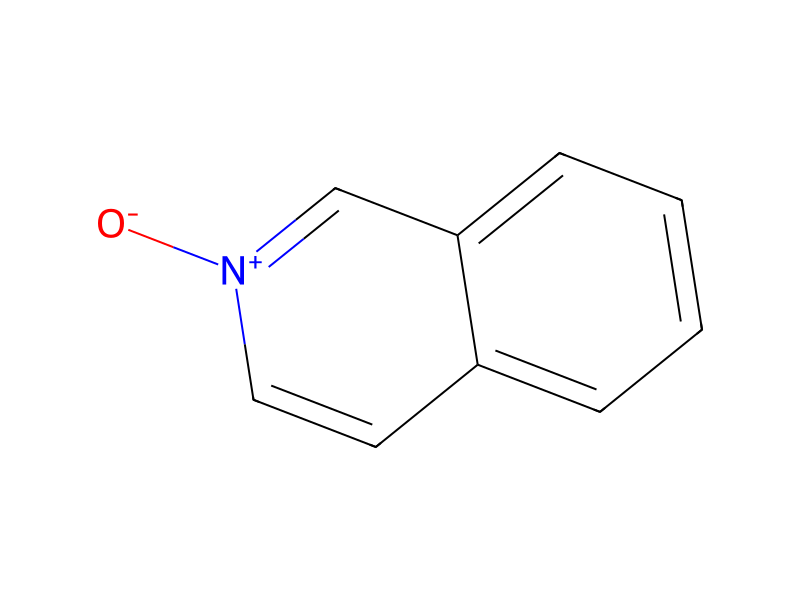
Product 1

Reagents, catalysts & solvents 1

Conditions
- Temperature
- 17.5 °C
Procedure
69.3 g of isoquinoline N-oxide (448 mmol) manufactured by Tokyo Chemical Industry Co., Ltd. and 225 ml of chloroform were introduced into a 1 L-three-neck flask dissolved therein. Then, 219.6 g (1,432 mmol) of phosphorous oxychloride was slowly added dropwise therein and stirred under ice-cooling while maintaining the inner temperature at 15 to 20° C. Thereafter, the mixture was heated and stirred under reflux for 3 hours. The reaction product was left to cool to room temperature, and the resulting product was poured into ice water. The mixture was extracted with ethyl acetate, and the organic layer was washed with water until it was neutral. The solvent was then dried under reduced pressure. The residue was purified using silica gel column chromatography (eluent: chloroform/hexane: 5/1) to yield 35.5 g of 1-chloroisoquinoline white crystals (44.9% yield).
Workup
- dissolutiondissolved
- temperaturecooling
- temperatureThereafter, the mixture was heated
- stirringstirred
- temperatureunder reflux for 3 hours
- waitThe reaction product was left
- temperatureto cool to room temperature
- extractionThe mixture was extracted with ethyl acetate
- washthe organic layer was washed with water until it
- customThe solvent was then dried under reduced pressure
- customThe residue was purified
Sources & evidence
- ORD record
- ord-a7fe4827bf244e3ca18040ef561605d5
- Source dataset
- uspto-grants-2009_10
- Patent number
- US07604683B2
Linked notes
Loading…