HomeMCPSkillsWorkbenchOpenChem
HomeWorkbenchNotificationsMe
llms.txt · skill.md · MCP GuidePrivacy Policy · Terms of Service · Supportv1.8.5
  1. Home
  2. /Reaction

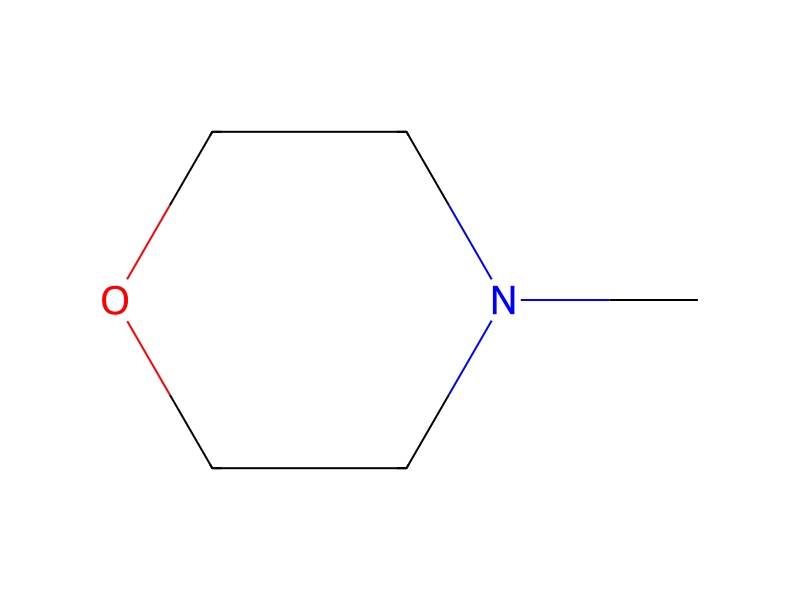
4-Methylmorpholine → ethyl 2-[3-(2-fluorophenyl)-N-methylprop-2-ynoylamino]acetate

HRID 1837943
Print

Reaction equation

[F:1][C:2]1[CH:7]=[CH:6][CH:5]=[CH:4][C:3]=1[C:8]#[C:9][C:10]([OH:12])=O.Cl.[CH2:14]([O:16][C:17](=[O:21])[CH2:18][NH:19][CH3:20])[CH3:15].CN1CCOCC1>C(Cl)Cl.CN(C1C=CN=CC=1)C>[F:1][C:2]1[CH:7]=[CH:6][CH:5]=[CH:4][C:3]=1[C:8]#[C:9][C:10]([N:19]([CH2:18][C:17]([O:16][CH2:14][CH3:15])=[O:21])[CH3:20])=[O:12]
ParticipantsProcedureWorkupSources & evidenceReaction notes

Participants

6

Reactant 3

HCID 79724-MethylmorpholineHCID 171173Ethyl N-methylaminoacetate hydrochlorideHCID 226776553-(2-Fluorophenyl)prop-2-ynoic acid

Product 1

HCID 22677637ethyl 2-[3-(2-fluorophenyl)-N-methylprop-2-ynoylamino]acetateYield 72%

Reagents, catalysts & solvents 2

HCID 142844-(Dimethylamino)pyridine
Catalyst
HCID 6344DichloromethaneSolvent

Procedure

To a 0° C. slurry of 3-(2-fluorophenyl)prop-2-ynoic acid (151 g, 0.92 mol) in CH2Cl2 (3L) was added DMAP (118 g, 0.96 mol, 1.05 equiv), followed by sarcosine ethyl ester hydrochloride (148 g, 0.96 mol, 1.05 equiv), and NMM (233 g, 2.3 mol, 2.5 equiv). The resulting clear solution was allowed to warm to room temperature and was maintained for 17 h. The reaction mixture was washed with a 2N HCl solution (4×500 mL). The aqueous layers were combined and the mixture was adjusted to pH 2 using conc. H2SO4, then back-extracted with CH2Cl2 (2×500 mL). The organic layers were combined, washed with a 10% H2SO4 solution (2×500 mL), dried (Na2SO4) and concentrated under reduced pressure to give ethyl 2-[3-(2-fluorophenyl)-N-methylprop-2-ynoylamino]acetate (174 g, 72%) as a brown oil: TLC (40% EtOAc/hex) Rf 0.61; 1H NMR (CDCl3; of rotomeric mixture) δ 1.27 (t, J=7.2 Hz, 3H), 3.07 (s, 1.4H, N—CH3), 3.36 (s, 1.6H, N—CH3), 4.17-4.27 (m, 3.2H), 4.41 (s, 0.8H, N—CH2), 7.06-7.17 (m, 2H), 7.37-7.58 (m, 2H); 13C NMR (CDCl3; of rotomeric mixture) δ 14.00, 14.03, 33.5, 37.2, 48.0, 52.5, 61.3, 61.5, 83.6, 84.3, 85.7 (d, JC−F=9.9 Hz, 1C), 108.9 (d, JC−F=15.5 Hz, 1C), 109.1, (d, JC−F=15.5 Hz, 1C), 115. (d, JC−F=10.4 Hz, 1C), 115.6 (d, JC−F=10.4 Hz, 1C), 124.2, 132.0 (d, JC−F=7.8 Hz, 1C), 132.1 (d, JC−F=7.8 Hz, 1C), 134.10, 134.15, 154.6, 163.3 (d, JC−F=254.4 Hz, 1C), 168.1, 168.5; HPLC ES-MS m/z (rel abundance) 264 (MH+, 75%).

Workup

  1. temperaturewas maintained for 17 h
  2. washThe reaction mixture was washed with a 2N HCl solution (4×500 mL)
  3. extractionback-extracted with CH2Cl2 (2×500 mL)
  4. washwashed with a 10% H2SO4 solution (2×500 mL)
  5. dry with materialdried (Na2SO4)
  6. concentrationconcentrated under reduced pressure

Sources & evidence

ORD record
ord-feb33abff1b04d99ad639a555f26e9a5
Source dataset
uspto-grants-2004_08
DOI
10.6084/m9.figshare.5104873.v1
Patent number
US06784167B2

Reaction notes

On this pageParticipantsProcedureWorkupSources & evidenceReaction notes

