HomeMCPSkillsWorkbenchOpenChem
HomeWorkbenchNotificationsMe
llms.txt · skill.md · MCP GuidePrivacy Policy · Terms of Service · Supportv1.8.5
  1. Home
  2. /Reaction

Propargyl alcohol → N-(4-Chlorobenzyl)-2-(hydroxymethyl)-8-(4-morpholinylmethyl)-6-oxo-6H-pyrrolo[3,2,1-ij]quinoline-5-carboxamide

HRID 1841529
Print

Reaction equation

[Cl:1][C:2]1[CH:30]=[CH:29][C:5]([CH2:6][NH:7][C:8]([C:10]2[CH:11]=[N:12][C:13]3[C:18]([C:19]=2[OH:20])=[CH:17][C:16]([CH2:21][N:22]2[CH2:27][CH2:26][O:25][CH2:24][CH2:23]2)=[CH:15][C:14]=3I)=[O:9])=[CH:4][CH:3]=1.[CH2:31]([OH:34])[C:32]#[CH:33]>C(NCC)C.C(Cl)Cl.Cl[Pd](Cl)([P](C1C=CC=CC=1)(C1C=CC=CC=1)C1C=CC=CC=1)[P](C1C=CC=CC=1)(C1C=CC=CC=1)C1C=CC=CC=1.[Cu]I>[Cl:1][C:2]1[CH:30]=[CH:29][C:5]([CH2:6][NH:7][C:8]([C:10]2[C:19](=[O:20])[C:18]3[C:13]4=[C:14]([CH:33]=[C:32]([CH2:31][OH:34])[N:12]4[CH:11]=2)[CH:15]=[C:16]([CH2:21][N:22]2[CH2:27][CH2:26][O:25][CH2:24][CH2:23]2)[CH:17]=3)=[O:9])=[CH:4][CH:3]=1
ParticipantsProcedureWorkupSources & evidenceReaction notes

Participants

7

Reactant 2

HCID 7859Propargyl alcoholHCID 178522928N-(4-chlorobenzyl)-4-hydroxy-8-iodo-6-(4-morpholinylmethyl)-3-quinolinecarboxamide

Product 1

HCID 491952N-(4-Chlorobenzyl)-2-(hydroxymethyl)-8-(4-morpholinylmethyl)-6-oxo-6H-pyrrolo[3,2,1-ij]quinoline-5-carboxamideYield 23%

Reagents, catalysts & solvents 4

HCID 24350Copper(1+) iodide; Copper(I) iodide; Cuprous iodide; Cuprous iodide (CuI)
Catalyst
HCID 178418476HCID 178418476, compoundCatalyst
HCID 6344DichloromethaneSolvent
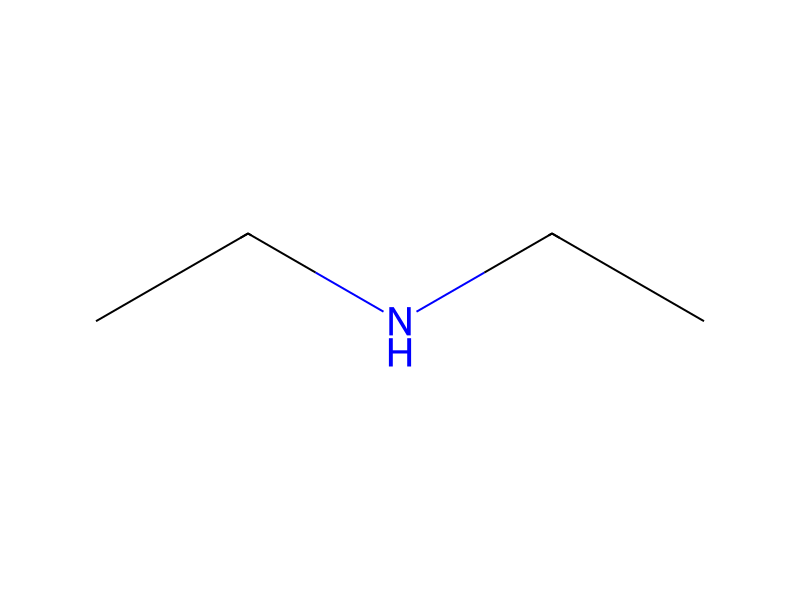
HCID 8021DiethylamineSolvent

Procedure

To a solution of N-(4-chlorobenzyl)-4-hydroxy-8-iodo-6-(4-morpholinylmethyl)-3-quinolinecarboxamide (0.15 g), PdCl2(PPh3)2 (0.0098 g) and CuI (0.0027 g) in diethylamine (5.2 mL) and CH2Cl2 (5 mL) is added propargyl alcohol (0.016 mL). The reaction is stirred at room temperature overnight, then concentrated. The crude residue is partitioned between CH2Cl2 and water. The aqueous layer is extracted with CH2Cl2 (3×). The combined organic layers are dried over Na2SO4 and condensed. The crude product is adsorbed onto silica and chromatographed (Biotage flash 40S, gradient from CH2Cl2 to 2.5% MeOH/CH2Cl2). Product containing fractions are combined and concentrated. The resulting solid is triturated with CH2Cl2/hexanes, filtered and dried to yield 0.029 g (23%) of N-(4-chlorobenzyl)-2-(hydroxymethyl)-8-(4-morpholinylmethyl)-6-oxo-6H-pyrrolo[3,2,1-ij]quinoline-5-carboxamide, m.p. 210-212° C.

Workup

  1. concentrationconcentrated
  2. customThe crude residue is partitioned between CH2Cl2 and water
  3. extractionThe aqueous layer is extracted with CH2Cl2 (3×)
  4. dry with materialThe combined organic layers are dried over Na2SO4 and condensed
  5. customchromatographed (Biotage flash 40S, gradient from CH2Cl2 to 2.5% MeOH/CH2Cl2)
  6. additionProduct containing fractions
  7. concentrationconcentrated
  8. customThe resulting solid is triturated with CH2Cl2/hexanes
  9. filtrationfiltered
  10. customdried

Sources & evidence

ORD record
ord-99f051cb38104d39b049177d7a075ecc
Source dataset
uspto-grants-2004_01
DOI
10.6084/m9.figshare.5104873.v1
Patent number
US06683181B2

Reaction notes

On this pageParticipantsProcedureWorkupSources & evidenceReaction notes