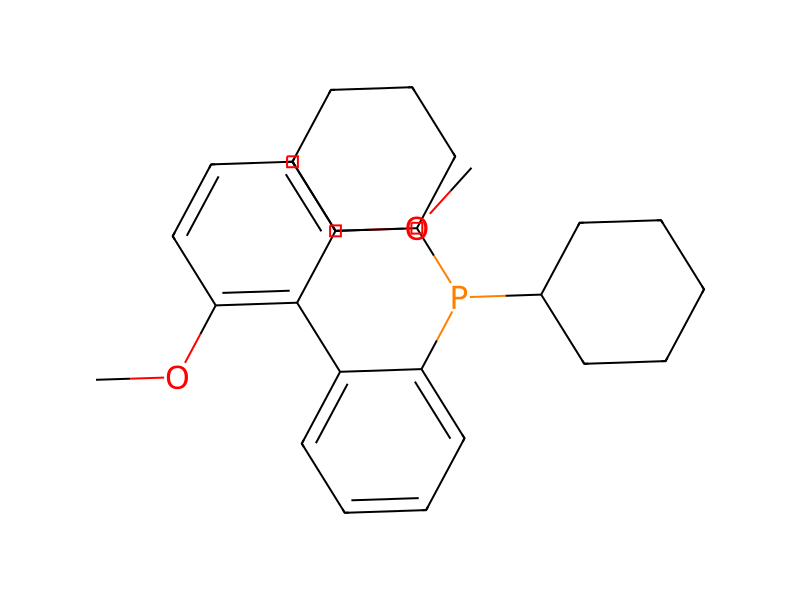
C(O[C:4]([C:6]1[CH:11]=[CH:10][CH:9]=[CH:8][C:7]=1B(O)O)=[O:5])C.Br[C:16]1[CH:22]=[CH:21][C:20]([F:23])=[CH:19][C:17]=1[NH2:18].C([O-])(=O)C.[Na+].C(=O)([O-])[O-].[Na+].[Na+]>C([O-])(=O)C.[Pd+2].C([O-])(=O)C.C1(P(C2CCCCC2)C2C=CC=CC=2C2C(OC)=CC=CC=2OC)CCCCC1.C(O)C>[F:23][C:20]1[CH:21]=[CH:22][C:16]2[C:17]([CH:19]=1)=[N:18][C:4]([OH:5])=[C:6]1[C:7]=2[CH:8]=[CH:9][CH:10]=[CH:11]1A mixture of 2-(ethoxycarbonyl)phenylboronic acid (7.0 g, 39 mmol), 2-bromo-5-fluoroaniline (7.4 g, 39 mmol), dicyclohexyl(2′,6′-dimethoxybiphenyl-2-yl)phosphine (S-Phos, 0.32 g, 0.78 mmol), sodium acetate (4.1 g, 39 mmol), and palladium acetate (0.087 g, 0.39 mmol) in 18 ml. of ethanol was heated with stirring at 80° C. for 18 h. Additional 2-(ethoxycarbonyl)phenylboronic acid (2.0 g), S-Phos (0.095 g), palladium acetate (0.020 g), and sodium carbonate (1.2 g) was added and the mixture was stirred for 18 h. The solvent was removed by evaporation under reduced pressure, and the resulting solid was isolated by vacuum filtration, washing the remaining solid with water and then hexane. The remaining solid and dried in vacuo @50° C. to provide the title compound (4.39 g, 53% yield) which was used without further purification.