Reaction equation

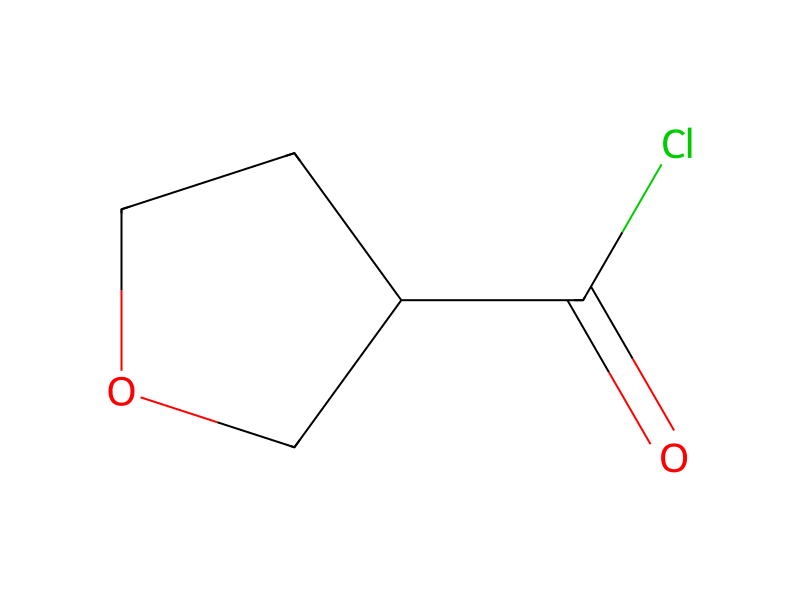
[NH2:1][C:2]1[C:7]([N+:8]([O-:10])=[O:9])=[CH:6][C:5]([OH:11])=[CH:4][C:3]=1[Cl:12].CCN(C(C)C)C(C)C.[O:22]1[CH2:26][CH2:25][CH:24]([C:27](Cl)=[O:28])[CH2:23]1>C(Cl)Cl>[Cl:12][C:3]1[CH:4]=[C:5]([OH:11])[CH:6]=[C:7]([N+:8]([O-:10])=[O:9])[C:2]=1[NH:1][C:27]([CH:24]1[CH2:25][CH2:26][O:22][CH2:23]1)=[O:28]Participants
5




Procedure
0.40 g (2.12 mmol) 4-amino-3-chloro-5-nitrophenol were placed in 5 mL DCM. 0.44 mL DIPEA and 0.34 g tetrahydrofuran-3-carbonyl chloride were added and the mixture was stirred for 2 h at RT. A further 0.34 g tetrahydrofuran-3-carbonyl chloride was added and the mixture was stirred overnight at RT. The reaction mixture was diluted with DCM and washed with water. The organic phase was evaporated down i.vac.
Workup
- stirringthe mixture was stirred overnight at RT
- washwashed with water
- customThe organic phase was evaporated down i.vac
Sources & evidence
- ORD record
- ord-750612a2b2be49fea853381032bdd2ab
- Source dataset
- uspto-grants-2015_02
- Patent number
- US08952014B2
Linked notes
Loading…