HomeMCPWorkbenchSkills
HomeWorkbenchNotificationsMe
llms.txt · MCP GuidePrivacy Policy · Terms of Service · Supportv1.8.0
  1. Home
  2. /Reaction

Hydrochloric Acid → Methyl 4-iodo-2-[N-(N-butylaminocarbonyl)aminosulfonyl]benzoate

HRID 1857825
Notes
Print preview

Reaction equation

HRID 1857825 reaction equation
[I:1][C:2]1[CH:11]=[CH:10][C:5]([C:6]([O:8][CH3:9])=[O:7])=[C:4]([S:12]([NH2:15])(=[O:14])=[O:13])[CH:3]=1.C([O-])([O-])=O.[K+].[K+].[CH2:22]([N:26]=[C:27]=[O:28])[CH2:23][CH2:24][CH3:25].Cl>ClC1C=CC=CC=1.O>[I:1][C:2]1[CH:11]=[CH:10][C:5]([C:6]([O:8][CH3:9])=[O:7])=[C:4]([S:12]([NH:15][C:27]([NH:26][CH2:22][CH2:23][CH2:24][CH3:25])=[O:28])(=[O:13])=[O:14])[CH:3]=1
ParticipantsConditionsProcedureWorkupSources & evidenceReaction notes

Participants

7

Reactant 4

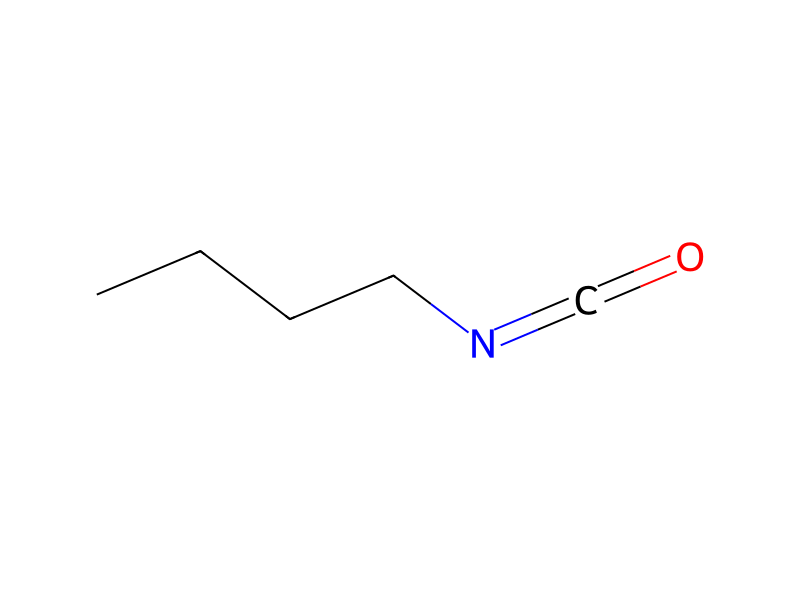
HCID 313Hydrochloric AcidHCID 8110Butyl isocyanateHCID 11430Potassium CarbonateHCID 109478222-(Aminosulfonyl)-4-iodobenzoic acid methyl ester

Product 1

HCID 10863097Methyl 4-iodo-2-[N-(N-butylaminocarbonyl)aminosulfonyl]benzoate

Reagents, catalysts & solvents 2

HCID 962
Water
Solvent
HCID 7964ChlorobenzeneSolvent

Conditions

Temperature
90 °C

Procedure

34.1 g (0.1 mol) of the sulfonamide of the formula (IV) from Example 1 and 14.7 g of K2CO3 (0.105 mol) are admixed with 10.6 g of n-butyl isocyanate (98% pure) (0.105 mol) in 250 ml of chlorobenzene, and the mixture is kept at 55 to 60° C. for 2 hours. The mixture is then stirred at 90° C. for 8.5 h. The mixture is cooled to room temperature and initially 200 ml of water and then 2n of hydrochloric acid are added until the pH has reached 1-2. The organic phase is separated off and washed free of acid using four times 50 ml of water. The solvent is removed under reduced pressure, and 43.8 g of the desired compound of the formula (I) (99.3% of theory) of melting point 128 to 130° C. remain.

Workup

  1. temperatureThe mixture is cooled to room temperature
  2. customThe organic phase is separated off
  3. washwashed free of acid
  4. customThe solvent is removed under reduced pressure, and 43.8 g of the desired compound of the formula (I) (99.3% of theory) of melting point 128 to 130° C.

Sources & evidence

ORD record
ord-64742d227bd8490ca2adb61bff4c49e2
Source dataset
uspto-grants-2000_11
DOI
10.6084/m9.figshare.5104873.v1
Patent number
US06147248

Reaction notes

Loading…

On this pageParticipantsConditionsProcedureWorkupSources & evidenceReaction notes