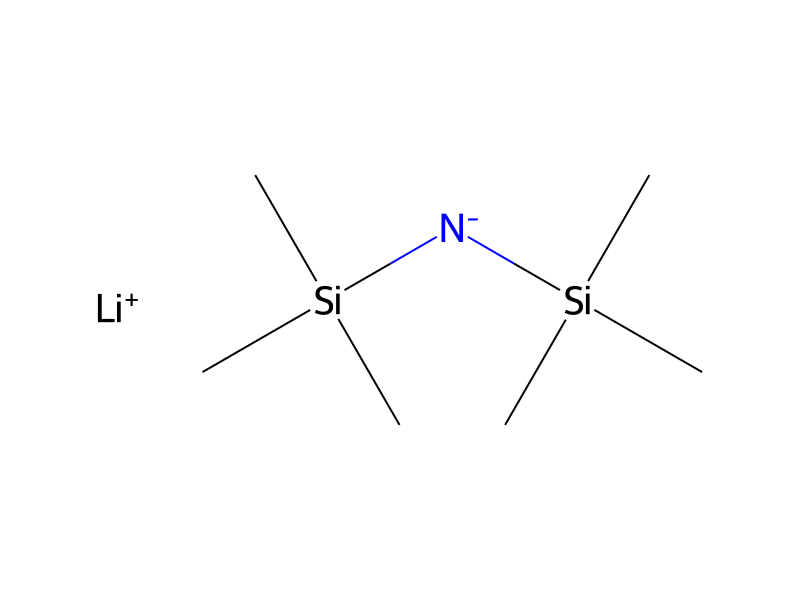
Lithium chloride (1.80 grams, 2.46 mmole; 10 equivalents) was rapidly weighed and placed in a 500 ml flask equipped with mechanical stirring, pressure equalizing addition funnel, thermocouple, injection septum and nitrogen inlet. (+)-(4aR)-(10bR)-4-Methyl-8-bromo-10b-methyl-1,2,3,4,4a,5,6,10b-octahydrobenzo[f]quinolin-3-one (13.09 grams, 2.46 mmole; 1.0 equivalents) and 100 mL of dry tetrahydrofuran were added and stirred until dissolved (10-15 minutes.). Then, 46.71 mL of lithium hexamethyldisilazide (LiN(TMS)2, 46.71 mmole; 1.1 equivalents) in tetrahydrofuran was added via syringe over 40 minutes (1 degree exotherm). A clear yellow solution resulted and was stirred at room temperature for 1 hour. Methyllithium (1.4M in diethyl ether; 33.36 mL; 46.71 mmole; 1.1 equivalents) was added dropwise via syringe over 50 minutes. Gas evolution was observed and the reaction was exothermic from 23 to 26 degrees. The exothermic reaction was controlled using standard procedures. The reaction mixture was allowed to stir at room temperature for 45 minutes and was then cooled to -70° C. n-butyllithium (1.6M in hexane; 29.2 mL; 46.71 mmole; 1.1 equivalents) was added via syringe over 25 minutes while the reaction temperature was maintained at -71/-70° C. The remaining yellow solution was maintained at -70° C. and stirred for 35 minutes. High pressure liquid chromatography showed nearly complete dianion formation after 15 minutes. Dimethyldisulfide (4.00 grams; 42.46 mmole; 1.0 equivalents) was dissolved in 25 mL of tetrahydrofuran and added over 50 minutes. The mixture was stirred for 30 minutes (-70° C.). High pressure liquid chromatography showed the reaction was complete after 10 minutes. The mixture was quenched with 1N hydrochloric acid (100 mL, -70° C). The reaction was warmed to room temperature and the aqueous layer was extracted with 200 mL of methyl t-butyl ether. The organic layers were combined and washed with 50 mL. of brine. The organic layers were dried over magnesium sulfate and filtered and concentrated on rotovap™@35° C. and house-vac. A white solid formed as the volume decreased. The organics were concentrated from 550 mL to approximately 30-40 mL. of a white slurry. The slurry was stirred at room temperature for a few hours followed by filtration with small portions of methyl t-butyl ether until the washes were colorless. The white solid was dried and afforded 7.73 grams (66%) of (+)-(4aR)-(10bR)-4-methyl-8-methylthio-10b-methyl-1,2,3,4,4a,5,6,10b-octahydrobenzo[f]quinolin-3-one.