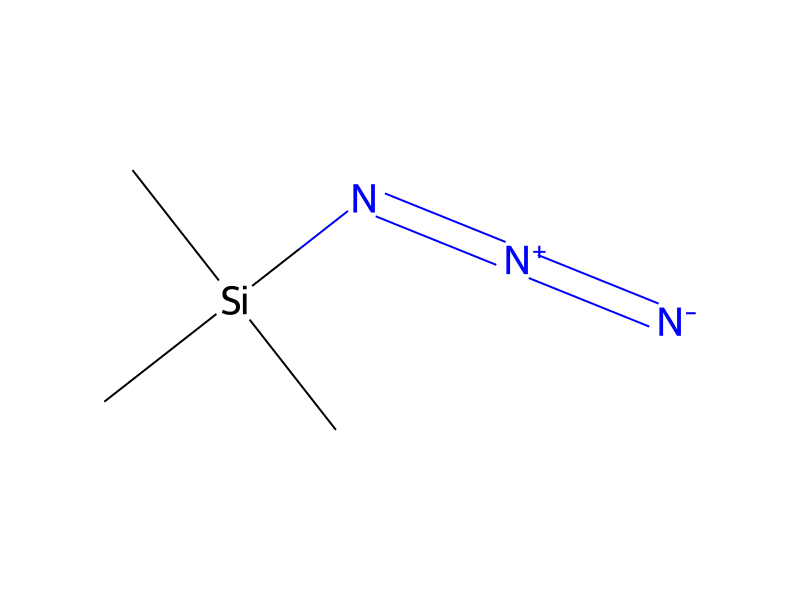
[C:1]([C:3]1[CH:4]=[CH:5][C:6]2[N:7]([CH:9]=[C:10]([C:12]([O:14][CH2:15][CH3:16])=[O:13])[N:11]=2)[CH:8]=1)#[CH:2].[N:17]([Si](C)(C)C)=[N+:18]=[N-:19].CN(C)C=O.CO>ClCCl>[NH:17]1[CH:2]=[C:1]([C:3]2[CH:4]=[CH:5][C:6]3[N:7]([CH:9]=[C:10]([C:12]([O:14][CH2:15][CH3:16])=[O:13])[N:11]=3)[CH:8]=2)[N:19]=[N:18]1To a solution of 220 mg of ethyl 6-ethynylimidazo[1,2-a]pyridine-2-carboxylate and 0.21 mL of azidotrimethylsilane in 4 mL of a mixture (9/1) of N,N-dimethylformamide and methanol are added 9.8 mg of cuprous iodide. The reaction mixture is stirred for 2 hours at 100° C. and then cooled, diluted with 4 mL of dichloromethane, filtered through alumina and concentrated to dryness. The residue is chromatographed on silica, eluting with a mixture of dichloromethane and ethanol (97/3). The fractions containing the expected product are combined and concentrated to dryness under reduced pressure to give 125 mg of ethyl 6-(1H-1,2,3-triazol-4-yl)imidazo[1,2-a]pyridine-2-carboxylate in the form of an off-white solid.