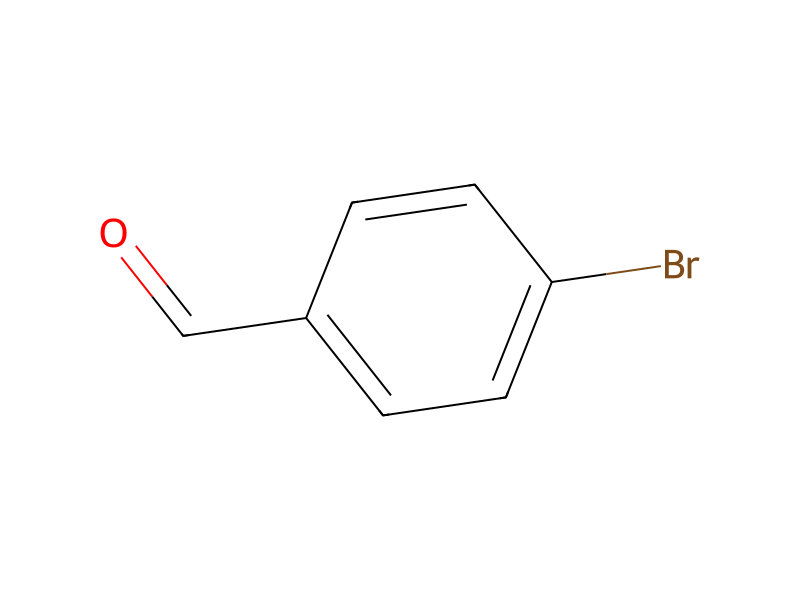
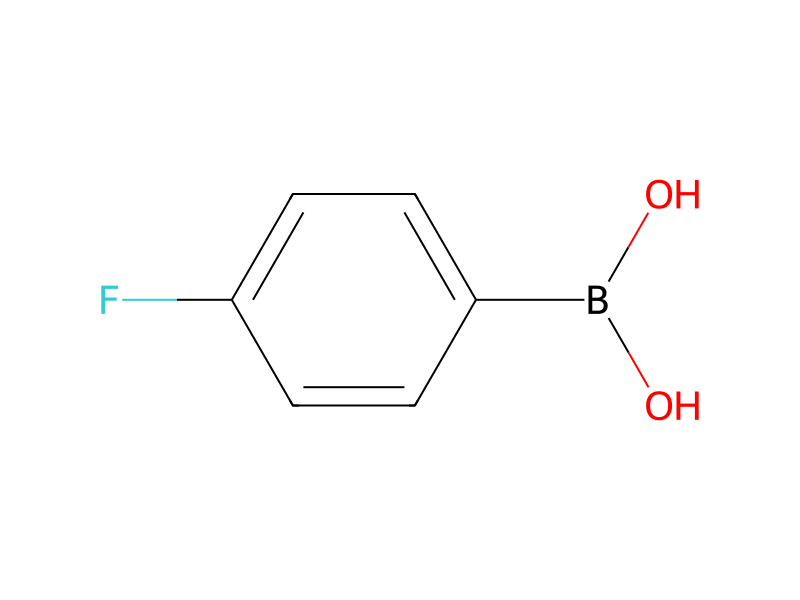
Br[C:2]1[CH:9]=[CH:8][C:5]([CH:6]=[O:7])=[CH:4][CH:3]=1.[F:10][C:11]1[CH:16]=[CH:15][C:14](B(O)O)=[CH:13][CH:12]=1.C([O-])([O-])=O.[K+].[K+]>C1(C)C=CC=CC=1.C1C=CC([P]([Pd]([P](C2C=CC=CC=2)(C2C=CC=CC=2)C2C=CC=CC=2)([P](C2C=CC=CC=2)(C2C=CC=CC=2)C2C=CC=CC=2)[P](C2C=CC=CC=2)(C2C=CC=CC=2)C2C=CC=CC=2)(C2C=CC=CC=2)C2C=CC=CC=2)=CC=1>[F:10][C:11]1[CH:16]=[CH:15][C:14]([C:2]2[CH:9]=[CH:8][C:5]([CH:6]=[O:7])=[CH:4][CH:3]=2)=[CH:13][CH:12]=1A solution of 4-bromobenzaldehyde (1.0 g, 5.4 mmol, 1.0 eq) and 4-fluorophenylboronic acid (0.75 g, 5.4 mmol, 1.0 eq) in toluene was purged with nitrogen for 15 minutes and degassed under vacuum. Dry K2CO3 (1.12 g, 8.12 mmol, 1.5 eq) and tetrakis catalyst (0.3 g, 0.27 mmol, 0.05 eq) were added under nitrogen. The reaction mixture was refluxed under nitrogen for 12 h, quenched with ice water and extracted with ethyl acetate. The organic layer was dried over sodium sulphate and concentrated under vacuum. The residue was purified by silica gel (60-120) column chromatography using 5-10% ethyl acetate/hexane as the eluent to afford the desired compound (0.75 g, 75%) as a white solid. 1H NMR (400 MHz, DMSO-d6) δ 7.29-7.35 (t, 2H), 7.77-7.83 (t, 2H), 7.86-7.88 (d, 2H), 7.96-7.98 (d, 2H), 10.03 (s, 1H). MS (ESI): 201.2 (M+H)+.