HomeMCPWorkbenchSkills
HomeWorkbenchNotificationsMe
llms.txt · MCP GuidePrivacy Policy · Terms of Service · Supportv1.8.3
  1. Home
  2. /Reaction

Tetrahydrofuran → Methyl 2-[4-[((3S)-1-tert-butoxycarbonyl-3-pyrrolidinyl)oxy]phenyl]-3-(5-cyano-2-indolyl)propionate

HRID 1901348
Print

Reaction equation

HRID 1901348 reaction equation
O1CCCC1.[Br-].[C:7]([C:9]1[CH:10]=[C:11]2[C:15](=[CH:16][CH:17]=1)[NH:14][C:13]([CH2:18][P+](C1C=CC=CC=1)(C1C=CC=CC=1)C1C=CC=CC=1)=[CH:12]2)#[N:8].[C:38]([O:42][C:43]([N:45]1[CH2:49][CH2:48][C@H:47]([O:50][C:51]2[CH:56]=[CH:55][C:54]([C:57](=O)[C:58]([O:60][CH3:61])=[O:59])=[CH:53][CH:52]=2)[CH2:46]1)=[O:44])([CH3:41])([CH3:40])[CH3:39].C1CCN2C(=NCCC2)CC1>CO>[C:38]([O:42][C:43]([N:45]1[CH2:49][CH2:48][C@H:47]([O:50][C:51]2[CH:52]=[CH:53][C:54]([CH:57]([CH2:18][C:13]3[NH:14][C:15]4[C:11]([CH:12]=3)=[CH:10][C:9]([C:7]#[N:8])=[CH:17][CH:16]=4)[C:58]([O:60][CH3:61])=[O:59])=[CH:55][CH:56]=2)[CH2:46]1)=[O:44])([CH3:41])([CH3:40])[CH3:39]

ParticipantsProcedureWorkupSources & evidenceReaction notes

Participants

6

Reactant 4

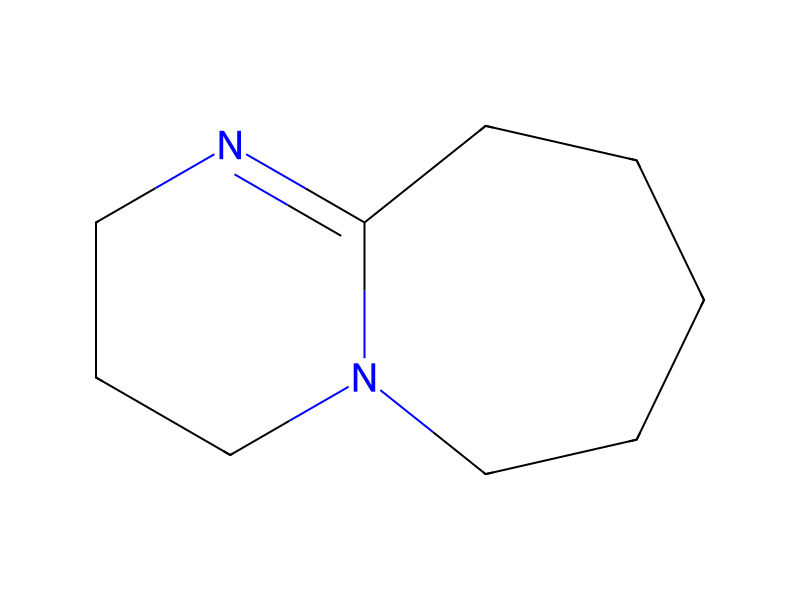
HCID 8028TetrahydrofuranHCID 811841,8-Diazabicyclo(5.4.0)undec-7-eneHCID 21844283(5-Cyano-2-indolyl)methyltriphenylphosphonium bromideHCID 57108615methyl 2-[4-[((3S)-1-tert-butoxycarbonyl-3-pyrrolidinyl)oxy]phenyl]-2-oxoacetate

Product 1

HCID 57259464
Methyl 2-[4-[((3S)-1-tert-butoxycarbonyl-3-pyrrolidinyl)oxy]phenyl]-3-(5-cyano-2-indolyl)propionate
Yield 71.1%

Reagents, catalysts & solvents 1

HCID 887MethanolSolvent

Procedure

In a solvent mixture of 50 ml of tetrahydrofuran and 50 ml of methanol were dissolved 5.0 g of (5-cyano-2-indolyl)methyltriphenylphosphonium bromide and 3.6 g of methyl 2-[4-[((3S)-1-tert-butoxycarbonyl-3-pyrrolidinyl)oxy]phenyl]-2-oxoacetate. With stirring at room temperature, 1.07 g of 1,8-diazabicyclo[5.4.0]-7-undecene was added to the thus prepared solution, and the mixture was stirred at the same temperature for 2 hours. After distilling off the solvent, the resulting residue was purified by subjecting it to silica gel column chromatography using a dichloromethane/acetone mixture as an eluant, thereby obtaining methyl 2-[4-[((3S)-1-tert-butoxycarbonyl-3-pyrrolidinyl)oxy]phenyl]-3-(5-cyano-2-indolyl)acrylate as a mixture of E and Z forms. The thus obtained compound was dissolved in a solvent mixture of 50 ml of tetrahydrofuran and 50 ml of methanol, and the resulting solution was mixed with 5.0 g of palladium oxide.1H2O.barium sulfate, and then subjected to catalytic hydrogenation under normal pressure. After removing the catalyst by filtration and distilling off the solvent, the resulting residue was purified by subjecting it to silica gel column chromatography using a dichloromethane/acetone mixture as an eluant. In this way, 3.5 g of the title compound was obtained in a viscous and oily form.

Workup

  1. stirringthe mixture was stirred at the same temperature for 2 hours
  2. distillationAfter distilling off the solvent
  3. customthe resulting residue was purified
  4. additionobtaining methyl 2-[4-[((3S)-1-tert-butoxycarbonyl-3-pyrrolidinyl)oxy]phenyl]-3-(5-cyano-2-indolyl)acrylate as a mixture of E and Z forms
  5. dissolutionThe thus obtained compound was dissolved in a solvent mixture of 50 ml of tetrahydrofuran and 50 ml of methanol
  6. additionthe resulting solution was mixed with 5.0 g of palladium oxide
  7. customAfter removing the catalyst
  8. filtrationby filtration
  9. distillationdistilling off the solvent
  10. customthe resulting residue was purified

Sources & evidence

ORD record
ord-bfb538f9d36b420cb6984166def94e9a
Source dataset
uspto-grants-1996_11
DOI
10.6084/m9.figshare.5104873.v1
Patent number
US05576343

Reaction notes

On this pageParticipantsProcedureWorkupSources & evidenceReaction notes
