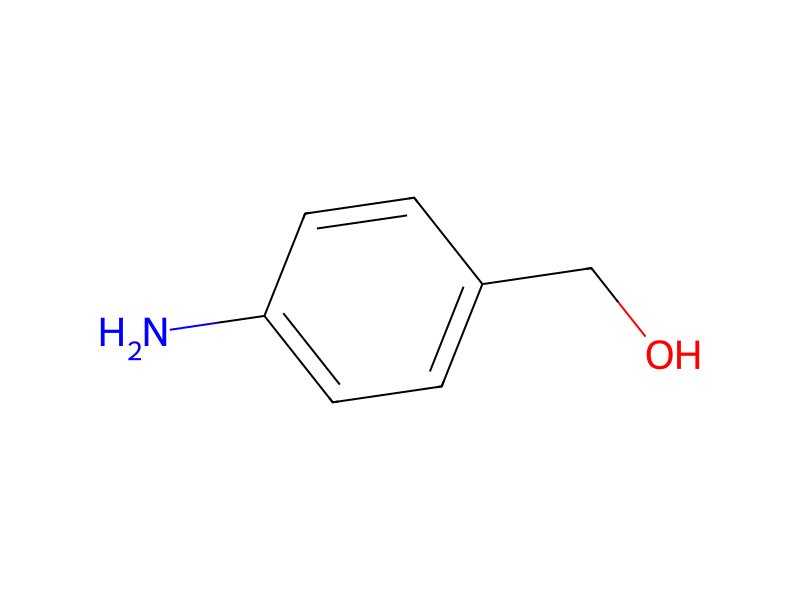
[NH2:1][C:2]1[CH:9]=[CH:8][C:5]([CH2:6][OH:7])=[CH:4][CH:3]=1.Cl.[N:11]([O-])=O.[Na+].[C:15]([C:17]1[C:18](=[O:26])[N:19]([CH3:25])[C:20]([OH:24])=[CH:21][C:22]=1[CH3:23])#[N:16].[OH-].[Na+].C([O-])(=O)C.[Na+]>O>[C:15]([C:17]1[C:18](=[O:26])[N:19]([CH3:25])[C:20]([OH:24])=[C:21]([N:11]=[N:1][C:2]2[CH:9]=[CH:8][C:5]([CH2:6][OH:7])=[CH:4][CH:3]=2)[C:22]=1[CH3:23])#[N:16]12.3 g of p-aminobenzyl alcohol was diazotized in a conventional manner using 30 ml of hydrochloric acid and 7 g of sodium nitrite. The diazotized solution thus obtained was added to a mixture composed of 16.4 g of 3-cyano-1,4-dimethyl-6-hydroxy-2-pyridone, 4 g of sodium hydroxide, 50 g of sodium acetate and 300 ml of water at a temperature range between 0° C. and 5° C. The mixture was stirred at a temperatue range between 5° C. and 10° C. for 30 minutes, the orange yellow colored precipitate thus deposited was collected by filtration and washed with water to obtain 28.5 g of Compound [2-a].