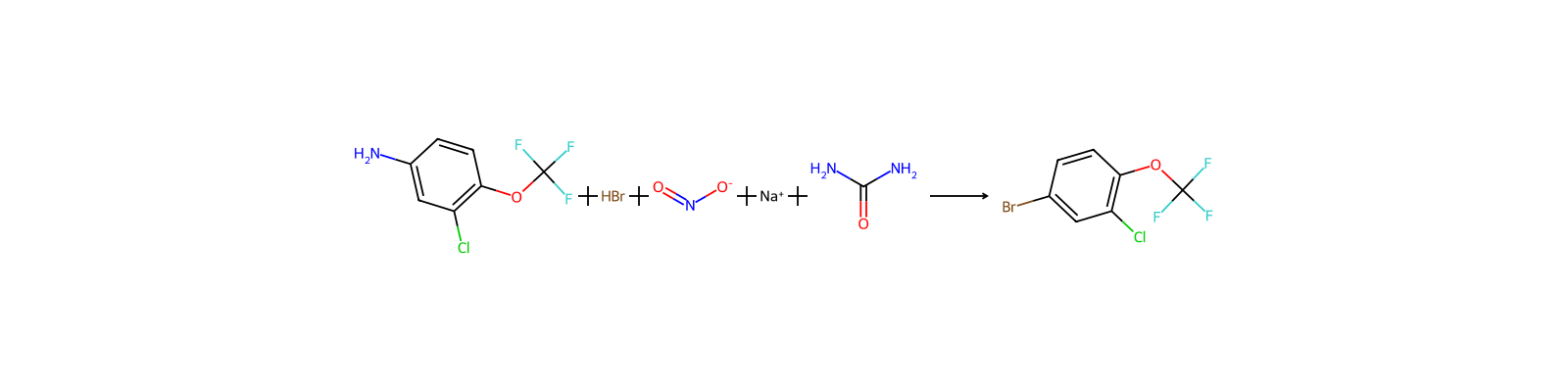
To a 0° C. solution consisting of 3-chloro-4-trifluoromethoxy-aniline (2.12 g, 10.0 mmol) and HBr (48% aq, 50 mL) was added NaNO2 (2 M aq., 917.7 mg, 13.3 mmol) dropwise at a rate such that the reaction temperature remained below 5° C. After stirring for 1.75 h, urea (330 mg, 5.5 mmol) was added and the mixture stirred for 20 min. A solution consisting of Cu(I)Br (2.96 g, 20.6 mmol) and HBr (48% aq., 13.1 mL) was then added while keeping the reaction temperature in the range of 0-5° C. Upon complete addition, the reaction mixture was heated to 85° C. for 2.5 h. After cooling to rt, the reaction mixture was poured into ice water (150 mL) and extracted with hexanes (100 mL). The aqueous layer was washed with CH2Cl2 (100 mL) and the combined organic phases washed with satd. aq. NaHCO3 (150 mL×2), dried (Na2SO4) and concentrated. The crude material was purified (FCC) to yield the title compound (806 mg, 29%).