3-Fluorophenylacetic acid → 3-{1-[(3-fluorophenyl)acetyl]-2,3-dihydro-1H-indol-5-yl}-1-methyl-1H-pyrazolo[3,4-d]pyrimidin-4-amine
HRID 1909936
Reaction equation

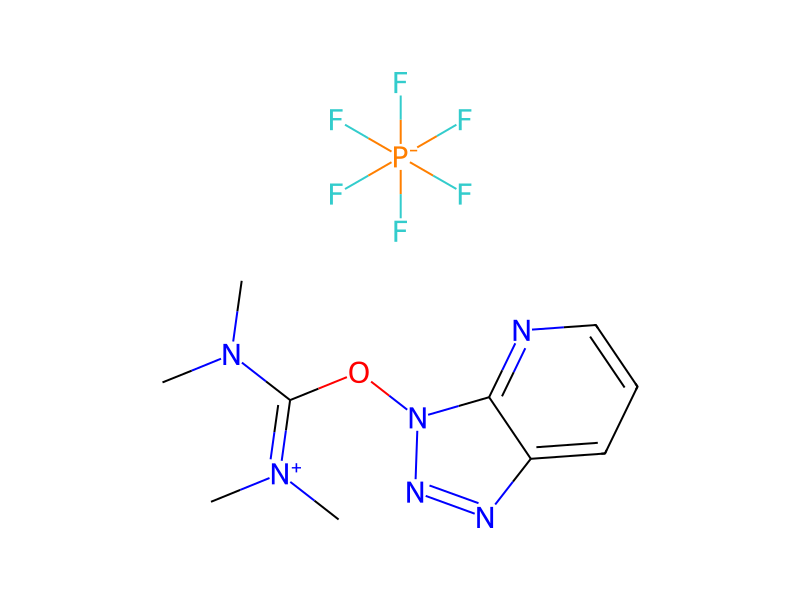
Cl.Cl.[NH:3]1[C:11]2[C:6](=[CH:7][C:8]([C:12]3[C:20]4[C:15](=[N:16][CH:17]=[N:18][C:19]=4[NH2:21])[N:14]([CH3:22])[N:13]=3)=[CH:9][CH:10]=2)[CH2:5][CH2:4]1.[F:23][C:24]1[CH:25]=[C:26]([CH2:30][C:31](O)=[O:32])[CH:27]=[CH:28][CH:29]=1.CN(C(ON1N=NC2C=CC=NC1=2)=[N+](C)C)C.F[P-](F)(F)(F)(F)F.CCN(C(C)C)C(C)C>CN(C=O)C.O>[F:23][C:24]1[CH:25]=[C:26]([CH2:30][C:31]([N:3]2[C:11]3[C:6](=[CH:7][C:8]([C:12]4[C:20]5[C:15](=[N:16][CH:17]=[N:18][C:19]=5[NH2:21])[N:14]([CH3:22])[N:13]=4)=[CH:9][CH:10]=3)[CH2:5][CH2:4]2)=[O:32])[CH:27]=[CH:28][CH:29]=1Participants
7
Reactant 4



Product 1


