HomeMCPWorkbenchSkills
HomeWorkbenchNotificationsMe
llms.txt · MCP GuidePrivacy Policy · Terms of Service · Supportv1.8.3
  1. Home
  2. /Reaction

Ammonium Chloride → HCID 58293397, compound

HRID 1912429
Print

Reaction equation

HRID 1912429 reaction equation
[C:1]([O:5][C:6]([N:8]1[CH2:11][CH:10]([CH3:12])[CH:9]1[C:13]([O:15][C:16]([CH3:19])([CH3:18])[CH3:17])=[O:14])=[O:7])([CH3:4])([CH3:3])[CH3:2].Br[CH2:21][CH:22]=[C:23]([CH3:25])[CH3:24].C[Si](C)(C)[N-][Si](C)(C)C.[Li+].[Cl-].[NH4+]>O1CCCC1.O>[C:1]([O:5][C:6]([N:8]1[CH2:11][CH:10]([CH3:12])[C:9]1([CH2:21][CH:22]=[C:23]([CH3:25])[CH3:24])[C:13]([O:15][C:16]([CH3:18])([CH3:17])[CH3:19])=[O:14])=[O:7])([CH3:4])([CH3:2])[CH3:3]
ParticipantsConditionsProcedureWorkupSources & evidenceReaction notes

Participants

7

Reactant 4

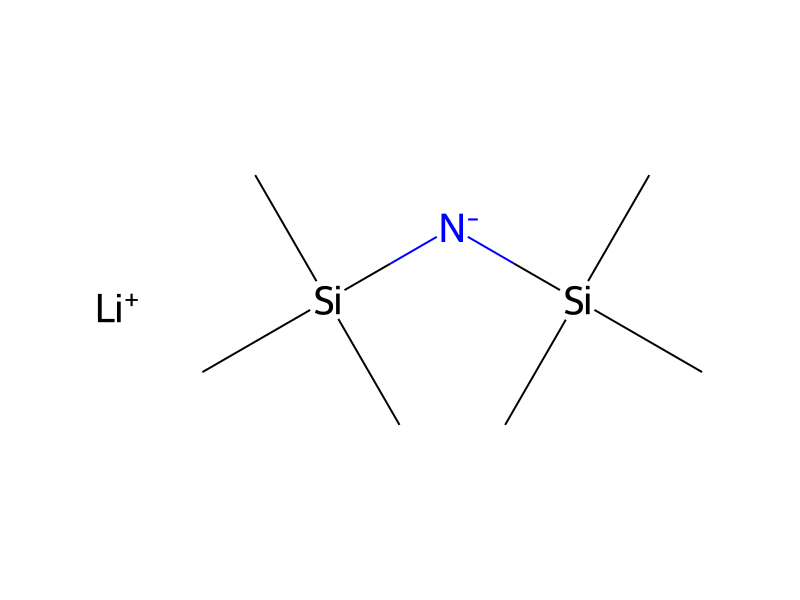
HCID 25517Ammonium ChlorideHCID 700922-Butene, 1-bromo-3-methyl-HCID 2733832Lithium hexamethyldisilazaneHCID 582933073-Methylazetidine-1,2-dicarboxylic acid di-tert-butyl ester

Product 1

HCID 58293397HCID 58293397, compound

Reagents, catalysts & solvents 2

HCID 962
Water
Solvent
HCID 8028TetrahydrofuranSolvent

Conditions

Temperature
-20 °C

Procedure

To a solution of an optically-active compound of 3-methylazetidine-1,2-dicarboxylic acid di-tert-butyl ester (48.0 g) and 1-bromo-3-methyl-2-butene (25.4 ml) in tetrahydrofuran (380 ml) cooled to −69° C. was added lithium hexamethyl disilazide (1.0M tetrahydrofuran solution, 200 ml). The reaction mixture was warmed to −20° C. over 40 minutes, and stirred at the same temperature for additional 20 minutes. To the reaction mixture were sequentially added saturated aqueous ammonium chloride solution (200 ml) and water (300 ml), and the mixture was extracted with n-hexane/ethyl acetate (1/1, 500 ml). The separated organic layer was sequentially washed with water (200 ml) and saturated aqueous sodium chloride solution (200 ml), dried over anhydrous magnesium sulfate and concentrated under reduced pressure. The resulting residue was purified by silica gel column chromatography (eluent: n-hexane/ethyl acetate=15/1 to 8/1) to give the titled compound (44.5 g).

Workup

  1. extractionthe mixture was extracted with n-hexane/ethyl acetate (1/1, 500 ml)
  2. washThe separated organic layer was sequentially washed with water (200 ml) and saturated aqueous sodium chloride solution (200 ml)
  3. dry with materialdried over anhydrous magnesium sulfate
  4. concentrationconcentrated under reduced pressure
  5. customThe resulting residue was purified by silica gel column chromatography (eluent: n-hexane/ethyl acetate=15/1 to 8/1)

Sources & evidence

ORD record
ord-f57eff782ec7425b936072c2fb6cf5b5
Source dataset
uspto-grants-2013_12
DOI
10.6084/m9.figshare.5104873.v1
Patent number
US08609647B2

Reaction notes

On this pageParticipantsConditionsProcedureWorkupSources & evidenceReaction notes