HomeMCPWorkbenchSkills
HomeWorkbenchNotificationsMe
llms.txt · MCP GuidePrivacy Policy · Terms of Service · Supportv1.8.3
  1. Home
  2. /Reaction

2,2'-Bipyridine → 1-Cyclopropyl-3-nitro-1H-pyrazole

HRID 1918843
Print

Reaction equation

HRID 1918843 reaction equation
[N+:1]([C:4]1[CH:8]=[CH:7][NH:6][N:5]=1)([O-:3])=[O:2].[CH:9]1(B(O)O)[CH2:11][CH2:10]1.C(=O)([O-])[O-].[Na+].[Na+].N1C=CC=CC=1C1C=CC=CN=1>C([O-])(=O)C.[Cu+2].C([O-])(=O)C.ClC(Cl)C>[CH:9]1([N:6]2[CH:7]=[CH:8][C:4]([N+:1]([O-:3])=[O:2])=[N:5]2)[CH2:11][CH2:10]1
ParticipantsConditionsProcedureWorkupSources & evidenceReaction notes

Participants

7

Reactant 4

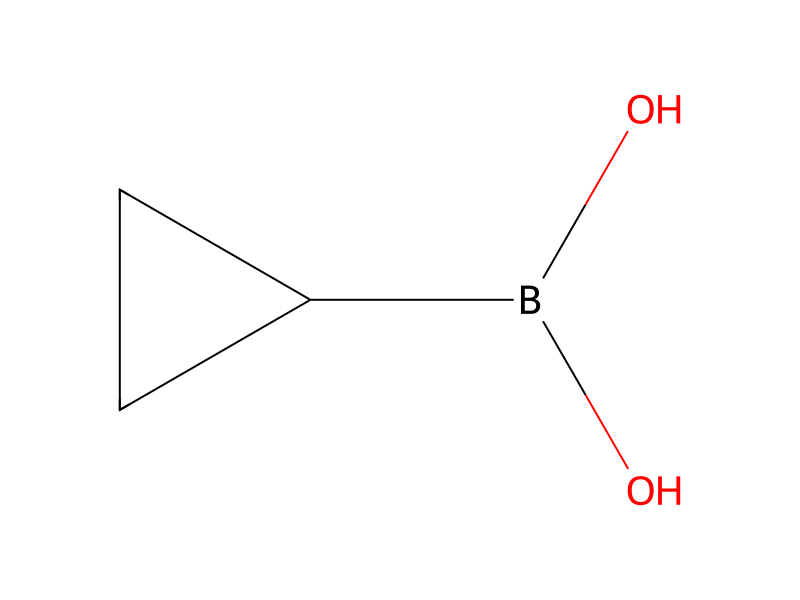
HCID 14742,2'-BipyridineHCID 10340Sodium CarbonateHCID 2760897Cyclopropylboronic acid2×HCID 178526745HCID 178526745, compound

Product 1

HCID 509999011-Cyclopropyl-3-nitro-1H-pyrazoleYield 85%

Reagents, catalysts & solvents 2

HCID 8895
Cupric acetate
Catalyst
HCID 63651,1-DichloroethaneSolvent

Conditions

Temperature
70 °C

Procedure

A 250-mL three-neck round-bottomed flask equipped with a reflux condenser and magnetic stirrer was purged with nitrogen and charged with 3-nitro-(1H)pyrazole (1.30 g, 11.5 mmol), cyclopropylboronic acid (1.98 g, 23.0 mmol), sodium carbonate (3.66 g, 34.5 mmol), 2,2′-bipyridyl (3.58 g, 23.0 mmol), dichloroethane (60 mL) and copper(II) acetate (2.08 g, 11.5 mmol). The reaction mixture was heated at 70° C. (oil bath temperature) for 3 h. After this time, another portion of cyclopropyl boronic acid (1.98 g, 23.0 mmol) was added, and the mixture was heated for 3 h. After this time, the mixture was cooled to room temperature and filtered. The filtrate was diluted with ethyl acetate (350 mL) and water (40 mL). The organic layer was separated, and the aqueous layer was extracted with ethyl acetate (3×150 mL). The combined organic layers were dried over sodium sulfate and concentrated under reduced pressure. The residue was purified by column chromatography (silica, 0% to 100% ethyl acetate/hexanes) to afford an 85% yield (1.49 g) of 123a as a colorless oil: 1H NMR (500 MHz, CDCl3) d 7.53 (d, 1H, J=2.4 Hz), 6.87 (d, 1H, J=2.5 Hz), 3.71 (m, 1H), 1.25 (m, 2H), 1.12 (m, 2H); MS (APCI+) m/z 154.1 (M+H).

Workup

  1. customA 250-mL three-neck round-bottomed flask equipped with a reflux condenser and magnetic stirrer
  2. customwas purged with nitrogen
  3. temperaturethe mixture was heated for 3 h
  4. temperatureAfter this time, the mixture was cooled to room temperature
  5. filtrationfiltered
  6. additionThe filtrate was diluted with ethyl acetate (350 mL) and water (40 mL)
  7. customThe organic layer was separated
  8. extractionthe aqueous layer was extracted with ethyl acetate (3×150 mL)
  9. dry with materialThe combined organic layers were dried over sodium sulfate
  10. concentrationconcentrated under reduced pressure
  11. customThe residue was purified by column chromatography (silica, 0% to 100% ethyl acetate/hexanes)

Sources & evidence

ORD record
ord-8d4d3acb543e48e2a84c1e8d9d16c431
Source dataset
uspto-grants-2013_12
DOI
10.6084/m9.figshare.5104873.v1
Patent number
US08618107B2

Reaction notes

On this pageParticipantsConditionsProcedureWorkupSources & evidenceReaction notes