HomeMCPWorkbenchSkills
HomeWorkbenchNotificationsMe
llms.txt · MCP GuidePrivacy Policy · Terms of Service · Supportv1.8.0
  1. Home
  2. /Reaction

Cesium carbonate → 5-Bromo-3-(5-ethyl-4,5,6,7-tetrahydropyrazolo[1,5-a]pyrazin-2-ylamino)-1-methylpyridin-2(1H)-one

HRID 1919088
Notes
Print preview

Reaction equation

HRID 1919088 reaction equation
[CH2:1]([N:3]1[CH2:8][CH2:7][N:6]2[N:9]=[C:10]([NH2:12])[CH:11]=[C:5]2[CH2:4]1)[CH3:2].Br[C:14]1[C:15](=[O:22])[N:16]([CH3:21])[CH:17]=[C:18]([Br:20])[CH:19]=1.C(=O)([O-])[O-].[Cs+].[Cs+].CC1(C)C2C(=C(P(C3C=CC=CC=3)C3C=CC=CC=3)C=CC=2)OC2C(P(C3C=CC=CC=3)C3C=CC=CC=3)=CC=CC1=2>O1CCOCC1.[Pd].[Pd].C(=CC(C=CC1C=CC=CC=1)=O)C1C=CC=CC=1.C(=CC(C=CC1C=CC=CC=1)=O)C1C=CC=CC=1.C(=CC(C=CC1C=CC=CC=1)=O)C1C=CC=CC=1.CO.C(OCC)C.C(OCC)(=O)C.O>[Br:20][C:18]1[CH:19]=[C:14]([NH:12][C:10]2[CH:11]=[C:5]3[CH2:4][N:3]([CH2:1][CH3:2])[CH2:8][CH2:7][N:6]3[N:9]=2)[C:15](=[O:22])[N:16]([CH3:21])[CH:17]=1
ParticipantsConditionsProcedureWorkupSources & evidenceReaction notes

Participants

11

Reactant 4

HCID 10796Cesium carbonateHCID 6360441,1'-(9,9-Dimethyl-9H-xanthene-4,5-diyl)bis(1,1-diphenylphosphine)HCID 36143503,5-Dibromo-1-methylpyridin-2(1H)-oneHCID 580439485-Ethyl-4,5,6,7-tetrahydropyrazolo[1,5-a]pyrazin-2-amine

Product 1

HCID 580439185-Bromo-3-(5-ethyl-4,5,6,7-tetrahydropyrazolo[1,5-a]pyrazin-2-ylamino)-1-methylpyridin-2(1H)-one
Yield 28%

Reagents, catalysts & solvents 6

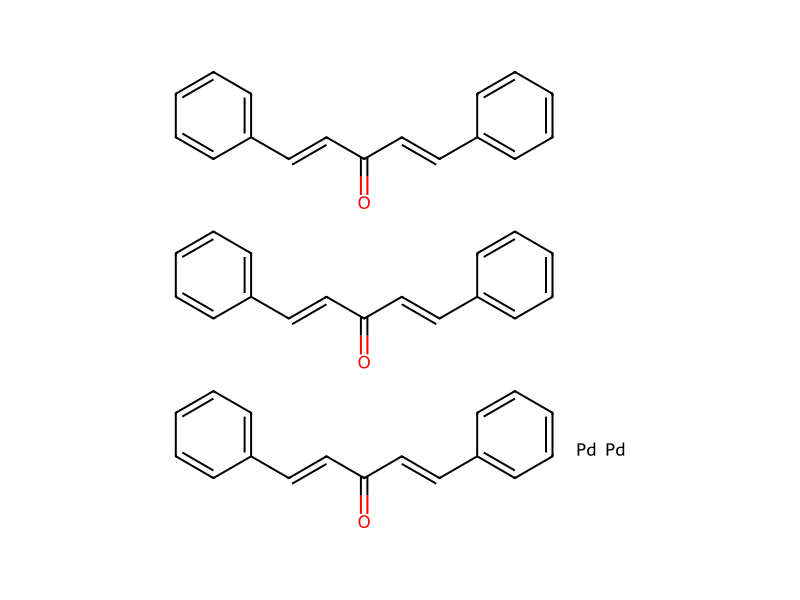
HCID 9832798Tris(dibenzylideneacetone) dipalladiumCatalystHCID 887MethanolSolventHCID 962WaterSolventHCID 3283Diethyl EtherSolventHCID 8857Ethyl AcetateSolventHCID 312751,4-DioxaneSolvent

Conditions

Temperature
100 °C

Procedure

A sealed tube was equipped with a magnetic stirrer and charged with 285b (1.1 g, 6.4 mmol), 3,5-dibromo-1-methylpyridin-2(1H)-one 5 (1.7 g, 6.4 mmol) and cesium carbonate (4.6 g, 14 mmol) in 1,4-dioxane (64 mL). After bubbling nitrogen through the solution for 30 min, Xantphos (440 mg, 0.8 mmol) and tris(dibenzylideneacetone) dipalladium(0) (400 mg, 0.5 mmol) were added, and the reaction mixture was heated to 100° C. for 16 h. After this time, water (50 mL) and ethyl acetate (50 mL) were added. The aqueous layer was separated and extracted with ethyl acetate (2×50 mL). The combined organic extracts were washed with brine (100 mL) and dried over sodium sulfate. The resulting residue was purified by column chromatography eluting with a gradient of methylene chloride-60:35:5 methylene chloride:diethyl ether:methanol to afford a 28% yield (620 mg) of 285c.

Workup

  1. customA sealed tube was equipped with a magnetic stirrer
  2. customAfter bubbling nitrogen through the solution for 30 min
  3. customThe aqueous layer was separated
  4. extractionextracted with ethyl acetate (2×50 mL)
  5. washThe combined organic extracts were washed with brine (100 mL)
  6. dry with materialdried over sodium sulfate
  7. customThe resulting residue was purified by column chromatography
  8. washeluting with a gradient of methylene chloride-60:35:5 methylene chloride

Sources & evidence

ORD record
ord-e14f199a635a4761b22bc78307a0ba89
Source dataset
uspto-grants-2013_12
DOI
10.6084/m9.figshare.5104873.v1
Patent number
US08618107B2

Reaction notes

Loading…

On this pageParticipantsConditionsProcedureWorkupSources & evidenceReaction notes