HomeMCPWorkbenchSkills
HomeWorkbenchNotificationsMe
llms.txt · MCP GuidePrivacy Policy · Terms of Service · Supportv1.8.3
  1. Home
  2. /Reaction

Potassium Iodide → 6-nitro-1-(3-(piperidin-1-yl)propyl)-3,4-dihydroquinolin-2(1H)-one

HRID 1922356
Print

Reaction equation

HRID 1922356 reaction equation
Cl[CH2:2][CH2:3][CH2:4][N:5]1[C:14]2[C:9](=[CH:10][C:11]([N+:15]([O-:17])=[O:16])=[CH:12][CH:13]=2)[CH2:8][CH2:7][C:6]1=[O:18].[NH:19]1[CH2:24][CH2:23][CH2:22][CH2:21][CH2:20]1.[I-].[K+].C(=O)([O-])[O-].[K+].[K+]>O.ClCCl.C(#N)C>[N+:15]([C:11]1[CH:10]=[C:9]2[C:14](=[CH:13][CH:12]=1)[N:5]([CH2:4][CH2:3][CH2:2][N:19]1[CH2:24][CH2:23][CH2:22][CH2:21][CH2:20]1)[C:6](=[O:18])[CH2:7][CH2:8]2)([O-:17])=[O:16]
ParticipantsConditionsProcedureWorkupSources & evidenceReaction notes

Participants

8

Reactant 4

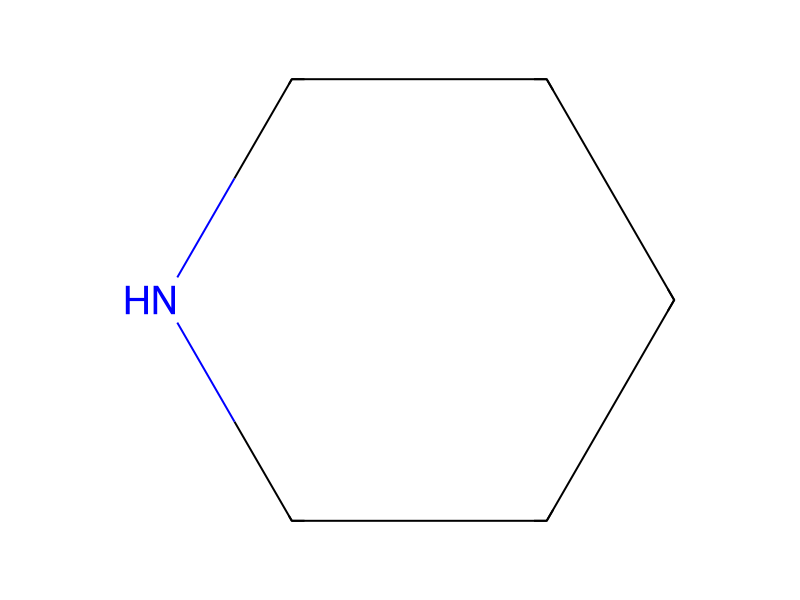
HCID 4875Potassium IodideHCID 8082PiperidineHCID 11430Potassium CarbonateHCID 434465161-(3-chloropropyl)-6-nitro-3,4-dihydroquinolin-2(1H)-one

Product 1

HCID 598071026-nitro-1-(3-(piperidin-1-yl)propyl)-3,4-dihydroquinolin-2(1H)-one

Reagents, catalysts & solvents 3

HCID 962
Water
Solvent
HCID 6342AcetonitrileSolvent
HCID 6344DichloromethaneSolvent

Conditions

Temperature
65 °C

Procedure

1-(3-chloropropyl)-6-nitro-3,4-dihydroquinolin-2(1H)-one (100 mg, 0.359 mmol), piperidine (355 uL, 3.59 mmol), potassium iodide (596 mg, 3.59 mmol) and potassium carbonate (496 mg, 3.59 mmol) were weighed into an argon purged vial fitted with a magnetic stirbar. Anhydrous acetonitrile (4 mL) was added, and the yellow suspension stirred in a heating block at a temperature of 65° C. for 18 hours. As starting material remained, the reaction was stirred at this temperature for an additional 3 days. After cooling to room temperature, the reaction was diluted with water (10 mL) and dichloromethane (15 mL) and transferred to a separatory funnel. The organic layer was collected, and the aqueous layer extracted twice more with dichloromethane (2×10 mL). The combined organic fractions were washed with brine (15 mL) and dried over sodium sulphate. The solution was decanted and concentrated to afford a yellow oil. The product was purified using flash chromatography (2 M NH3 in MeOH:CH2Cl2, 2.5-5:95-97.5) to afford a yellow oil. Yield: 102 mg yellow oil (89%). 1H NMR (CDCl3) δ: 8.13 (dd, J=2.7, 9 Hz, 1H), 8.05 (d, J=2.4 Hz, 1H), 7.29 (d, J=9.0 Hz, 1H), 4.02 (t, J=7.5 Hz, 2H), 3.00 (t, J=7.2 Hz, 2H), 2.73-2.68 (m, 2H), 2.39-2.35 (m, 6H), 1.88-1.79 (m, 2H), 1.64-1.45 (m, 6H). MS (EI): 317 (M+).


Workup

  1. customvial fitted with a magnetic stirbar
  2. stirringthe reaction was stirred at this temperature for an additional 3 days
  3. temperatureAfter cooling to room temperature
  4. customtransferred to a separatory funnel
  5. customThe organic layer was collected
  6. extractionthe aqueous layer extracted twice more with dichloromethane (2×10 mL)
  7. washThe combined organic fractions were washed with brine (15 mL)
  8. dry with materialdried over sodium sulphate
  9. customThe solution was decanted
  10. concentrationconcentrated
  11. customto afford a yellow oil
  12. customThe product was purified
  13. customto afford a yellow oil

Sources & evidence

ORD record
ord-17cf2ffab650478f9c5a9fe0f04ccaf0
Source dataset
uspto-grants-2012_05
DOI
10.6084/m9.figshare.5104873.v1
Patent number
US08173813B2

Reaction notes

On this pageParticipantsConditionsProcedureWorkupSources & evidenceReaction notes