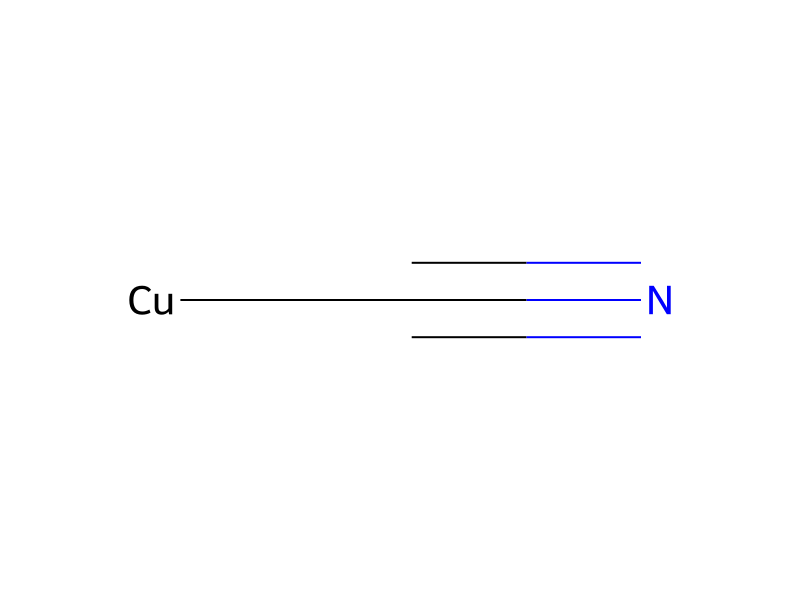
[Cu][C:2]#[N:3].Cl[C:5]1[CH:6]=[C:7]2[C:23]([CH3:24])=[C:22]([CH3:25])[NH:21][C:8]2=[C:9]([N:11]2[CH2:20][CH2:19][C:18]3[C:13](=[CH:14][CH:15]=[CH:16][CH:17]=3)[CH2:12]2)[N:10]=1.C(OCC)(=O)C>CN(C)C=O>[CH2:12]1[C:13]2[C:18](=[CH:17][CH:16]=[CH:15][CH:14]=2)[CH2:19][CH2:20][N:11]1[C:9]1[N:10]=[C:5]([C:2]#[N:3])[CH:6]=[C:7]2[C:23]([CH3:24])=[C:22]([CH3:25])[NH:21][C:8]=12Copper(I) cyanide (9.3 g, 102.6 mmol) was added to a solution of 2-(5-chloro-2,3-dimethyl-1H-pyrrolo[2,3-c]pyridin-7-yl)-1,2,3,4-tetrahydroisoquinoline (3.2 g, 10.3 mmol) prepared in Example 656 in anhydrous N,N-dimethylformamide (100 ml). The reaction mixture was refluxed for 24 hours and then cooled to room temperature. Ethyl acetate was added to the reaction mixture, which was then filtered to discard insoluble materials. The reaction mixture was washed with water. The organic layer was dried on anhydrous magnesium sulfate and then concentrated under reduced pressure. The resulting residue was purified with silica gel column chromatography (ethyl acetate/n-hexane=1/3, v/v) to give 750 mg of the titled compound as a white solid. (Yield: 26%)