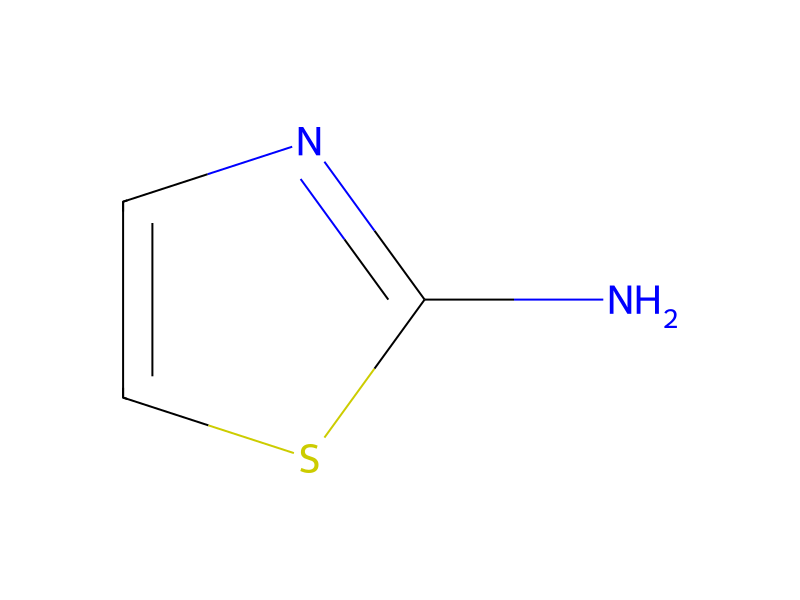
A solution of triphenylphosphine (165 mg, 0.63 mmol) in methylene chloride (5 mL) was cooled to 0° C. and then treated with N-bromosuccinimide (112 mg, 0.63 mmol). The reaction mixture was stirred at 0° C. for 30 min and then treated with a solution of (E)-2-[3-chloro-4-(5-methyl-tetrazol-1-yl)-phenyl]-3-cyclopentyl-acrylic acid (123 mg, 0.37 mmol) in methylene chloride (3 mL). The reaction mixture was stirred for 15 min at 0° C. and then allowed to warm to 25° C. where it was stirred for 1.5 h. The reaction mixture was then treated with 2-aminothiazole (92.5 mg, 0.93 mmol), and the resulting suspension was stirred for 2 d at 25° C. The reaction mixture was then concentrated in vacuo to remove methylene chloride, and the residue was diluted with ethyl acetate (20 mL) and a 1N aqueous hydrochloric acid solution (30 mL). The two layers were separated, and the aqueous layer was extracted with ethyl acetate (1×15 mL). The combined organic extracts were successively washed with a 1N aqueous hydrochloric acid solution (1×50 mL), a saturated aqueous sodium bicarbonate solution (1×50 mL) and a saturated aqueous sodium chloride solution (1×50 mL), dried over anhydrous magnesium sulfate, filtered, and concentrated in vacuo. Biotage chromatography (FLASH 40S, Silica, 1/1 hexanes/ethyl acetate) afforded (E)-2-[3-chloro-4-(5-methyl-tetrazol-1-yl)-phenyl]-3-cyclopentyl-N-thiazol-2-yl-acrylamide (36 mg, 23%) as an amorphous solid: EI-HRMS m/e calcd for C19H19ClN6OS (M+) 414.1029, found 414.1029.