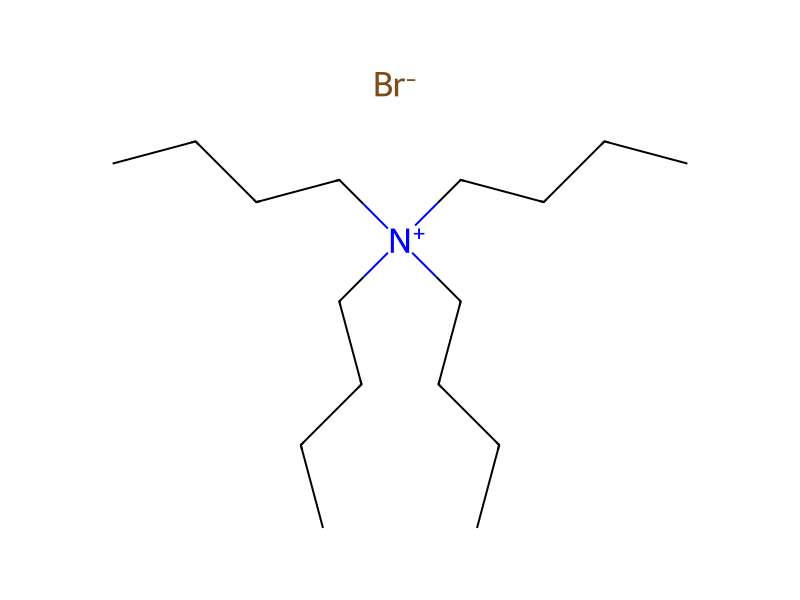
[C:1]([O:5][C:6]([N:8]1[CH2:12][C@H:11]([O:13][S:14]([CH3:17])(=[O:16])=[O:15])[CH2:10][C@H:9]1[C:18](OC(OCC)=O)=[O:19])=[O:7])([CH3:4])([CH3:3])[CH3:2].[BH4-].[Na+].Cl>[Br-].C([N+](CCCC)(CCCC)CCCC)CCC.O>[C:1]([O:5][C:6]([N:8]1[CH2:12][C@H:11]([O:13][S:14]([CH3:17])(=[O:15])=[O:16])[CH2:10][C@H:9]1[CH2:18][OH:19])=[O:7])([CH3:4])([CH3:3])[CH3:2]To the resulting reaction mixture containing (2S,4R)-1-t-butoxycarbonyl-2-ethoxycarbonyloxycarbonyl-4-methane sulfonyloxypyrrolidine obtained in Step D-3 cooling at -40° C., tetra-n-butylammonium bromide (11.8 g: 0.0365 mole) and a solution of sodium borohydride (52.5 g: 1.35 mole) in water (55 ml) are added. The mixture is allowed to warm to -10° C. and stirred for 1 hour. The aqueous layer is acidified with dilute hydrochloric acid to pH 3. The organic layer is taken, successively washed with aqueous sodium hydrogen carbonate and water, dried over magnesium sulfate, and concentrated under reduced pressure. The residue is recrystallized from a toluene-hexane mixture to give (2S,4R)-1-t-butoxycarbonyl-4-methanesulfonyloxypyrrolidine-2-methanol (101.3 g). Yield: 94%. Colorless crystals. mp. 95° to 96° C.