Reaction equation

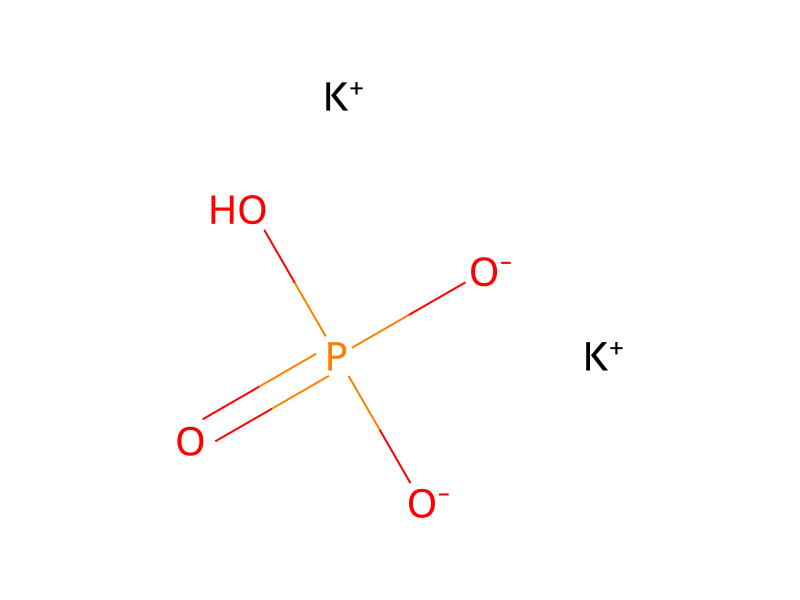
[CH3:1][NH:2][CH2:3][C@H:4]([NH2:8])[C:5]([OH:7])=[O:6].C(Cl)CCl.S(C1C[C:21](=[O:23])N(O)C1=O)(O)(=O)=O.[OH:25]P([O-])(O)=O.[K+]>OP([O-])([O-])=O.[K+].[K+]>[CH3:1][NH:2][CH2:3][C@H:4]([NH2:8])[C:5]([OH:7])=[O:6].[NH2:8][C@H:4]([C:5]([OH:7])=[O:6])[CH2:3][C:21]([OH:23])=[O:25]Participants
Reactant 4



Product 2

Reagents, catalysts & solvents 1
Procedure
Conjugates of BMAA with BSA or with HRP were prepared by activating, in the absence of BMAA, the carboxylic groups of BSA or HRP with EDC thereby forming BSA-EDC or HRP-EDC. This was followed by the coupling of the activated carboxylate groups on the carrier protein to the primary amino group of BMAA. The procedure was as follows: 50 mg of EDC and 5 mg of sulfo-NHS (Sulfo-N-hydroxysuccinimide) were added to 15 mg of BSA or HRP pre-dissolved in 5 ml of 10 mM KH2PO4, pH 5.0. The reaction mixture was stirred for 2-3 minutes, thereby forming BSA-EDC or HRP-EDC, followed by the addition of 5 mL of a 1% solution of BMAA in 0.2 M K2HPO4, pH 8.5. After the solution was stirred overnight, the conjugate (BSA-EDC-BMAA or HRP-EDC-BMAA) was dialyzed exhaustively against PBS-7.4 (0.14 M NaCl, 10 mM K2HPO4, pH 7.4) or TBS-8 (tris-buffered saline, pH 8). Conjugates were stored at ≦20° C. (20° C. or less) By this procedure the conjugate was formed by linkage of BMAA to the carrier protein predominantly via the glutamic and aspartic acid residues of the carrier protein.
Workup
- stirringAfter the solution was stirred overnight
- customthe conjugate (BSA-EDC-BMAA or HRP-EDC-BMAA) was dialyzed exhaustively against PBS-7.4 (0.14 M NaCl, 10 mM K2HPO4, pH 7.4) or TBS-8 (tris-buffered saline, pH 8)
- customwere stored at ≦20° C.
- custom(20° C. or less)
Sources & evidence
- ORD record
- ord-081eacc0d5f947e5a4ca457b505093bc
- Source dataset
- uspto-grants-2013_03
- Patent number
- US08394596B1
Linked notes
Loading…