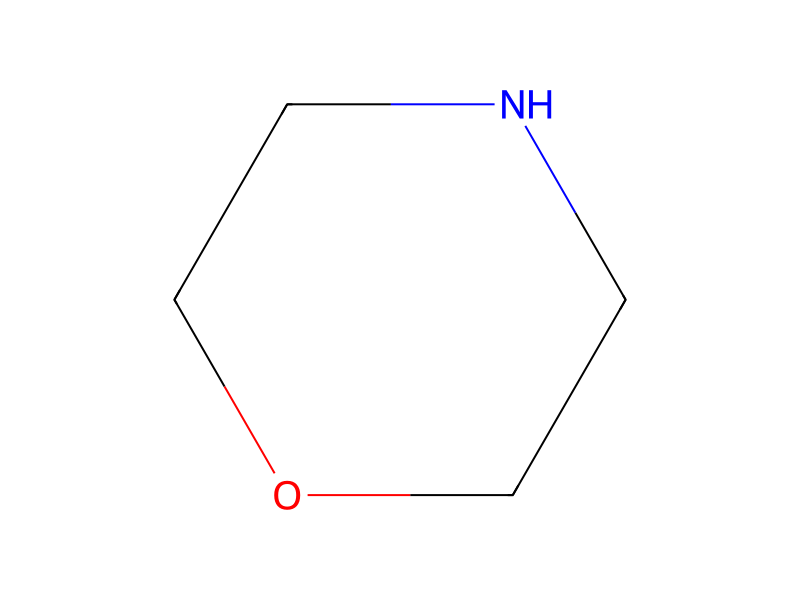
[Cl:1][C:2]1[N:10](CC=C)[C:9]2[C:8](=[O:14])[NH:7][C:6](=[O:15])[N:5]([CH2:16][C:17]#[N:18])[C:4]=2[N:3]=1.N1CCOCC1.Cl.C(Cl)(Cl)Cl>C1COCC1.C1C=CC([P]([Pd]([P](C2C=CC=CC=2)(C2C=CC=CC=2)C2C=CC=CC=2)([P](C2C=CC=CC=2)(C2C=CC=CC=2)C2C=CC=CC=2)[P](C2C=CC=CC=2)(C2C=CC=CC=2)C2C=CC=CC=2)(C2C=CC=CC=2)C2C=CC=CC=2)=CC=1>[Cl:1][C:2]1[NH:10][C:9]2[C:8](=[O:14])[NH:7][C:6](=[O:15])[N:5]([CH2:16][C:17]#[N:18])[C:4]=2[N:3]=1A solution of [8-chloro-2,6-dioxo-7-(2-propen-1-yl)-1,2,6,7-tetrahydro-3H-purin-3-yl]acetonitrile (0.084 g, 0.32 mmol) in THF (5 ml) was degassed by the successive application of vacuum and nitrogen pressure to the reaction mixture. The solution was subsequently treated with morpholine (0.3 ml, 3.4 mmol) and tetrakis(triphenylphosphine)palladium(0) (0.03 g, 0.03 mmol). After 2 hours, the mixture was treated with 2M aqueous hydrochloric acid (3 ml) and chloroform (5 ml). The mixture was separated and the organic phase evaporated. The product was purified from the residue using mass-directed HPLC, to afford the title compound as a white solid (0.018 g, 25%). NMR δH (400 MHz, d6-DMSO) 4.95 (s, 2H), 11.49 (s, 1H), 14.63 (br. s, 1H); m/z 226 [MH+].